Why People with the Same Zodiac Sign Are Different
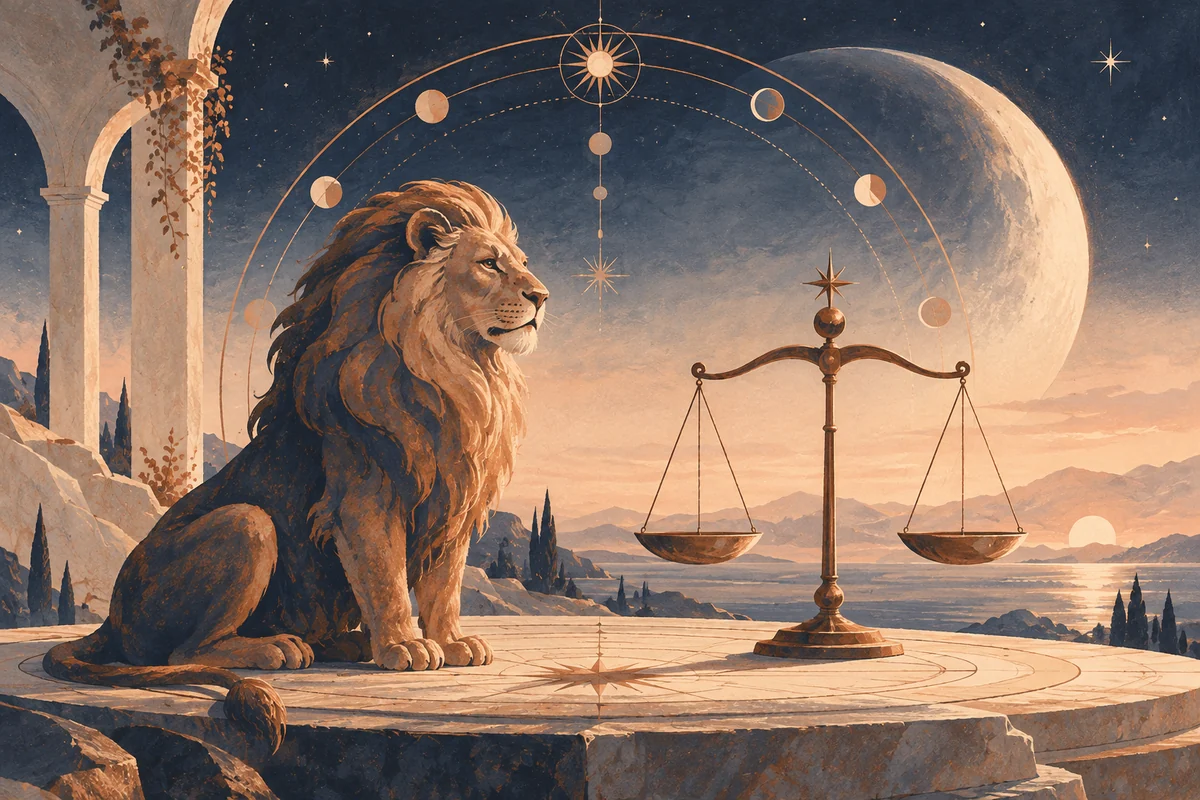
The primary reason why people with the same zodiac sign are different comes down to astrological decans, which divide each thirty-degree zodiac sign into three distinct ten-degree segments. Each decan introduces a unique secondary planetary ruler and a subtle elemental variation, altering how the core archetype expresses itself in daily life. Combined with distinct rising signs and natal chart aspects, these subdivisions explain why two individuals born under the exact same sun sign can possess remarkably divergent temperaments.
The Geometry of the Zodiac: Understanding Decans
In Western astrology, the celestial wheel consists of twelve signs, each measuring precisely thirty degrees of arc to form a complete 360-degree circle. While popular horoscope culture treats every sign as a monolithic block, traditional astrologers have long recognized that energy shifts across those thirty degrees. By dividing each sign into three equal sections of ten degrees each, practitioners created decans, derived from the Greek word deka, meaning ten. Each sign contains a first decan spanning zero to nine degrees, a second decan spanning ten to nineteen degrees, and a third decan spanning twenty to twenty-nine degrees.
Historically, decans originated in ancient Egyptian astronomy, where stellar groupings called decans marked thirty-six ten-day periods across the solar year. When Hellenistic astrologers blended Egyptian astronomy with Babylonian planetary systems, decans became integral tools for assessing planetary dignity and character subtlety. Rather than assuming that every individual born between late March and late April behaves like a textbook Aries, ancient astrologers used these ten-degree segments to identify subtle personality variations, energetic shifts, and varying psychological motivations.
Today, decans provide practitioners with an analytical framework that bridges the gap between oversimplified sun-sign astrology and comprehensive natal chart interpretation. When you observe two people who share a sun sign yet approach conflict, ambition, or relationships in fundamentally opposing ways, their solar degree placement is often the primary structural factor. By examining decans, you begin to see the zodiac not as twelve rigid categories, but as thirty-six distinct narrative chapters that depict human development.
Why People with the Same Zodiac Sign Are Different: Planetary Sub-Rulers
The core technical explanation for why people with the same zodiac sign are different lies in secondary planetary rulership. While the overall sign retains its primary planetary ruler, each decan receives an additional planetary overseer that modifies its behavioral tone. In the widely used modern triplicity method, sub-rulership follows the signs of the same element in natural zodiacal order. For instance, the first decan of an earth sign is ruled entirely by its traditional planetary master, while the second and third decans borrow secondary rulership from the succeeding earth signs.
To illustrate this mechanic, consider Taurus, an earth sign ruled fundamentally by Venus. A person born in the first decan, spanning zero to nine degrees, experiences pure Venusian energy, characterized by an emphasis on sensual comfort, patience, aesthetic refinement, and material stability. However, someone born in the second decan, from ten to nineteen degrees, falls under the secondary influence of Mercury, the ruler of neighboring earth sign Virgo. This Mercury sub-influence adds an analytical, detail-oriented, and occasionally anxious intellectual energy that contrasts sharply with the easygoing calm of the first decan.
Meanwhile, an individual born in the third decan of Taurus, spanning twenty to twenty-nine degrees, absorbs the secondary influence of Saturn, the ruler of Capricorn. Rather than prioritizing soft luxury or conversational analysis, this third-decan Taurus often presents as rigorous, ambitious, stoic, and deeply conscious of legacy. Both individuals carry the foundational resilience and steadfast loyalty of Taurus, yet their outward behavior, life priorities, and emotional expressions differ dramatically because Mercury and Saturn color the primary Venusian canvas in entirely different tones.
The Triplicity System Versus the Chaldean Order
When exploring decan mechanics, students frequently encounter two distinct frameworks: the modern triplicity system and the ancient Chaldean order. The triplicity system, popularized in the twentieth century by astrologer Alan Leo and widespread in contemporary psychological astrology, links decans to signs of the same element. In fire signs, for example, the first decan of Leo belongs purely to the Sun, the second decan incorporates Jupiter through Sagittarius resonance, and the third decan integrates Mars through Aries association. This system provides an intuitive, elemental logic that modern readers find particularly cohesive.
Conversely, traditional and Renaissance astrologers rely on the Chaldean order, which assigns planetary rulers based on the geocentric speed of the visible wandering bodies: Saturn, Jupiter, Mars, the Sun, Venus, Mercury, and the Moon. Starting with Mars ruling the first decan of Aries, this ancient sequence cycles continuously through the thirty-six decans without regard for elemental triplicity. Under the Chaldean model, the first decan of Leo is ruled by Saturn, the second by Jupiter, and the third by Mars, introducing distinct classical virtues, challenges, and planetary dignities to every sector.
Neither system represents an objective physical certainty, as both operate as symbolic lenses developed across distinct cultural eras. Contemporary readers who lean toward modern psychological and archetypal analysis generally prefer the triplicity system because it reinforces elemental harmony and psychological themes. Conversely, students of Hellenistic and medieval astrology usually favor the Chaldean order because of its deep integration with historical essential dignities, traditional face rulerships, and time-honored astrological philosophy.
Real-World Manifestations: Comparing Decans in Water and Air Signs
Examining how decans operate within water and air signs provides immediate clarity on why peer personalities diverge. Take Cancer, a water sign ruled by the Moon, representing instinct, nurturing, and emotional memory. A first-decan Cancer born between zero and nine degrees embodies double lunar influence, displaying protective tendencies, heightened sensitivity, and pronounced domestic priorities. These individuals often wear their emotional impressions openly, seeking psychological comfort within established family circles and private domestic sanctuaries.
Contrast that initial decan with a Cancer born in the second decan, spanning ten to nineteen degrees. In the triplicity system, this segment is co-ruled by Pluto and Mars via Scorpio. Instead of exhibiting gentle lunar softness, second-decan Cancers frequently display an intense, investigative, and deeply private demeanor, accompanied by powerful personal boundaries and an instinctive grasp of psychological subtext. Their protective nature transforms into fierce loyalty that defends vulnerable loved ones with tactical precision and unyielding emotional resolve.
Air signs display an equally striking spectrum through decanic subdivision. A Gemini born in the first decan carries pure Mercurial energy, excelling in quick banter, rapid data gathering, and spontaneous conversation. Move into the second decan, influenced by Venus through Libra, and Gemini presents with pronounced diplomatic grace, artistic appreciation, and a strong preference for partnership over solitary intellectual pursuits. By the third decan, co-ruled by Uranus and Saturn via Aquarius, Gemini channels its communicative gift toward inventive systems, social causes, and philosophical debate rather than lighthearted neighborhood socializing.
Beyond the Sun: Additional Natal Factors That Separate Birthdays
While decans supply vital nuance, they operate within a much larger energetic ecosystem that prevents any two birth charts from functioning identically. The most powerful personalizer in Western astrology is the rising sign, or Ascendant, which establishes the house layout of the natal chart based on the exact minute and geographical location of birth. Two people born on the very same day in the same hospital three hours apart will possess entirely different rising signs, shifting their outward demeanor, personal appearance, and life orientation.
The Moon sign introduces another major layer of behavioral separation between people who share a solar birthday. Because the Moon moves through the entire zodiac in approximately twenty-eight days, it changes signs roughly every two and a half days. One sun-sign native might navigate stress through an assertive Moon in Aries, demanding direct action and autonomy, while another peer born forty-eight hours later processes emotional turbulence through an introspective, privacy-seeking Moon in Cancer, producing drastically different reactions to identical external pressures.
Planetary aspects, which measure the angular relationships formed between celestial bodies, further individualize each chart. A sun closely conjunct Saturn expresses restraint, self-doubt, and solemn discipline, regardless of the sign it occupies, whereas that same sun forming an expansive trine to Jupiter radiates optimism, generosity, and resilience. Astrological practitioners always emphasize that decans serve as powerful diagnostic components within an interconnected mosaic, rather than standalone determinants of an individual's character.
Reflecting on Your Personal Decan for Deeper Self-Awareness
Exploring decan theory shifts astrology away from restrictive generalizations and repositions it as a versatile tool for personal reflection. When examining your natal degrees, you can ask purposeful questions regarding your natural motivations. Does your life approach reflect the purest archetypal expression of your sign, or do you resonate more clearly with the secondary planetary sub-ruler assigned to your ten-degree sector? Identifying this subtle balance enables you to honor both your core solar identity and the complementary instincts that guide your daily decisions.
Decans can also assist you in understanding interpersonal dynamics with colleagues, friends, and family members who happen to share your birth sign. When you find yourself frustrated that another person with your sun sign acts with conflicting priorities, analyzing their decan often reveals the source of tension. Recognizing that a fellow Sagittarius carries an intellectual, analytical Mercurial sub-ruler while you carry a direct, competitive Mars sub-ruler fosters genuine empathy and dissolves unrealistic expectations of identical behavior.
Ultimately, understanding why people with the same zodiac sign are different allows you to approach astrological symbolism with greater intellectual maturity. Human individuality is vast, complex, and shaped by biological, cultural, and environmental realities that no celestial model can fully encapsulate. By viewing decans as evocative metaphors for developmental growth, you gain a richer symbolic vocabulary for personal contemplation, celebrating the nuanced expressions that make each individual journey distinct.
Frequently asked questions
How do I find out which decan I belong to?
To find your decan, look at the exact degree of your Sun on your natal chart. If your Sun falls between 0°00' and 9°59', you are in the first decan. If it sits between 10°00' and 19°59', you belong to the second decan. Degrees between 20°00' and 29°59' represent the third decan.
Does your decan change throughout your life?
In natal astrology, your birth decan remains fixed forever because it reflects the exact astronomical position of the Sun when you were born. However, practitioners of predictive techniques like secondary progressions track your progressed Sun as it moves roughly one degree per year, gradually passing into new decans over decades of emotional maturation.
Which is more accurate: the Chaldean decan system or the triplicity system?
Astrologers consider both systems historically valid, but they serve different analytical purposes. The ancient Chaldean system is preferred in classical astrology for calculating dignity and traditional planetary power. The modern triplicity system is more common in psychological astrology because it links each decan to familiar elemental sister signs.
Can decan placement override your main zodiac sign?
No, a decan does not override your primary zodiac sign. Instead, it adds a secondary planetary accent to your core solar archetype. Your sun sign defines your foundational purpose and vital nature, while the decan's sub-ruler acts like an interior filter that colors how you express that core drive.