What Are the Big 3 in Astrology and Why They Matter
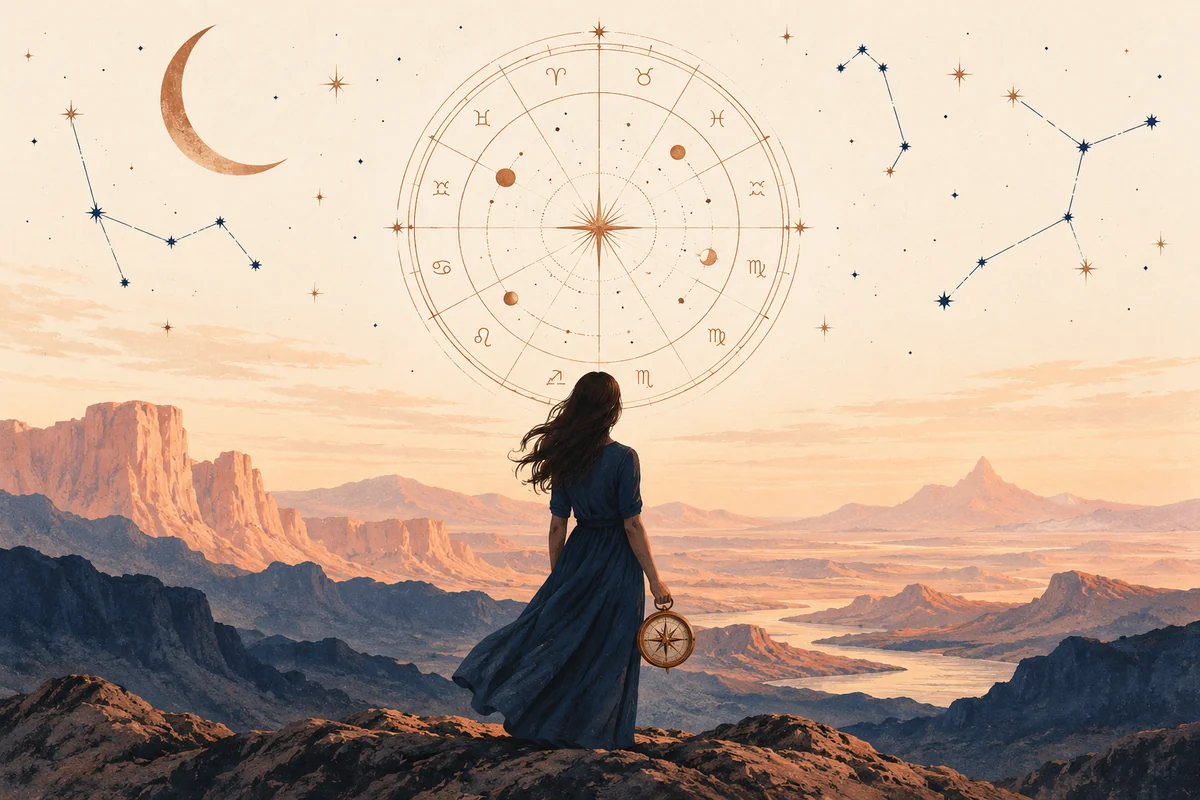
In Western astrology, your Big 3 consists of your Sun sign, Moon sign, and Rising sign, also known as your Ascendant. Together, these three placements form the foundational triad of your birth chart, representing your conscious identity, your private emotional landscape, and the social filter through which you engage with the world. Rather than relying solely on your familiar birthday sign, understanding this trio offers a nuanced look at your personal strengths, instincts, and growth.
Understanding What Are the Big 3 in Astrology
When people ask about your sign, they are almost always referring to your Sun sign, which marks the position of the Sun on the calendar date you were born. While the Sun provides a solid foundation, human personality is far too complex to capture in twelve generic categories. This is why practitioners look toward what are the big 3 in astrology to build a more authentic snapshot of individual nature. By incorporating your Moon and your Rising sign alongside the Sun, astrologers examine three distinct psychological dimensions that operate simultaneously.
Historically, Western astrology has viewed the birth chart as a celestial snapshot of the sky at the exact second you took your first breath. In that moment, every celestial body occupied a specific degree within the twelve zodiac constellations. Among these planetary placements, the Sun, the Moon, and the Ascendant line hold special structural significance. While other planets describe specific capacities such as communication or love, the primary trio establishes the core framework of character, providing context for every other placement on the wheel.
Approaching this triad from a modern perspective means viewing these signs as symbolic tools for self-reflection rather than rigid fatalistic labels. Practitioners describe the primary trio as a mirror that can help you understand personal contradictions, such as feeling deeply sensitive in private while presenting a bold, detached face in public. Learning how these three forces dialogue with one another enables you to navigate your relationships, personal ambitions, and emotional patterns with greater clarity and compassion.
The Sun Sign: Your Conscious Ego and Vital Purpose
In traditional astrological symbolism, the Sun represents vitality, conscious awareness, and the core essence of who you are becoming over your lifetime. Just as the Sun sits at the center of our solar system, illuminating the planets around it, your natal Sun sign highlights the central fuel source that feeds your personal drive. It reflects your conscious will, your fundamental identity, and the creative spirit that emerges when you feel grounded, confident, and true to yourself.
Your Sun sign describes what motivates you on a broad level, showing how you seek recognition and what gives you a sense of personal pride. For instance, an individual with the Sun in Leo often experiences revitalization through creative self-expression, leadership, and generous warmth, whereas someone with the Sun in Virgo feels fulfilled through pragmatic service, problem-solving, and attention to detail. This placement is less about reflexive emotional habits and more about deliberate, purposeful choices you make as an adult.
Because the Sun spends roughly thirty days in each zodiac sign, it is the easiest placement to find without specialized records. However, having the Sun in a particular sign does not mean you express every classic textbook trait. The house where the Sun lives, the planetary aspects it forms, and the tempering influence of your Moon and Ascendant all shape the specific way your solar vitality shines through.
The Moon Sign: Your Emotional Core and Instinctual Self
While the Sun governs daytime consciousness, the Moon represents the reflective night, governing your subconscious patterns, emotional instincts, and intimate psychological needs. Your Moon sign reveals the person you are when nobody else is watching, describing how you self-soothe, process vulnerability, and react to sudden changes. Many astrologers consider the Moon to be the emotional anchor of the entire birth chart because it holds your early memories and sense of safety.
Because the Moon moves through the entire zodiac in approximately twenty-eight days, it spends only two to two-and-a-half days in each sign. This rapid motion makes your lunar placement intensely personal, often setting you apart from peers born just days before or after you. A person with the Moon in Taurus, for example, typically craves sensory comfort, routine, and predictable emotional stability, while an individual with the Moon in Gemini processes feelings through verbal dialogue, curious inquiry, and mental stimulation.
Understanding your lunar placement offers practical insight into how you manage stress and what you need in intimate partnerships. When you feel overwhelmed or depleted, it is usually your Moon sign that signals distress and dictates what kind of care will genuinely restore your spirits. Honoring these lunar needs allows you to build sustainable self-care rituals that match your psychological nature rather than adopting trendy remedies that do not resonate.
The Rising Sign: Your Public Demeanor and Life Lens
The Rising sign, traditionally termed the Ascendant, is the specific zodiac sign that was ascending on the eastern horizon at the precise minute of your birth. Because Earth rotates on its axis once every twenty-four hours, the Ascendant changes signs roughly every two hours throughout the day. This rapid progression makes your Rising sign the most time-sensitive point in your chart, which is why an accurate birth time is vital for an authentic reading.
Symbolically, practitioners describe the Rising sign as the front porch of your personality or the lens through which you view the outside world. It influences your initial impressions, your automatic survival instincts in unfamiliar settings, and even your physical presence and style. When meeting someone for the first time, you typically encounter their Rising sign before they reveal the deeper core of their solar ambitions or the vulnerability of their lunar emotions.
Beyond social first impressions, the Ascendant sets the entire geometry of your personal astrological chart. It anchors the cusp of your first house of self, which in turn determines the boundaries of all eleven subsequent houses governing family, career, and relationships. Furthermore, the planet that rules your Ascendant sign becomes your chart ruler, functioning as an energetic captain that guides your overall developmental trajectory throughout life.
How Your Placements Blend: Harmonious and Conflicting Dynamics
The true art of astrology lies in synthesis, observing how distinct elements and modalities cooperate or clash within a single individual. Your Sun, Moon, and Rising signs each possess their own elemental assignment of fire, earth, air, or water, as well as a modality of cardinal, fixed, or mutable. When these components share compatible elements, such as water and earth, your outer behavior and inner feelings tend to support one another in a coherent, comfortable rhythm.
Tension arises when your placements belong to elements that naturally pull in opposite directions. Consider an individual with a courageous Aries Sun, a private Scorpio Moon, and a detached Aquarius Rising. Outwardly, their Aquarius Ascendant makes them appear progressive, analytical, and socially open. Underneath, their Aries Sun seeks immediate physical conquest and pioneering independence, while their Scorpio Moon demands intense emotional discretion and cautious trust. Such combinations explain why our inner experiences frequently contradict how people perceive us.
Rather than viewing these contradictory placements as weaknesses, practitioners treat them as sources of personal depth and resilience. A clash between your emotional needs and your social persona invites mindful integration, requiring you to develop healthy boundaries between your public presentation and your private reality. Reflecting on where your Big 3 agree and where they dispute can help you cultivate patient self-acceptance whenever you feel pulled between diverse impulses.
Locating Your Chart Details and Reflecting on What Are the Big 3 in Astrology
To calculate your complete trio accurately, you will need three vital pieces of data: your full calendar birth date, your exact birth city, and your precise birth time, typically found on an official birth certificate. While approximate times can sometimes yield an accurate Sun and Moon sign, even a thirty-minute discrepancy can alter your Rising sign entirely or misplace your Moon. Free online chart calculators can generate your wheel in seconds once these accurate details are entered.
Once you discover your placements, begin your reflection by asking practical questions about how they show up in your daily life. Do you recognize the emotional needs of your Moon sign when you face personal disappointment? Does your Rising sign explain how acquaintances describe your initial energy at social gatherings? Engaging with astrology as an ongoing journal prompt or contemplative framework keeps the symbolism grounded and meaningful, preventing it from turning into rigid dogma.
Ultimately, understanding what are the big 3 in astrology provides a balanced gateway into self-discovery that honors human nuance. Your birth chart contains numerous other planets, asteroids, and angles, but mastering this core triad illuminates the essential dialogue between your conscious purpose, your emotional heart, and your social presentation. When used thoughtfully, these archetypes provide helpful vocabulary for embracing your complexity and living with intentionality.
Frequently asked questions
Can your Big 3 signs ever change over your lifetime?
In standard natal astrology, your Big 3 signs never change because they represent the exact planetary positions at the moment of your birth. Advanced techniques like secondary progressions track symbolic personal growth over decades, but your natal Sun, Moon, and Rising remain your lifelong baseline.
Which of the Big 3 placements is the most important?
None of the three is inherently superior, as each fulfills an essential psychological function. Astrologers generally view the Sun as your central purpose, the Moon as your emotional bedrock, and the Ascendant as the steering wheel that directs your path through the world.
Can you have the same sign for all of your Big 3?
Yes, although it is relatively uncommon. If you were born near sunrise during the two-day period when the Moon was traversing the same sign as the Sun, all three placements will share that single zodiac sign, creating an intensely concentrated expression of that archetype.
What should you do if you do not know your exact birth time?
Without a birth time, you can still determine your Sun sign with certainty, and you can usually find your Moon sign if it did not switch signs that day. However, calculating your correct Rising sign requires an accurate birth time down to the minute.