What Is a Stellium in Astrology and Do You Have One?
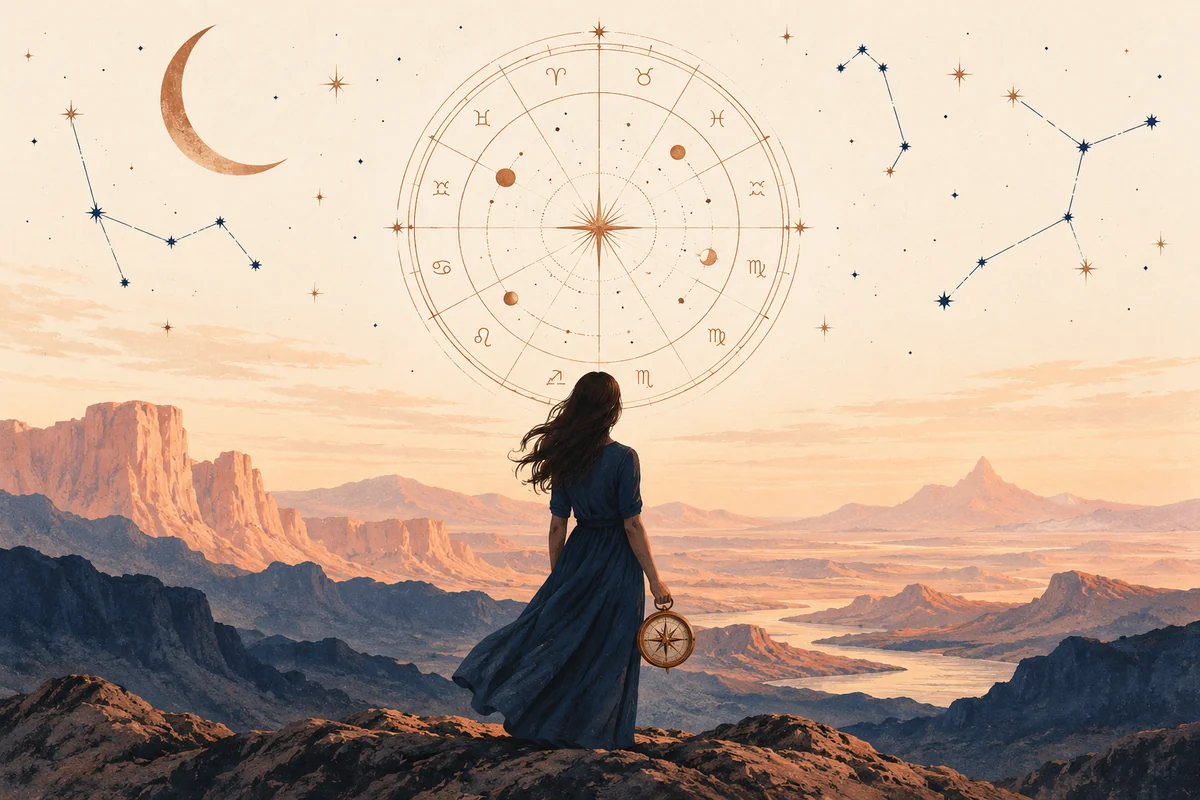
In western astrology, a stellium occurs when three or more planets gather closely together within a single zodiac sign or astrological house. This concentrated grouping functions like an energetic spotlight, focusing a substantial portion of your natal chart's motivation and expression into one specific realm of experience. Knowing whether you carry this alignment helps clarify why certain themes, talents, and personal challenges dominate your everyday life.
What Is a Stellium in Astrology and How Does It Form?
To understand what is a stellium in astrology, picture a round table where several influential voices gather in one tight corner. While a typical birth chart distributes ten celestial bodies across twelve signs and houses, a stellium consolidates three or more planets into a single area. Many astrologers require at least four planets if the cluster involves fast-moving personal bodies like Mercury or Venus alongside the Sun, while others consider three sufficient if an outer planet or major angle is involved. Regardless of strict numerical cutoffs, this concentration intensifies the tone of that specific placement.
From an astronomical perspective, stelliums are relatively common occurrences because Mercury and Venus never travel far from the Sun. When the Sun transits through Capricorn or Aquarius, for example, inner planets frequently join it in the same section of the sky. If Mars or a slower-moving outer planet like Jupiter or Saturn happens to be moving through that sector simultaneously, a potent cluster forms. People born during these windows inherit a cosmic signature characterized by laser focus rather than diffuse variety across the wheel.
In psychological astrology, this pattern represents an innate specialization. When so many celestial archetypes share tight quarters, their symbolic needs blend into a unified drive. A person with multiple placements in a single sign rarely feels lukewarm about the themes governed by that sign. Instead, they often experience those qualities as their foundational operating system, shaping how they communicate, pursue goals, and interpret their identity.
Sign Stelliums Versus House Stelliums
A sign stellium occurs when your planetary cluster occupies the same zodiac sign, even if the planets bridge two adjacent houses. This configuration colors your psychological makeup and personal style with the distinct elemental nature and modality of that sign. For instance, a Leo stellium expresses itself with dramatic warmth, creative visibility, and strong pride, whereas a Scorpio stellium channels its energy through emotional depth, privacy, and investigative resolve. The sign dictates how you process reality and express your core motivations.
Conversely, a house stellium happens when planets gather within the same numbered house, potentially spanning two different signs depending on the house system used. Astrological houses represent external arenas of life rather than internal temperaments. A concentration in the Fourth House pulls attention toward home, ancestral roots, and private emotional foundations, whereas a cluster in the Tenth House directs immense drive toward career, public reputation, and social standing. The house reveals where life continually asks you to show up.
Occasionally, an individual possesses a compound alignment where three or more planets share both the identical sign and the identical house. Practitioners describe this as the purest and most concentrated expression of stellium energy. In these cases, internal temperament and external circumstances align completely, making the designated themes impossible to overlook. Life continually funnels opportunities and challenges through that specific doorway, shaping the native's personal journey in unmistakable ways.
Which Celestial Bodies Count in a Planetary Cluster?
Astrological traditions hold varying perspectives on which points qualify when tallying a stellium. Most practitioners agree that major celestial bodies—the Sun, Moon, Mercury, Venus, Mars, Jupiter, Saturn, Uranus, Neptune, and Pluto—are eligible contributors. However, classical astrologers often argue that at least two personal planets, such as the Sun, Moon, Mercury, Venus, or Mars, must participate. Without personal planets, an outer-planet conjunction simply reflects a generational marker shared by millions of peers born across several months.
Debate also surrounds sensitive calculated points such as the Ascendant, Midheaven, North Node, or Chiron. While these points add meaningful nuance and personal resonance to an existing grouping, many modern readers view them as modifiers rather than primary anchors. A gathering consisting of Neptune, Uranus, and the Midheaven, for example, represents a generational career influence rather than a true personal stellium. Including at least three physical bodies ensures that the configuration carries authentic weight in daily self-expression.
Proximity between the planets, known as orb of aspect, also plays a crucial role in evaluation. Traditional interpretations prefer conjunctions within eight to ten degrees of one another, forming an unbroken chain where Planet A touches Planet B, and Planet B touches Planet C. When planets occupy the same sign but sit twenty-five degrees apart without connective aspects, the sign's flavor remains strong, but the interactive synergy feels less immediate and pressurized.
The Strengths and Blind Spots of a Concentrated Chart
The greatest gift of a concentrated chart is undeniable mastery. While individuals with evenly distributed charts often juggle competing interests, stellium natives typically possess extraordinary focus, clarity, and dedication within their chosen domain. An Aries stellium can pioneer projects with fearless courage, while a Virgo stellium organizes intricate systems with effortless precision. This natural concentration often produces noticeable talent early in life because the psyche wastes minimal energy questioning where its core interests reside.
However, heavy concentration creates an inevitable counterpart: chart imbalance. When four planets crowd one sign, the remaining eleven signs and houses receive proportionally less natal emphasis. Natives can easily become myopic, viewing every complex life situation solely through the lens of their dominant archetype. A Gemini stellium might attempt to intellectualize profound grief, while a Cancer stellium risks interpreting professional disagreements as direct emotional attacks. Recognizing this tendency helps prevent interpersonal friction.
Burnout presents another frequent challenge for people with this configuration. Because multiple planetary drives activate simultaneously whenever transits touch that sign, periods of intense stress can feel all-consuming. When an eclipse or major outer planet enters the territory of your cluster, every planet involved responds at once. Learning self-regulation, boundary setting, and intentional pacing prevents the native from being overwhelmed by their own concentrated vitality.
Step-by-Step Guide to Finding a Stellium in Your Birth Chart
To discover whether your birth chart contains this powerful configuration, start by generating your accurate natal wheel using your exact birth date, year, time, and location. Precise birth time is critical because it determines your house cusps and the exact placement of your Moon, which changes signs roughly every two and a half days. Without an accurate time, you can still evaluate sign groupings, but your house calculations may prove entirely unreliable.
Next, scan your chart wheel or planetary list and count how many planets occupy each sign. Look specifically for groupings of three or more celestial bodies sharing one zodiac sign, paying close attention to whether the Sun, Moon, or inner personal planets are present. If you observe three or more planets spanning a single thirty-degree sign segment, you have identified a sign stellium. Take note of the exact degrees to see whether they form tight conjunctions.
Finally, examine the twelve numbered house divisions around your wheel to check for house groupings. Look for three or more planets settled between two consecutive house cusps, regardless of whether a sign boundary crosses through that sector. If you find a grouping, identify which house is highlighted and review its classical themes. Recognizing whether your cluster is sign-based, house-based, or both offers a clear roadmap for further personal reflection.
Navigating and Balancing Your Concentrated Planetary Energy
Learning how to live comfortably with a stellium requires cultivating an intentional relationship with the astrological polarity point directly across the wheel. In astrology, signs and houses exist on axes of balance: Aries balances Libra, Taurus balances Scorpio, and the First House balances the Seventh. When your chart leans heavily to one side, consciously adopting the virtues of the opposing sign acts as a vital pressure release valve that restores equilibrium to daily living.
Reflective practices offer practical support for integrating this dynamic. If you carry a cluster in an intellectual Air sign like Aquarius, grounding practices such as physical movement, somatic meditation, or time in nature can help discharge mental tension. If your cluster sits in an emotional Water sign like Pisces, structured journaling, disciplined schedules, and clear boundaries provide helpful containment. Honoring your dominant gifts while nurturing complementary habits prevents your signature strengths from becoming overwhelming liabilities.
Ultimately, understanding what is a stellium in astrology allows you to view your distinct intensity with self-compassion instead of frustration. Rather than wondering why certain topics consume your thoughts or why life repeatedly directs you toward specific challenges, you can embrace your chart's built-in specialization. By pairing self-awareness with conscious balance, you transform an intense planetary cluster into a lifelong source of creative purpose and resilience.
Frequently asked questions
How many planets are needed to make a stellium?
Most contemporary astrologers consider three planets in a single sign or house sufficient to form a stellium. However, if the grouping contains only fast-moving personal planets like the Sun, Mercury, and Venus, traditional practitioners often look for four planets to confirm a true concentration of energy.
Can asteroids or the North Node create a stellium?
Asteroids like Ceres or points like the North Node and Ascendant add nuance, but standard astrological practice requires three physical planetary bodies. Calculated points lack planetary mass and symbolic independence, serving instead as modifying lenses that color existing planetary expressions rather than forming standalone clusters.
Is having a stellium considered lucky or unlucky?
Astrology views a stellium as neutral symbolism rather than inherently good or bad fortune. It grants intense focus, unique talents, and clear determination, but it can also manifest as obsessive habits or blind spots if the native neglects the rest of their chart's needs.
What is the lead planet in a stellium?
The lead planet is often considered the body with the lowest degree in the sign, acting as the initiating gatekeeper for the group. Astrologers also examine the planetary ruler of the sign housing the cluster, as that ruler strongly influences how the entire group operates.