How to Use Astrology for Self Reflection and Growth
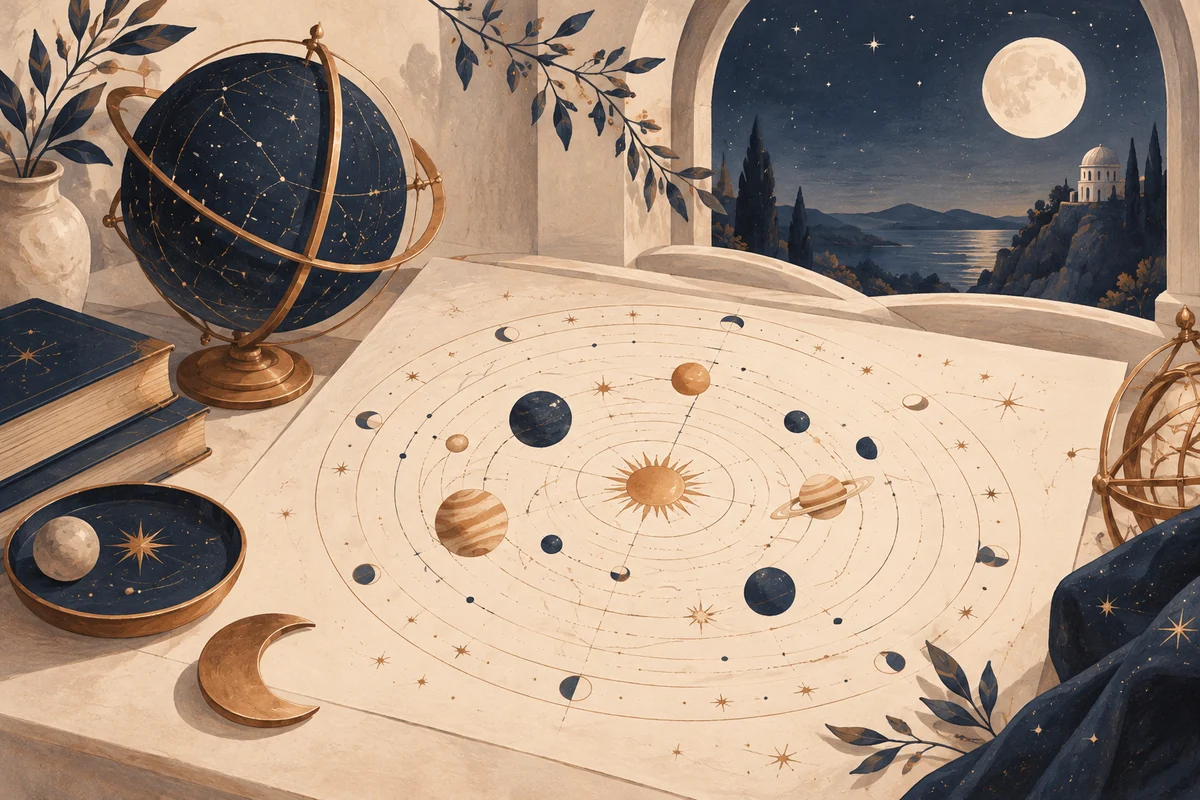
Learning how to use astrology for self reflection begins with viewing your natal chart as a symbolic map of your internal psyche rather than a fixed prediction of destiny. By approaching planetary placements as mirrors for personal habits, emotional reactions, and internal dialogue, you can observe recurring behaviors without judgment. This psychological perspective transforms traditional planetary archetypes into practical journaling tools and mindfulness prompts that support deliberate personal growth.
The Natal Chart as a Psychological Mirror
Many modern practitioners view psychological astrology not as a predictive fortune-telling method, but as an ancient language of archetypes. When you examine a birth chart, you are looking at a snapshot of the sky that reflects your complex inner landscape. Carl Jung frequently noted that astrology represents the summation of all ancient knowledge regarding human psychology. Approaching these symbols with curiosity rather than fatalism allows you to explore the varied facets of your character. It provides an objective distance, letting you observe personality quirks without assuming that your initial emotional responses are unchangeable flaws.
When you remove the pressure of prediction, the chart becomes a tool for active inquiry. Instead of asking what will happen to you tomorrow, you ask what specific tensions are asking for resolution inside you right now. For instance, having strong fire placements alongside grounded earth placements can manifest as an inner conflict between immediate action and cautious deliberation. Acknowledging this dynamic as an archetypal balance reduces the frustration of feeling indecisive. You begin to understand that these competing impulses represent complementary parts of your personal system seeking functional collaboration.
Objectivity is the primary benefit of working with astrological symbols. When people struggle with recurring emotional distress, they often judge themselves harshly for their reactions. Astrology introduces a neutral framework that reframes these struggles as natural tensions between universal human drives. By shifting your perspective from self-blame to neutral observation, you create the psychological breathing room necessary to evaluate your habits clearly. You become an interested witness to your own patterns, which is the foundational first step for lasting, compassionate self-improvement.
Mapping Core Motivations with the Luminaries
The Sun and the Moon form the energetic core of Western astrology, symbolizing conscious purpose and unconscious emotional security. Traditionally, the Sun reflects your intentional identity, representing the values, creative pursuits, and life directions that bring a sense of personal vitality. When you reflect on your Sun sign and its house placement, you can ask whether your daily activities align with your core motivations. Living out of alignment with your solar needs often leads to feelings of depletion, restlessness, or a lack of personal fulfillment in everyday routines.
In contrast, the Moon describes your subjective emotional processing, instinctive responses, and what you require to feel safe. A Water Moon may need solitude and emotional validation to process daily stress, whereas an Air Moon might regulate nervous tension through analytical conversation or conceptual reading. When you understand your lunar profile, you stop judging your emotional needs against standard societal expectations. You recognize that your self-care practices must match your specific internal nature rather than generic wellness advice that may not fit your disposition.
To use these two luminaries for personal reflection, try comparing how they interact in your chart. If your Sun in Leo craves visible recognition but your Moon in Scorpio requires strict privacy, you may experience an underlying friction between being seen and staying protected. Acknowledging this structural contrast helps you design a lifestyle that honors both needs simultaneously. You can share your creative output publicly while preserving strong boundaries around your intimate personal life, resolving an inner conflict through thoughtful, conscious compromise.
Tracking Thought Patterns Through Mercury and Mars
The personal planets Mercury and Mars represent your cognitive processing and your assertive drive. In psychological astrology, Mercury governs perception, internal monologues, and how you articulate ideas to the outside world. An analytical Mercury in Virgo might focus intensely on micro-details and problem solving, which is an incredible asset for organization but can tilt toward anxious perfectionism. Conversely, a Mercury in Sagittarius often focuses on the broader conceptual horizon, occasionally glossing over essential nuances. Observing these inclinations helps you understand your unique cognitive blind spots.
Mars illustrates how you direct personal energy, express anger, assert boundaries, and pursue specific ambitions. Many individuals struggle with their relationship to anger, either suppressing assertiveness or reacting with reflexive hostility when challenged. Reflecting on your Mars placement reveals your instinctive conflict style and energetic pacing. A person with Mars in Taurus may process confrontation slowly and build anger over time, whereas Mars in Aries tends to react immediately and clear the air swiftly. Identifying this tempo empowers you to modulate your responses thoughtfully.
By observing the relationship between your cognitive Mercury and your assertive Mars, you can unpack how you handle daily stress and difficult interactions. When communication breaks down, you can reflect on whether your thoughts are driving hasty actions or if suppressed anger is distorting your communication. Asking targeted questions about these archetypes transforms momentary interpersonal friction into self-awareness. You gradually transition from reflexive, unconscious reactions into deliberate, measured responses that preserve your personal relationships and align with your long-term personal goals.
A Step-by-Step Framework: How to Use Astrology for Self Reflection
Establishing a repeatable routine is essential when learning how to use astrology for self reflection effectively. The first step is selecting one planetary placement or natal aspect to study in isolation. Rather than overwhelming yourself by trying to interpret an entire birth chart at once, choose a placement that relates directly to a recurring challenge you are facing. For instance, if you struggle with self-discipline or feelings of inadequacy, focusing on your Saturn sign and house offers an ideal focal point for structured introspection.
The second step is translating the symbolic archetype into specific psychological questions. Instead of reading deterministic horoscopes, compile a dedicated inquiry list based on the planet's core qualities. If you are exploring Venus, ask yourself how you value personal relationships, where you compromise your integrity to keep peace, and what your relationship with self-worth looks like. Write these questions in a private journal, allowing yourself to record your honest behavioral patterns without editing your thoughts to sound virtuous or emotionally enlightened.
The third step involves objective behavioral tracking over several weeks. Notice how the archetypal themes manifest during routine situations, interpersonal discussions, and stressful events. When you catch yourself acting out the shadowy or difficult expressions of a placement, simply note the behavior as an interested researcher. The final step is conscious experimentation, where you deliberately choose an alternative, constructive expression of that planet. Through this deliberate practice, astrology moves beyond passive study into an active modality for personal growth.
Working with Challenging Aspects and Shadow Material
In astrology, challenging aspects such as squares and oppositions indicate internal tension, competing drives, and unconscious shadow patterns. Traditionally, older astrological texts labeled these alignments as malefic or difficult, which can cause unnecessary worry for beginners. Psychological astrologers view these dynamic angles as powerful engines of personal transformation and self-knowledge. A square between your Sun and Saturn does not indicate inevitable failure; it symbolizes a lifelong dialogue between your personal ambitions and your internal critical voice, challenging you to build authentic resilience.
Engaging with these demanding aspects requires looking directly at traits you might prefer to avoid. If your natal Pluto forms a square to your Venus, you might uncover an instinctual habit of using subtle emotional control to prevent abandonment. Recognizing these darker impulses is not an exercise in shame, but an essential step toward emotional honesty. When you bring unconscious defenses into conscious awareness, they lose their power to dictate your relationship choices and reactions, creating space for mature and vulnerable connections.
Shadow work through astrology succeeds when you treat difficult aspects as invitations to develop emotional balance. You can visualize the two planets in tension as two characters in conversation, each expressing a legitimate human requirement. When you honor both planetary voices, you no longer need to project that tension outward onto other people or external circumstances. Integrating conflicting archetypes builds emotional depth, allowing you to cultivate genuine inner peace by embracing the full complexity of your human personality.
Integrating Astrological Insights into Daily Self Reflection
The true measure of self-reflection is how effectively it translates into practical adjustments in your everyday life. Astrology provides an expansive conceptual language, but the insights remain purely theoretical until you apply them to your daily schedule and relationship habits. When you understand your psychological blueprint, you can build a lifestyle that supports your unique nervous system and temperament. You can set realistic boundaries, choose projects that nurture your talents, and honor the natural rhythms of your emotional life with greater grace.
Many practitioners find it helpful to pair astrological reflection with regular journaling, meditation, or discussions with a counselor. Tracking your natural inclinations helps you spot cognitive distortions and emotional triggers before they lead to self-sabotage. If you know that your Mercury placement struggles with vulnerability, you can actively practice transparent communication in moments of interpersonal tension. Over time, these small, intentional micro-adjustments accumulate into meaningful personal transformation, replacing habitual reactivity with calm, grounded discernment across all areas of your life.
Ultimately, mastering how to use astrology for self reflection frees you from rigid expectations and borrowed definitions of success. Your natal chart does not trap you in a predetermined fate; rather, it functions as a compass pointing toward self-acceptance and emotional maturity. By engaging with these ancient archetypal mirrors with humility, skepticism, and curiosity, you cultivate a deeply supportive relationship with yourself. You learn to navigate personal challenges with patience, recognizing that every inner conflict holds the raw material for continuous self-evolution.
Frequently asked questions
Do I need to know my exact birth time to use astrology for self reflection?
While an exact birth time provides your precise rising sign, Moon placement, and house cusps, you can still gain significant self-reflection benefits without it. A birth chart cast for noon still displays your Sun, Mercury, Venus, Mars, and outer planetary signs. These planetary placements offer rich archetypal mirrors for examining your cognitive communication styles, motivations, and relationship habits without needing house-specific details.
How is psychological astrology different from traditional predictive astrology?
Traditional astrology historically focused on assessing external circumstances, concrete life events, and future outcomes. Psychological astrology, popularized in the twentieth century, views the chart as an internal symbolic map of motives, personality dynamics, and unconscious complexes. Instead of asking what external events will occur, psychological astrology asks how you can consciously integrate competing inner needs to foster personal maturity and emotional growth.
Can analyzing my natal chart replace traditional mental health therapy?
No. Astrological self-reflection is a personal exploratory framework and mindfulness practice, not a clinical therapy or mental health diagnosis. While archetypes can help you articulate feelings and observe habits, they cannot treat mood disorders, trauma, or psychological distress. If you feel overwhelmed, anxious, or depressed, consult a licensed mental health professional who can provide evidence-based clinical guidance and compassionate psychological care.
What should I do if a planetary placement in my chart sounds negative?
Avoid fatalistic interpretations found in older texts or automated horoscope apps. In psychological astrology, every planet, sign, and aspect contains both constructive gifts and unconscious challenges. A placement described as difficult simply points to an area where you face personal growth lessons and tension. Treat challenging symbols as neutral prompts to examine your habits, defenses, and untapped reservoirs of resilience.