Venus Conjunct Mars Synastry: Raw Chemistry and Passion
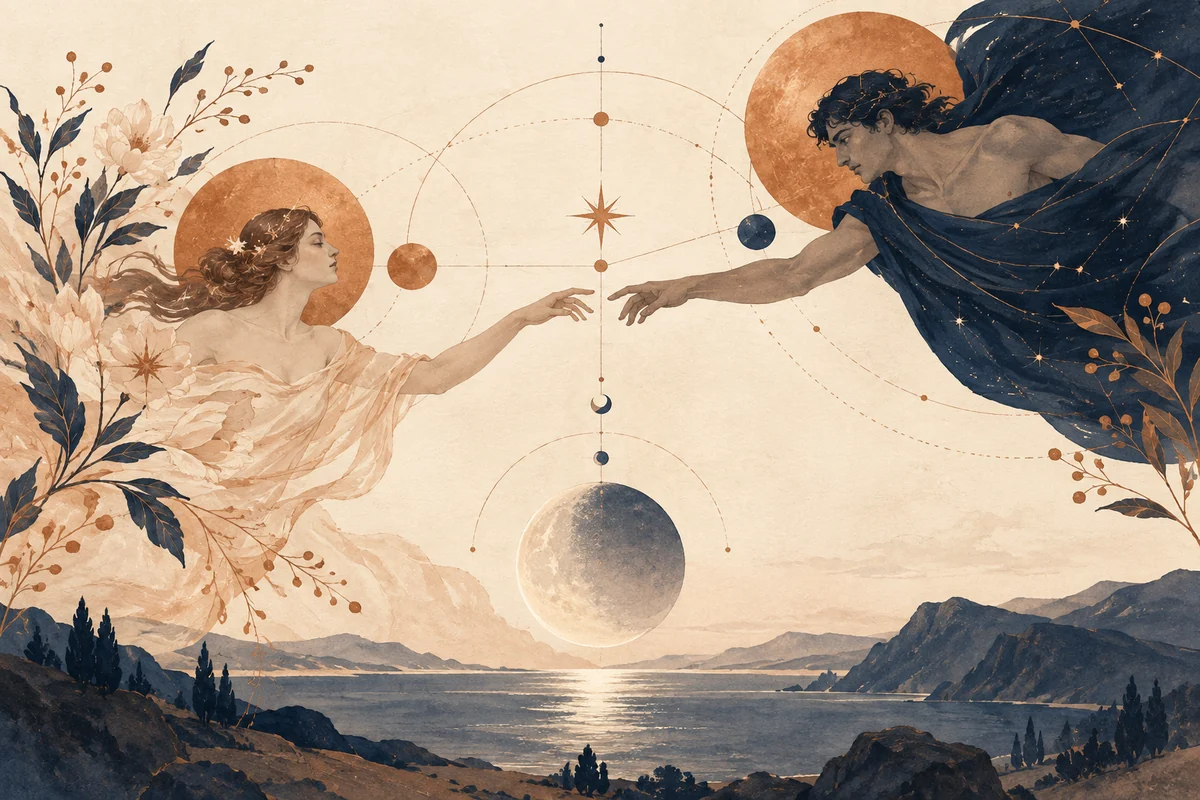
Venus conjunct Mars synastry is one of the most electric astrological aspects for mutual romantic chemistry, uniting the archetype of affection with the archetype of physical desire. When one person's Venus aligns directly with another partner's Mars, both individuals tend to feel an immediate, instinctual pull that bridges emotional sweetness and passionate pursuit. This planetary contact often marks relationships where attraction feels effortless, magnetic, and unmistakably vibrant.
Understanding the Archetypal Union of Venus and Mars
In relationship astrology, Venus and Mars function as cosmic complements. Venus reflects how we give and receive affection, what we find aesthetically pleasing, and our inherent values in partnership. Mars represents physical drive, assertion, courage, and how we pursue whatever we desire. When these two planets align in a conjunction across two charts, the cosmic lovers meet at the exact same degree of the zodiac. Astrologers traditionally view this aspect as a classic indicator of intense mutual fascination.
Rather than experiencing romance and eroticism as separate urges, this conjunction synthesizes them into a unified dynamic. The energy of one partner's loving nature directly stimulates the active drive of the other. Many practitioners describe this alignment as a natural gravitational pull that eliminates initial awkwardness. Instead of needing months to build physical or romantic rapport, partners with this placement often recognize an unmistakable warmth and kinetic charge during their very first conversation.
It is worth noting that a conjunction operates differently from harmonious trines or challenging squares. While trines can sometimes become passive and squares can produce friction, conjunctions focus concentrated energy into a single focal point. This creates a powerful shared field where emotional validation and physical hunger trigger each other in a continuous, reciprocal loop.
The Venus Person and the Mars Person Roles
Although both partners feel the potent charge of this aspect, they often experience and express the energy through distinct roles. The Venus person naturally embodies what the Mars person finds deeply desirable and charming. To Mars, Venus appears beautiful, graceful, and emotionally receptive. The Venus person frequently feels flattered, cherished, and energized by the straightforward attentiveness that Mars brings to the table, finding their partner's presence both validating and exciting.
Meanwhile, the Mars person acts as the catalyst who drives the relationship forward. Mars provides the passion, enthusiasm, and direct pursuit that draws Venus out of hesitation. Because Venus feels safe in its allure, Mars is encouraged to express romantic initiative without fear of harsh rejection. This generates an affirming environment where Mars feels confident in their pursuit and Venus feels genuinely wanted. The mutual responsiveness keeps the romantic spark lively across extended periods.
These roles do not represent static gender stereotypes; rather, they reflect archetypal modes of relating that anyone can embody regardless of gender or orientation. Often, couples alternate between these positions as their relationship matures. The Venus person may initiate playfulness or invite deeper connection, while the Mars person responds with protective warmth and focused determination, creating a balanced and fulfilling emotional dance.
Romantic Magnetism and Physical Tension in Daily Life
The everyday experience of this conjunction often involves a palpable physical chemistry that is difficult to ignore. Couples with this alignment frequently report high levels of spontaneous physical touch, playful banter, and affectionate teasing. Even during ordinary domestic routines or quiet evenings at home, a continuous baseline of attraction persists beneath the surface. This physical ease helps maintain closeness, as touch frequently serves as a bridge to resolve misunderstandings.
Beyond physical desire, there is a distinct romantic sweetness present here. Venus softens the blunt edges of Mars, turning potentially aggressive impulses into protective tenderness and warm enthusiasm. In turn, Mars infuses the refined tastes of Venus with vitality, keeping the partnership from growing stagnant or complacent. Astrological traditions suggest that this aspect makes partners feel genuinely exciting to one another, preventing the romantic spark from turning into platonic detachment.
Consider an example where the Mars person plans an impromptu weekend adventure tailored specifically to the artistic tastes of the Venus person. In response, the Venus person creates a warm, welcoming environment that makes Mars feel deeply appreciated. This seamless exchange exemplifies how affection and pursuit constantly replenish the relationship, ensuring both individuals feel valued for what they naturally contribute.
Navigating Potential Challenges and Overheated Energy
While this aspect offers remarkable chemistry, passion can occasionally spill over into volatility if other chart factors lack grounding. Mars represents passion, but traditional astrology also associates Mars with conflict, impatience, and frustration. If the Mars person becomes overly demanding or insensitive, the sensitive sensibilities of the Venus person can be bruised. When hurt, Venus may withdraw affection, triggering irritation and defensive reactions from Mars.
Another potential pitfall is mistaking physical chemistry for complete emotional compatibility. A powerful physical pull can sometimes blind partners to fundamental incompatibilities in lifestyle, communication styles, or shared ethics. Astrologers encourage individuals to examine Mercury, the Moon, and Saturn placements alongside this aspect. Chemistry initiates connection, but shared values, emotional safety, and responsible commitment are what sustain a lasting, healthy partnership over decades.
Couples can manage this fiery dynamic by practicing conscious communication and emotional self-regulation. When friction arises, the Mars partner must learn to soften their tone, while the Venus partner benefits from stating needs directly rather than resorting to passive withdrawal. Honoring each other's emotional rhythms ensures that passion serves as a source of joy rather than a source of unnecessary domestic turmoil.
How the Zodiac Elements Shape the Conjunction
The zodiac sign where the conjunction occurs dramatically colors how this energy is expressed. When meeting in fire signs such as Aries, Leo, or Sagittarius, the attraction is spontaneous, dramatic, and expressive. These couples thrive on adventure, bold declarations of affection, and dynamic physical activities. Their romantic style is direct, playful, and brimming with infectious enthusiasm, though they must take care to avoid sudden fiery arguments.
In earth signs like Taurus, Virgo, or Capricorn, the energy becomes grounded, sensual, and patient. Touch here is deliberate and tactile, centered around comfort, sensory pleasure, and practical acts of devotion. Earth conjunctions build physical bonds slowly and steadily, turning attraction into enduring loyalty. These couples often express love through building a stable home, sharing meals, and offering reliable support in concrete ways.
When the conjunction takes place in air signs such as Gemini, Libra, or Aquarius, attraction manifests through witty dialogue, intellectual stimulation, and social charm. These partners are drawn to each other's minds, finding that lively debate and shared ideas fuel physical desire. Flirtation remains verbal, clever, and engaging, creating a partnership rooted in mutual curiosity and continuous learning.
In water signs such as Cancer, Scorpio, or Pisces, the conjunction becomes deeply emotional, intimate, and soul-stirring. Physical attraction is inextricably linked with vulnerability and psychic sensitivity. These couples frequently share an unspoken emotional intuition, where touch conveys profound empathy and healing. However, they must nurture clear personal boundaries to avoid becoming overwhelmed by emotional extremes.
Cultivating Longevity Beyond the Venus Conjunct Mars Synastry Spark
Experiencing venus conjunct mars synastry is an undeniable cosmic gift for romantic vitality, yet conscious cultivation ensures the spark endures. Relying solely on physical tension can leave a relationship fragile when daily stress or routine responsibilities take center stage. To transform this initial passion into lasting companionship, partners must actively nurture emotional transparency, mutual respect, and intellectual curiosity alongside their attraction.
Astrologers often recommend engaging in shared creative or athletic pursuits to channel excess Mars energy constructively. Undertaking home design projects, cooking vibrant meals together, or participating in regular fitness activities can provide healthy outlets for this dynamic planetary duo. By collaborating on tangible goals, the couple honors the creative fertility traditionally symbolized by the sacred union of Venus and Mars.
Ultimately, this aspect provides the romantic fuel, but the individuals behind the birth charts steer the vehicle. When partners combine this radiant attraction with mindful listening and emotional generosity, the connection deepens with time. Venus continues to inspire, Mars continues to champion, and the raw chemistry that sparked their initial meeting evolves into an enduring, multi-layered love story.
Frequently asked questions
Who feels the attraction more in Venus conjunct Mars synastry?
Both partners typically feel intense attraction, but they experience it through different lenses. The Mars person is often the overt pursuer, captivated by the charm and beauty of Venus. The Venus person feels deeply desired, magnetized, and energized by the confident attention of Mars.
Can a relationship last on Venus conjunct Mars synastry alone?
While this aspect provides outstanding physical and romantic chemistry, it cannot guarantee long-term stability by itself. Lasting longevity requires supportive connections involving Saturn for commitment, Mercury for communication, and the Moon for emotional security across both individual charts.
What happens when Venus conjunct Mars has challenging aspects?
If this conjunction receives difficult aspects from planets like Saturn, Uranus, or Pluto, the relationship may experience friction. Saturn can bring feelings of emotional cooling or restriction, Uranus can introduce instability, and Pluto may add themes of jealousy or intense power dynamics.
Does the orb of the conjunction matter in synastry?
Yes, astrologers consider the tightness of the orb very important. An exact conjunction within zero to three degrees operates with immediate, unmistakable intensity. An orb between four and eight degrees still creates strong mutual attraction, though its influence manifests in subtler, less urgent ways.