Neptune Retrograde: Meaning and How to Work With It
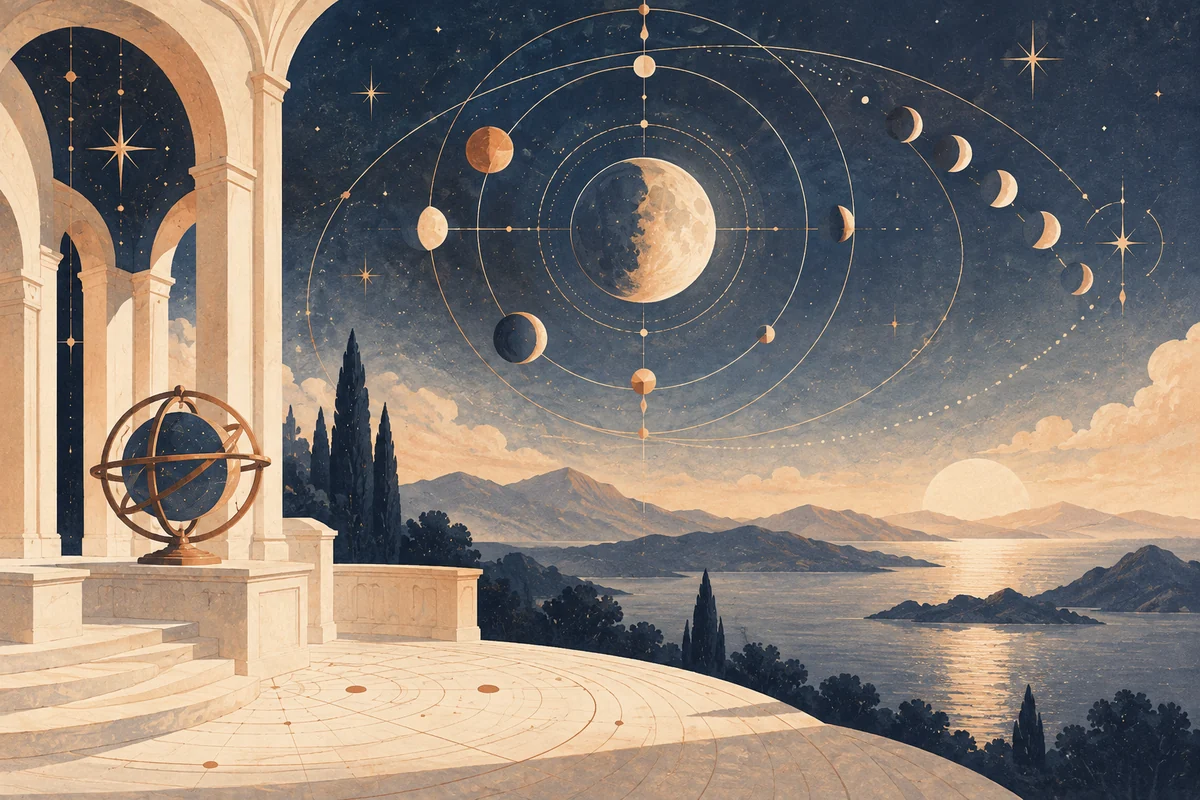
Neptune retrograde is an annual astrological transit lasting about five to six months during which Neptune appears to move backward through the zodiac from our vantage point on Earth. In Western astrology, this cycle invites you to peer past personal illusions, confront wishful thinking, and view spiritual ideals with sober clarity. Rather than triggering sudden outer disruptions, this gentle inward shift offers an extended window to recalibrate your intuition, strengthen creative boundaries, and align dreams with lived reality.
The Astronomy of Neptune Retrograde: An Apparent Backward Motion
Like all retrogrades in Western astrology, Neptune retrograde is an optical illusion created by relative orbital speeds rather than an actual reversal of the planet's physical path. Because Earth orbits the Sun on an inside track and travels much faster than Neptune, our planet periodically overtakes Neptune along the celestial plane. When Earth swings past this distant gas giant, Neptune appears to slow down, halt in what astronomers call a station, and drift backward against the backdrop of distant stars before resuming direct motion.
Neptune takes roughly one hundred and sixty-five years to complete a single journey around the Sun, spending approximately fourteen years in each zodiac sign. Because of its vast distance from the center of our solar system, Neptune spends nearly forty percent of every calendar year in retrograde motion. Typically, the retrograde station lasts for five to six continuous months, making the phenomenon a regular, predictable rhythm in astronomical cycles rather than an unexpected anomaly.
Because this transit occupies almost half of every calendar year, astrologers categorize Neptune as a generational or outer planet alongside Uranus and Pluto. Its astronomical movement is slow and imperceptible to casual stargazers without high-powered telescopes. Understanding this cosmic tempo reminds us that outer planet retrogrades do not demand sudden tactical reactions. Instead, they mark sustained, unfolding eras where subtle psychological themes gradually mature over several seasonal transitions.
Neptune in Astrology: The Archetype of Dreams, Fog, and Transcendence
In modern astrology, Neptune rules the mutable water sign Pisces and oversees the twelfth house of the natal chart, sharing historical rulership of Pisces with Jupiter. As an archetype, Neptune represents the longing to dissolve boundaries, merge with the divine, and experience unconditional love. It governs artistic imagination, poetic insight, psychic sensitivity, and mystical ecstasy. Under healthy expression, Neptunian energy inspires compassionate acts, musical genius, and deep communion with universal archetypes.
Every astrological symbol carries a dual nature, and Neptune is no exception. When untethered to reality, Neptune manifests as rose-colored glasses, escapism, addiction, confusion, and victimhood. Neptune's signature is mist and fog, obscuring harsh details so that we can imagine things as we wish them to be. While this haze fuels creative fiction and romantic idealism, it can also leave individuals vulnerable to wishful thinking, boundary erosion, and chronic self-deception in everyday life.
During direct motion, Neptune projects its visionary qualities outward into cultural trends, collective spiritual movements, and cinematic art. We often use this outward momentum to build grand visions or immerse ourselves in comforting daydreams. However, when the planet turns retrograde, the external projection recedes. The lens shifts from projecting fantasy outward to auditing the structures of our internal imaginative world, asking whether our ideals actually serve our growth.
Core Themes of Neptune Retrograde: Lifting the Veil of Illusion
When Neptune retrograde begins, practitioners traditionally describe the transit as a gradual lifting of the veil. If you have been romanticizing a difficult relationship, ignoring systemic problems at work, or relying on wishful thinking to avoid practical decisions, this cycle often brings quiet illumination. The rose-tinted glasses slip off gently. Rather than shattering your worldview overnight, the transit exposes where your expectations departed from the truth of what was actually happening.
This period asks you to evaluate where you have been engaged in spiritual bypassing or excessive idealism. Astrologers frequently observe that Neptune retrograde brings clarity to situations previously shrouded in ambivalence. You may suddenly realize that an inspiring mentor has normal human flaws, or that a creative project requires structural discipline rather than endless conceptual brainstorming. Confronting these realities might feel mildly sobering at first, but it ultimately grounds your personal agency.
Another central theme of this transit is the reclaiming of energy lost to escapist habits. When daily reality feels overwhelming, Neptunian impulses often encourage daydreaming, endless digital scrolling, or self-soothing behaviors that numb distress without solving underlying challenges. Neptune retrograde encourages an honest inventory of these coping mechanisms. By examining why you seek escape, you can address the unmet emotional needs beneath the surface with genuine compassion.
Navigating Spiritual Disillusionment and Emotional Boundaries
A common experience during Neptune retrograde is disillusionment, a word that carries an unfairly negative connotation in modern culture. To experience disillusionment literally means to be freed from an illusion that held you captive. While losing a cherished fantasy can feel momentarily grief-inducing, it also restores your freedom to engage with genuine circumstances. Embracing this shift allows you to replace brittle fantasies with durable, authentic hopes that can withstand real-world testing.
Boundaries become an essential focus during this retrograde window. Neptune naturally dissolves the energetic walls separating the self from the collective, which can lead to emotional exhaustion, caretaking burnout, or porous interactions. During the retrograde phase, you are encouraged to examine where your boundaries have become too diffuse. Asking whether you are absorbing the mood of everyone around you helps you distinguish between healthy empathy and self-sacrificing codependency.
Practitioners recommend approaching any feelings of spiritual fatigue during this transit with patience. You might find that your usual meditation techniques, devotional routines, or creative practices feel temporarily uninspiring or dry. Astrologers view this stillness not as a loss of faith, but as a necessary fallow period. Allowing your imagination to rest without forcing profound revelations creates room for a more authentic relationship with your inner world to emerge naturally.
Reflective Practices for Working With Neptune Retrograde
Because Neptune retrograde operates on subtle psychological wavelengths, quiet introspective practices yield the greatest clarity. Dream journaling is particularly effective during this transit, as your subconscious mind often uses symbolic narratives to process hidden truths. Keeping a notebook beside your bed and recording fragments upon waking helps you decipher recurring motifs. Reflecting on these symbols without rushing to assign rigid meanings allows intuitive wisdom to surface organically over several weeks.
Creative expression offers another constructive container for navigating Neptunian fog. Working with watercolor painting, freeform poetry, instrumental music, or expressive movement provides an outlet for ambiguous emotions that resist linear verbalization. When channeling this transit into creative craft, focus entirely on the process rather than producing a polished masterpiece. Treating art as an open dialogue with your unconscious mind helps discharge underlying anxiety and clears mental mist.
Finally, practice asking grounding questions whenever you notice yourself longing to rescue others or surrender your autonomy. Ask yourself: What facts am I ignoring in order to preserve peace? Where am I confusing empathy with tolerating boundary violations? How can I honor my sensitivity while maintaining clear physical limits? Answering these questions honestly in a journal creates an emotional compass that keeps you anchored, even when collective atmospheres feel chaotic or uncertain.
Neptune Retrograde Through the Houses and Natal Charts
To understand how Neptune retrograde influences your personal journey, locate the astrological house in your natal chart that contains the retrograde transit. Each house governs specific life domains, and Neptune's backward movement highlights where illusions are dissolving in that specific sphere. For example, transit through the second house invites a reality check around finances and material self-worth, while transit through the seventh house prompts honest reflection regarding long-term romantic or business partnerships.
If the retrograde transit forms aspects to your personal planets, such as the Sun, Moon, Mercury, Venus, or Mars, its themes will feel significantly more pronounced. Conjunctions and squares often challenge you to clarify your identity or communication patterns, whereas trines and sextiles facilitate gentle creative breakthroughs and spiritual integration. Consulting an accurate natal chart helps you track these exact mathematical degrees and observe how the transit interacts with your unique planetary blueprint.
Regardless of the specific house placement, the universal invitation of this transit remains steady: ground your ideals in practical reality. Neptune retrograde does not demand that you abandon your dreams, discard spiritual aspirations, or become a cynical observer. Instead, it invites you to build sturdy foundations under the castles you have built in the air, ensuring that your most cherished visions can thrive in the physical world long after the fog clears.
Frequently asked questions
How does Neptune retrograde affect daily life compared to Mercury retrograde?
While Mercury retrograde governs fast-moving logistics like communication, travel, and technology, often producing immediate disruptions, Neptune retrograde operates on an internal, generational timescale. You are unlikely to experience missed trains or broken computers. Instead, the effects emerge as gradual shifts in perception, the fading of personal illusions, and deeper psychological realizations regarding boundaries, empathy, and spiritual authenticity over several months.
Can I start a new romantic relationship during Neptune retrograde?
Yes, you can certainly begin relationships during Neptune retrograde. In fact, many astrologers consider this transit advantageous for romance because the lifting of Neptunian fog helps you evaluate partners realistically rather than through idealization. You are less likely to fall in love with potential or project fantasies onto someone, making it easier to build a sustainable connection rooted in mutual honesty.
What should I avoid doing while Neptune is retrograde?
Astrologers generally advise against using escapist habits to avoid unresolved emotional discomfort during Neptune retrograde. Avoid signing ambiguous contracts without thorough review, as latent confusion can still linger. Furthermore, avoid falling into martyr or rescuer roles in your social circle. Refrain from dismissing intuitive red flags simply because you hope a circumstance will magically improve without concrete effort.
Does everyone feel Neptune retrograde with the same intensity?
No. Because Neptune is a slow-moving outer planet, its transit is felt most acutely by individuals with personal planets or chart angles—such as the Ascendant or Midheaven—aligned with the exact degrees of the retrograde station. People with dominant Pisces placements or strong twelfth-house emphasis also tend to register its subtle perceptual shifts more vividly than others.