Firdaria Astrology: Your Guide to Medieval Life Cycles
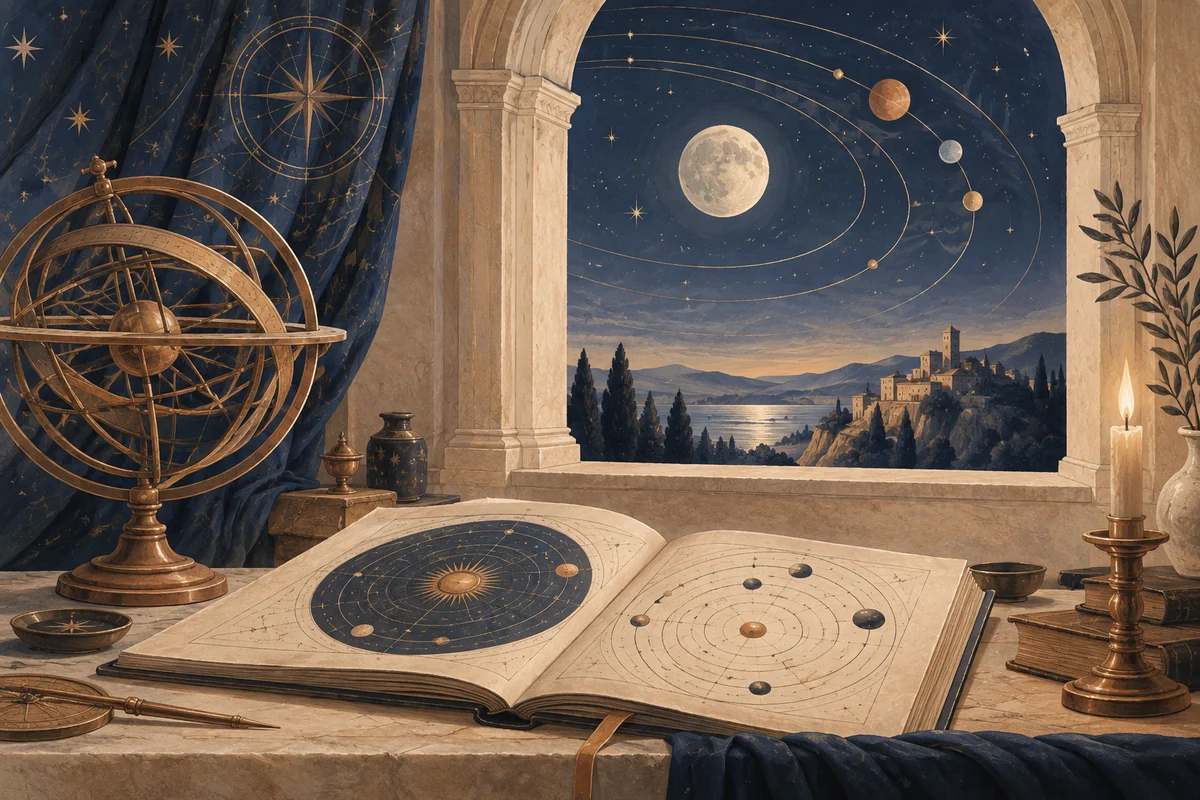
In traditional practice, firdaria astrology is a medieval time-lord system that divides a human lifespan into distinct planetary chapters based on whether an individual was born during the day or at night. Originating among Persian and Arabic astrologers such as Abu Ma'shar, this predictive technique assigns each classical planet a fixed allotment of years to govern personal development. By identifying your current planetary ruler, practitioners describe recurring themes, psychological thresholds, and constructive periods of self-reflection.
The Origins of Medieval Planetary Periods
Firdaria, sometimes spelled firdar, represents one of the foundational time-lord systems of the medieval astrological tradition. While Hellenistic astrologers relied heavily on techniques like circumambulations and zodiacal releasing, Persian and Arabic practitioners developed firdaria to measure the unfolding of human potential over an established seventy-five-year continuum. Renowned scholars such as Abu Ma'shar and Al-Biruni preserved these methods, translating earlier Mesopotamian and Sasanian materials into sophisticated treatises that eventually traveled into medieval Europe through Latin translations.
The underlying premise of this tradition is that time is neither uniform nor strictly linear in its qualitative experience. Instead, traditional practitioners viewed human life as an unfolding tapestry overseen by rotating cosmic guardians. Each planet takes its turn at the helm, bringing forward the psychological inclinations, relational patterns, and worldly focus associated with its traditional sphere. Understanding this historical lineage helps modern students appreciate the elegant order medieval thinkers perceived in the passage of earthly time.
Today, contemporary astrologers approach the firdaria sequence not as fatalistic prophecy, but as an evocative roadmap of human maturation. By recognizing that different seasons of life call for different virtues, you can work constructively with each planetary climate. When reflecting on your past, tracing these historical cycles often illuminates why certain years felt distinctly introspective, ambitious, or relational, providing reassuring structural context for your personal memories and creative accomplishments.
The Difference Between Day and Night Charts
Before you can calculate your planetary periods, you must determine the astrological sect of your birth chart. Sect is a fundamental concept in traditional astrology that separates charts into diurnal, or daytime, and nocturnal, or nighttime, categories. If the Sun is positioned above the horizon, defined by the axis between the Ascendant and Descendant, you have a day chart. If the Sun rests below the horizon, your chart belongs to the night sect.
This diurnal and nocturnal division dictates the order in which the planets govern your life chapters. Day charts begin their firdaria cycle with the Sun, honoring the supreme luminary of the diurnal sect, followed by Venus, Mercury, the Moon, Saturn, Jupiter, and Mars, concluding with the lunar nodes. Conversely, night charts commence with the Moon, celebrating the dominant luminary of the night sky, and follow the sequence through Saturn, Jupiter, Mars, the Sun, Venus, and Mercury.
Because the starting point alters the entire sequence, two people born in the same year may navigate radically different planetary chapters. A daytime infant begins life learning solar lessons of visibility, vital expression, and identity formation, while a nocturnal infant begins under lunar themes of physical nurturing, instinctive responsiveness, and emotional bonding. Astrologers view sect as the foundational lens that brings harmony and coherence to the entire firdaria chronology.
How Firdaria Astrology Divides the Human Lifespan
In firdaria astrology, each classical planet and the lunar nodes receive a fixed number of solar years based on ancient metaphysical associations. The Sun governs for ten years, Venus for eight, Mercury for thirteen, the Moon for nine, Saturn for eleven, Jupiter for twelve, and Mars for seven years. Additionally, the North Node rules for three years and the South Node for two years. Together, these allotments total seventy-five years, completing a comprehensive cycle of human adulthood.
When a person lives beyond seventy-five years, the entire cycle begins anew, starting once again with the primary sect luminary. The duration of each planet reflects traditional views on maturity and earthly endurance. For example, Mercury is granted thirteen years because of the broad, intricate development of language, trade, and intellectual agility, whereas Mars receives a brief seven years due to its volatile and demanding energetic nature.
Mapping your life against this chronological schema allows you to view your personal narrative through a wide-angle lens. Instead of judging your productivity by modern standards of relentless, identical output, firdaria honors the reality that a Saturnian decade demands patient endurance and structural revision, whereas a subsequent Jupiterian chapter invites generous philosophical expansion and social renewal. This traditional structure offers permission to honor the season you currently inhabit.
Understanding Planetary Sub-Periods and Finer Timing
While a major planetary chapter defines the broad overarching climate of a decade, firdaria offers granular timing through sub-periods, traditionally known as participating rulers. Each primary period is subdivided into seven equal segments of time, with the exception of the nodes, which do not subdivide. The primary planet rules the first sub-period, followed in descending order by the remaining planets according to the traditional Chaldean order of the cosmos.
For instance, during a daytime person's ten-year Sun firdaria, the primary solar ruler presides over the entire decade, but each sub-period lasts approximately one year, five months, and four days. The first sub-period is Sun-Sun, creating an intense distillation of solar vitality. This is followed successively by Sun-Venus, Sun-Mercury, Sun-Moon, Sun-Saturn, Sun-Jupiter, and Sun-Mars. Each sub-period acts as a conversational partner, infusing the main theme with its specific flavor.
Practitioners describe these sub-rulers as the practical administrators of the primary lord's vision. If your primary firdaria ruler is Jupiter, promising broad educational and ethical growth, entering a Saturnian sub-period might manifest as disciplined study, rigorous exams, or setting realistic boundaries around your ambitions. Analyzing sub-periods prevents firdaria from feeling monolithic and provides precise, manageable chapters for yearly goal-setting and deliberate emotional reflection.
Interpreting Planetary Rulers in Your Natal Chart
To interpret what a specific firdaria chapter means for you, you must examine how that planet operates within your unique natal chart. The planetary symbols are not generic archetypes floating in isolation; they are deeply rooted in the signs, houses, and aspects of your birth map. A Venus firdaria for an individual with Venus dignified in Taurus in the Tenth House unfolds very differently than for someone with Venus in Aries in the Sixth House.
Astrologers begin by assessing the planet's essential dignity, noting whether it resides in its domicile, exaltation, detriment, or fall. Next, consider the houses the planet rules and occupies. If you enter a Saturn chapter, and Saturn rules your Seventh House of partnerships, your relationships will likely become a central arena for accountability, commitment, and mutual maturation. The house placement shows the tangible stage where the planetary narrative unfolds.
Finally, examine the aspects the active time lord receives from other natal bodies. Benefic connections from Jupiter or Venus can soften difficult transits during that chapter, suggesting resources, support, and internal resilience. Challenging aspects from Mars or outer planets might signify periods that demand rigorous boundaries and stress management. By anchoring the firdaria ruler to your natal chart, the abstract system transforms into a deeply personal psychological portrait.
Applying Firdaria Astrology to Your Personal Growth
Integrating firdaria astrology into your contemplative practice invites a compassionate perspective on personal evolution. Modern culture often demands that we remain perpetually extroverted, productive, and cheerful, but traditional time-lord methods remind us that human beings are seasonal creatures. When you find yourself in a nocturnal Saturn period or a challenging martial phase, you can release the guilt of moving slower and instead embrace the necessary work of pruning, strengthening, and resting.
To work constructively with your active cycle, consider asking yourself targeted reflective questions. If you are navigating a Mercury chapter, what skills, studies, or communication habits are asking for refinement? If you are moving through a lunar period, how can you better nurture your physical body, honor your domestic sanctuary, and process emotional vulnerability? Journaling through these inquiries aligns your conscious intentions with the archetypal rhythm of your current time lord.
Ultimately, the goal of exploring firdaria astrology is not to fear the future or await preordained events, but to cultivate self-awareness and wisdom. By recognizing that every planetary cycle has a definitive beginning, middle, and end, you gain patience during challenging intervals and humble gratitude during prosperous stretches. This medieval framework stands as a timeless mirror, helping you navigate life transitions with agency, curiosity, and grounded poise.
Frequently asked questions
What is the difference between firdaria and zodiacal releasing?
Both techniques are traditional time-lord methods, but firdaria is a medieval Persian planetary cycle based on fixed numerical years and natal sect. Zodiacal releasing is a Hellenistic technique that calculates periods based on the movement of the Lot of Fortune or the Lot of Spirit through the zodiac signs.
How do the lunar nodes function in firdaria?
The North Node and South Node appear near the conclusion of the seventy-five-year cycle, lasting three years and two years respectively. Unlike the seven classical planets, the nodes do not divide into sub-periods, representing concentrated periods of spiritual release, destiny, and karmic reorientation.
Can firdaria predict exact life events?
Traditional astrologers used firdaria alongside transits and solar revolutions to forecast timing, but modern practitioners regard it as a symbolic framework. It describes prevailing archetypal themes, psychological priorities, and developmental seasons rather than guaranteeing specific, unavoidable material outcomes.
What happens after the seventy-five-year firdaria cycle ends?
When you reach the end of the seventy-five-year sequence, the firdaria cycle resets and begins again from your natal sect ruler. For day charts, the second cycle opens with another ten-year Sun period, while night charts recommence with a nine-year Moon period at a mature octave.