Sun Sign vs. Moon Sign: What Is the Difference?
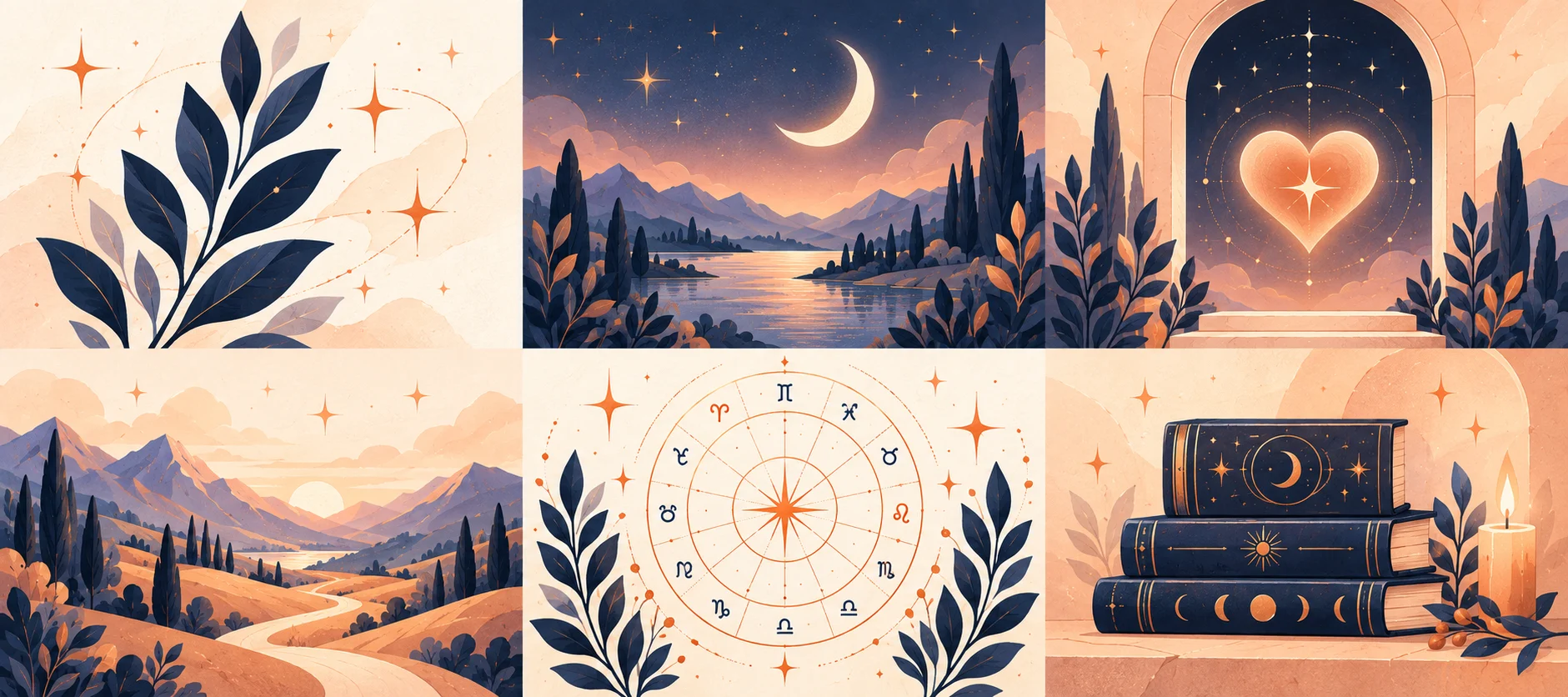
When comparing your sun sign vs moon sign, the fundamental difference lies between your conscious external identity and your private internal world. Your Sun sign represents your core ego, life purpose, and the deliberate energy you project into the world, whereas your Moon sign governs your instinctive emotional reactions, subconscious needs, and private self. Understanding both placements provides a much richer portrait of your personality than looking at your birthday alone.
Understanding the Fundamentals of Core Identity and Emotion
In popular astrology, most people only know the zodiac sign where the Sun was positioned on the day they were born. While this placement offers meaningful insight into your conscious motivations, it accounts for only one piece of a complete natal chart. The Sun and the Moon are traditionally referred to as the luminaries or lights of the chart, functioning as two halves of a psychological whole. Where the Sun illuminates the path forward through willpower and deliberate self-expression, the Moon reflects the quiet depths of memory, safety, and bodily intuition.
Think of the Sun sign as the executive director of your psyche and the Moon sign as your emotional home environment. When you meet an acquaintance or tackle a professional project, you naturally lead with your solar qualities. However, when stress strikes, when you retreat into private spaces, or when you relate to intimate loved ones, your lunar instincts take control. Many practitioners describe the Sun as the adult self you are learning to cultivate, while the Moon represents the emotional child within you that requires consistent comfort.
Recognizing this dual dynamic explains why many people feel alienated by standard horoscopes that focus solely on solar traits. If an introspective person with a Sun in energetic Aries has a contemplative Moon in sensitive Pisces, they may not identify with the stereotypical brashness attributed to Aries. The emotional climate established by the lunar placement continuously modifies how solar vitality expresses itself in day-to-day life.
The Sun Sign: Your Conscious Vitality and Life Purpose
Astrologically, the Sun sits at the center of the solar system, symbolizing your core identity, central willpower, and primary life force. Governed by the sign of Leo in traditional astrology, the Sun embodies the creative urge to establish an individual presence in the world. It answers the fundamental question of what energizes you and where you seek recognition. When you act in alignment with your solar qualities, you generally experience a sense of self-respect, confidence, and sustained vitality.
Because the Sun takes roughly thirty days to transit each zodiac sign, your birth date easily determines its placement. This regular movement mirrors the steady, conscious effort required to actualize your full potential over a lifetime. Solar energy is not automatic or passive; it represents a lifelong project of character development. For instance, someone with the Sun in practical Capricorn must consciously develop discipline, strategic patience, and structural integrity to feel genuinely fulfilled as an adult.
Your solar placement also reveals how you interpret meaning and leadership in your life. It shapes the conscious values you hold dear and the principles for which you are willing to stand up. When working through personal challenges, looking to your Sun sign provides clarity on how to regain confidence and direct your focus toward tangible, fulfilling outcomes.
The Moon Sign: Your Subconscious Processing and Instincts
The Moon moves swiftly, spending approximately two and a half days in each zodiac sign, which reflects its association with fluctuating moods and immediate emotional impressions. In traditional astrology, the Moon is ruler of Cancer and governs the water element, symbolizing nourishment, cyclical changes, and the realm of memory. Your Moon sign describes how you digest everyday experiences on an instinctual level, revealing what makes you feel emotionally grounded, safe, and understood.
Unlike the deliberate clarity of the Sun, the Moon operates in the shadows of the subconscious mind. It governs your immediate gut reactions before your analytical brain has time to formulate a reasoned response. If you receive sudden bad news, your Moon sign dictates whether your natural reflex is to withdraw into silence, analyze the problem logically, express explosive anger, or seek reassuring physical connection from close friends.
Understanding your lunar placement is also essential for sustainable self-care and relationship wellness. While the Sun shows what you want out of life, the Moon describes what you fundamentally need to rest and recharge. A person with an analytical Moon in Gemini may soothe anxiety through conversation, reading, and intellectual engagement, whereas a person with an earthy Moon in Taurus requires sensory calm, stillness, and dependable creature comforts.
Sun Sign vs Moon Sign: How Elements and Modalities Interact
When examining sun sign vs moon sign interactions within a single natal chart, comparing their elements and modalities reveals how your conscious goals cooperate with your emotional needs. There are four astrological elements: fire, earth, air, and water. When your Sun and Moon share the same element or compatible elements, such as fire with air or earth with water, your daily desires and instinctual responses tend to work in mutual harmony without severe inner conflict.
Conversely, when your luminaries occupy contrasting elements, you may experience persistent internal friction that requires patient self-awareness. For example, consider an individual with a passionate Sun in Leo paired with an analytical Moon in Aquarius. The Leo Sun longs for personal applause, dramatic expression, and warm center-stage affirmation, yet the Aquarian Moon instinctively values detached objectivity, collective equality, and emotional reserve. Navigating these complementary polarities often becomes a central theme in personal maturity.
Modalities also influence how this dialogue unfolds across cardinal, fixed, and mutable signs. Cardinal placements initiate action, fixed placements preserve stability, and mutable placements adapt to change. If your Sun is cardinal and your Moon is fixed, your conscious mind may want to start ambitious new initiatives constantly, while your emotional instincts crave familiar routines. Studying these structural dynamics helps you embrace your multidimensional nature rather than judging yourself for having conflicting feelings.
How to Find and Calculate Both Signs in Your Birth Chart
Determining your Sun sign requires only your birth month and day, as the Sun follows a predictable annual journey through the twelve signs of the zodiac. Finding your Moon sign, however, requires precise birth data. Because the Moon moves so quickly across the celestial sphere, changing signs every sixty hours, an approximate guess is rarely enough. A shift of just a few hours can mean the difference between an adventurous Sagittarius Moon and an ambitious Capricorn Moon.
To calculate your placements accurately, gather your exact date of birth, year of birth, city of birth, and exact time of birth from an official birth certificate. With these details, you can generate a natal chart using reputable calculation tools or consult a professional astrologer. The resulting wheel chart will show the exact degree and zodiac sign of both your Sun and Moon, along with the astrological houses they occupy.
Once you obtain both signs, begin your reflection by journaling about their respective archetypes. Ask yourself whether your public persona feels distinct from the feelings you experience when you are alone in your bedroom. Notice how you respond when you are startled or hurt versus how you behave when you are delivering an intentional presentation. Comparing these real-world behaviors grounds your birth chart in tangible self-awareness.
Bringing the Sun and Moon Together for Daily Self-Reflection
Integrating your conscious vitality with your emotional instincts is one of the most rewarding practices in psychological astrology. Rather than favoring your solar ambitions over your lunar vulnerabilities, true inner balance comes from creating a respectful dialogue between both energies. Honoring your Sun sign gives you direction and self-respect, while honoring your Moon sign ensures that your emotional foundation remains resilient enough to sustain that journey.
Whenever you find yourself feeling depleted or dissatisfied despite reaching personal milestones, check in with your lunar placement. It is common to pursue solar goals that impress others while completely neglecting the quiet requirements of your Moon. For instance, an industrious Sun in Virgo might excel at completing detailed tasks at work, but if paired with a sensitive Moon in Cancer, working long hours without comforting family connection will eventually lead to emotional exhaustion.
In closing, exploring your sun sign vs moon sign dynamic allows you to move past simplistic characterizations and embrace your true psychological complexity. Divination and astrological charts serve best as mirrors for contemplation, offering symbolic language to help you navigate your inner world. By listening to both your solar spark of ambition and your lunar rhythm of emotional restoration, you can live with greater clarity, empathy, and self-acceptance.
Frequently asked questions
Which is more important, your Sun sign or your Moon sign?
Neither sign is more important than the other; they serve complementary functions. Your Sun sign represents your conscious ego, life purpose, and outward personality, while your Moon sign governs your emotional instincts, subconscious habits, and private needs. A healthy personality requires balancing your conscious goals with your emotional well-being.
Can your Sun sign and Moon sign be the same?
Yes, your Sun and Moon can be in the same sign, an alignment that occurs during a New Moon. People with this combination possess focused energy, as their conscious ambitions and instinctual emotions share identical elemental and modal traits, though they may need deliberate effort to cultivate alternative perspectives.
Why do I feel more like my Moon sign than my Sun sign?
Many people identify more strongly with their Moon sign during childhood, periods of heightened stress, or within close private relationships where vulnerability emerges. Additionally, if your Moon sign has several neighboring planets or sits near the chart angles, its emotional themes may dominate your subjective self-perception.
Do I need my exact birth time to know my Moon sign?
Because the Moon traverses a complete zodiac sign in approximately two and a half days, knowing your exact birth time is strongly recommended. If you were born on a day when the Moon transitioned between two signs, an accurate birth time is necessary to confirm your correct placement.