What Is a Universal Year in Numerology? Global Energy
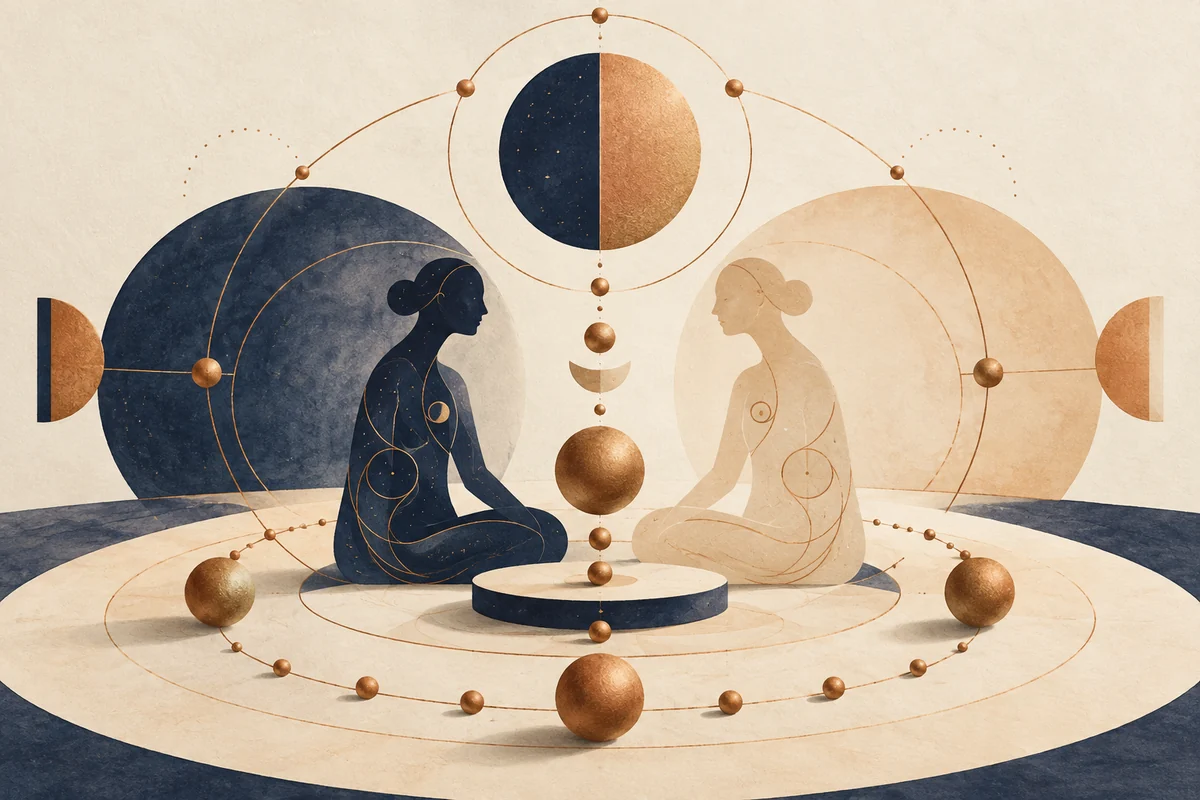
In numerology, understanding what is a universal year begins with recognizing the overarching energetic frequency and shared themes that influence the global collective throughout a single calendar year. Calculated by adding together all four digits of a given year and reducing the sum to a single digit or master number, it reflects the social climate, collective lessons, and widespread cultural shifts that people experience together. While personal numbers describe individual journeys, the universal vibration describes the broader environment through which everyone navigates.
Calculating the Collective Number Step by Step
In Pythagorean numerology, calculating the global vibrational frequency for any calendar year involves a simple arithmetic method known as digit reduction. Practitioners take the complete four-digit calendar year according to the Gregorian calendar and sum every individual numeral. For example, to calculate the vibration for the year 2025, one calculates two plus zero plus two plus five, which equals nine. Because nine is already a single digit, it requires no further addition. This final single digit identifies the primary energetic keynote that numerologists associate with global societal movements and collective experiences.
When a sum results in a double-digit number, the practitioner repeats the addition process until arriving at a single base numeral from one to nine, unless it forms a master number. Consider the year 2026 as a practical illustration: adding two, zero, two, and six yields ten. Because ten consists of two digits, one and zero are added together, resulting in a single-digit frequency of one. Every person on the planet shares this overarching calendar baseline, providing a unified symbolic context through which cultural events, technological developments, and global economic attitudes unfold.
It is essential to recognize that numerology relies on shared temporal agreements rather than physical astronomical forces. Because humanity largely tracks civil time, commerce, and international legal systems through the Gregorian calendar, practitioners view this synchronized global measurement as a massive collective focus. When billions of individuals mark their daily calendars by the same numerical structure, that shared framework creates a symbolic resonance. Practitioners do not view the number as an unavoidable fate, but rather as an invitation to notice broad psychological patterns emerging across societies.
Understanding What Is a Universal Year Versus a Personal Year
To comprehend what is a universal year, one must contrast it with the concept of a Personal Year. While both cycles utilize the nine-year developmental rhythm in numerology, they operate on entirely different planes of human experience. A Personal Year reflects an individual's unique developmental chapter, calculated by combining an individual's birth month and day with the current calendar digits. Consequently, two people living in the same household may navigate entirely different personal phases, such as one pursuing major professional ambition while the other enters a period of quiet reflection.
In contrast, the Universal Year provides the macrocosmic environment in which all individual stories unfold. Many readers describe this dynamic using the metaphor of climate and personal attire. The universal vibration functions like the seasonal weather outdoors, establishing whether humanity is facing collective rain, cold, or intense heat. Your personal cycle, meanwhile, represents what you choose to wear and the specific tasks you undertake while navigating that weather. Understanding the outer environment allows you to contextualize why certain societal currents feel easeful or challenging alongside your individual goals.
Harmonizing these two distinct cycles often offers valuable clarity for self-reflection. For instance, an individual experiencing a Personal Year 1 centered on bold beginnings while the collective operates under a Universal Year 9 of closure might feel tension between personal momentum and global endings. Rather than interpreting this friction as a setback, the practitioner recognizes the invitation to release obsolete habits before launching ambitious initiatives. Recognizing how the global rhythm interacts with personal progress helps prevent frustration and cultivates greater patience with external circumstances beyond personal control.
The Early Collective Cycle from 1 to 4
The universal nine-year cycle begins with a Universal Year 1, a collective interval characterized by pioneering enterprise, innovation, and fresh starts. During this phase, global society often witnesses the emergence of novel technologies, newly founded political movements, and a shared desire for independence. Because it represents the metaphorical planting of seeds, this period encourages societies to embrace bold action and move past previous stagnation. People frequently feel a renewed sense of collective courage, though challenges may arise regarding unilateral decision-making or excessive individualism on the global stage.
Following initial creation, a Universal Year 2 shifts the collective atmosphere toward diplomacy, cooperation, and patience. Where the preceding year emphasized unilateral initiative, the second year highlights partnerships, treaty negotiations, and conflict resolution. Societal conversations often center on peace, fairness, and mutual interdependence. Because the vibrational tempo slows down significantly, frustration can surface when large-scale projects require extensive committee reviews or compromises. Symbolically, this period invites humanity to learn the delicate art of listening and building harmonious relationships rather than forcing immediate outcomes.
The cycle then progresses through contrasting foundational energies during Universal Years 3 and 4. A Universal Year 3 brings widespread creative expression, social communication, and cultural enthusiasm, often sparking notable artistic movements alongside lively public discourse. Conversely, a Universal Year 4 demands practical discipline, structural integrity, and hard labor. Under the four vibration, communities frequently examine foundational institutions, financial systems, and infrastructure. Societies are challenged to establish secure, realistic systems that can endure adversity, prioritizing pragmatic reliability over exciting but fleeting innovations.
The Transformative Collective Numbers from 5 to 9
The midway turning point occurs during a Universal Year 5, bringing unpredictable change, dynamic expansion, and widespread demands for personal freedom. During this period, cultural norms undergo rapid renegotiation as technological innovations disrupt traditional industries and travel or communication patterns accelerate. Societies often experience collective restlessness, which can stimulate profound progress or fuel collective volatility. The overarching lesson centers on adaptability, asking communities to let go of rigid dogmas and navigate unexpected shifts with curiosity, flexibility, and constructive resilience.
Stability returns with a Universal Year 6, shifting collective attention toward social responsibility, public welfare, and community healing. During this phase, public awareness frequently gravitates toward family well-being, domestic affairs, healthcare systems, and educational reform. It represents a domestic reset on a global scale, where issues of justice, civic duty, and mutual caretaking dominate civic discussions. While this period can foster warm community solidarity, challenges can arise if governments or social institutions adopt overly paternalistic postures or impose excessive domestic burdens on citizens.
The cycle concludes through the deeply contemplative stages of Universal Years 7, 8, and 9. A Universal Year 7 fosters widespread intellectual analysis, philosophical inquiry, and spiritual introspection, prompting nations to question their underlying values. Next, a Universal Year 8 demands material accountability, financial realism, and the ethical distribution of power and resources, often exposing systemic imbalances. Finally, a Universal Year 9 embodies global culmination, forgiveness, and humanitarian release, urging societies to complete unresolved cycles, discard outmoded policies, and prepare the collective terrain for a new nine-year dawn.
Master Numbers and the Collective Experience
Within Pythagorean numerology, the double-digit numbers 11, 22, and 33 carry special designation as master numbers, representing heightened spiritual tension and potential. While master numbers appear frequently in individual core profiles, their presence in global calendar calculations is relatively uncommon. Some schools of numerology preserve these double digits whenever the annual digit sum yields 11 or 22, refusing to reduce them immediately to a single 2 or 4. For instance, practitioners debated whether 2009, which sums to eleven, should be read as a master frequency.
When a year retains master status, practitioners describe the collective atmosphere as carrying intense visionary challenges and amplified social awakenings. An eleven vibration in the collective sphere highlights heightened intuition, visionary idealism, and urgent ethical realizations across cultures. A twenty-two vibration, known as the master builder, emphasizes monumental structural achievements and tangible global collaborations that shape generations. However, because master numbers demand exceptional conscious integration, many numerologists suggest that humanity as a whole often defaults to experiencing the reduced base frequencies of two or four instead.
Differing traditions also disagree on whether non-Western calendar systems can or should be interpreted through standard Pythagorean techniques. Chinese, Hebrew, and Islamic calendars, for instance, track civil and ceremonial years according to completely distinct lunar and solar epochs. Responsible modern numerologists emphasize that Pythagorean cycles are tethered directly to the symbolic adoption of the Gregorian calendar. The universal vibration does not claim objective celestial supremacy; instead, it provides a lens for observing cultural narratives within the societies that intentionally coordinate their lives around this shared civil date.
Applying Collective Numerology to Everyday Life
Exploring what is a universal year allows individuals to discover a meaningful reflective framework for contextualizing complex world events without falling into helplessness or cynicism. When headlines highlight intense structural restructuring or dramatic cultural shifts, recognizing the archetypal qualities of the current universal cycle can provide helpful emotional perspective. Divination systems function best not as rigid predictive tools, but as symbolic mirrors that encourage contemplative discernment. They remind individuals that collective history moves through recurring evolutionary seasons rather than endless, meaningless chaos.
To apply this knowledge constructively, consider journaling about the intersections between your personal aspirations and current societal moods. Are you attempting to launch a risky new enterprise during a global year of cautious foundation building, or are you seeking quiet retreat during an active season of worldwide innovation? Acknowledging the ambient energy of your environment helps you adjust your timelines with grace. You can ask yourself where your community needs greater support and how your unique skills can address the specific ethical challenges emphasized by the collective cycle.
Ultimately, understanding what is a universal year empowers you to participate more thoughtfully in the collective story of human progress. Rather than passively absorbing global tension, you can intentionally channel the constructive virtues of the prevailing number. Whether the current calendar year calls humanity toward diplomatic reconciliation, innovative initiative, rigorous structural accountability, or humanitarian release, every person contributes to the collective tone. By aligning individual integrity with universal cycles, one transforms passive observation into active, compassionate citizenship.
Frequently asked questions
Does everyone experience the Universal Year in the exact same way?
No. While the Universal Year establishes a shared societal climate for everyone, individual experiences depend heavily on each person's Personal Year number and unique birth chart. An individual navigating a solitary Personal Year 7 will respond differently to an active, social Universal Year 3 than someone who is already in a compatible personal cycle.
When does the Universal Year energetic cycle begin and end?
In Pythagorean numerology, the Universal Year follows the standard Gregorian calendar, beginning on January 1 and concluding on December 31. However, many practitioners observe that collective energy shifts gradually, with emerging themes becoming noticeable during the final quarter of the preceding year as humanity anticipates the calendar transition.
Can a Universal Year predict specific global catastrophes or events?
No. Numerology does not provide literal or fatalistic event predictions. Instead, it describes archetypal themes, psychological climates, and symbolic lessons that societies face. A Universal Year indicates the general flavor of collective challenges and opportunities, offering a reflective framework rather than concrete forecasts of historical events or disasters.
What should I do if my Personal Year clashes with the Universal Year?
Contrasting numbers are not negative; they simply highlight different areas of attention. If your personal number emphasizes rest while the collective year emphasizes rapid expansion, use the tension constructively. Honor your personal need for renewal while remaining mindfully aware of the dynamic, fast-paced environment operating around you.