Three Stages of the Fool's Journey: Mind, Heart, Spirit
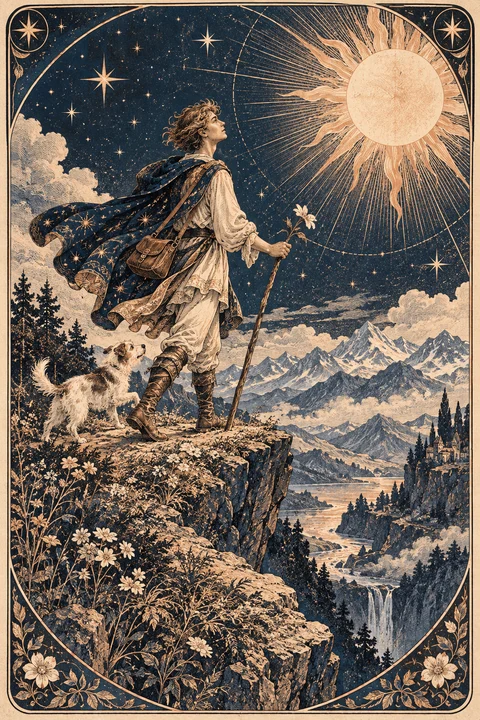
The three stages of the Fool's journey divide the twenty-two cards of the Major Arcana into three distinct developmental chapters known as septenaries. Beginning with conscious worldly mastery in the first seven cards, the journey moves through subconscious crisis and emotional testing in the second seven, culminating in superconscious awakening and spiritual integration in the final seven. This classical framework helps readers interpret individual cards as part of an overarching path of psychological and spiritual maturation.
Understanding the Structure of the Fool's Journey
In modern Tarot study, the Major Arcana is widely understood as an allegory for human life and self-realization, a concept popularized by twentieth-century occultist Eden Gray and expanded through archetypal psychology. The sequence begins with The Fool, numbered zero, who embodies pure potential, innocence, and unconditioned spirit. As The Fool steps out onto the path, the remaining twenty-one cards unfold in three balanced sets of seven, known as septenaries.
Each septenary corresponds to a distinct realm of human consciousness. The first septenary represents the conscious mind, outer development, and social integration. The second septenary plunges downward into the subconscious mind, confronting moral dilemmas, personal mortality, and emotional transformation. The third septenary ascends into the superconscious mind, exploring universal forces, liberation from illusion, and ultimate unity with life.
Rather than viewing the Major Arcana as an unpredictable collection of random symbols, this threefold division provides an orderly map of maturation. By understanding where a card falls within these three tiers, readers can instantly glean the core developmental challenge facing an individual, discerning whether a life event calls for practical effort, internal introspection, or cosmic perspective.
The First Stage: Conscious Mastery and the Outer World
The first stage of the Fool's journey encompasses The Magician through The Chariot. Here, The Fool enters physical existence and develops a functional ego, gathering the tools required to navigate secular society. In The Magician and The High Priestess, The Fool encounters the elemental polarities of conscious volition and intuitive receptivity. These archetypal figures teach the nascent self how to direct will outward into matter while respecting the quiet, unexpressed currents of the inner world.
As the journey deepens, The Empress and The Emperor provide foundational socialization, representing nurturing creativity and institutional structure. The Fool learns the comforts of natural abundance alongside the discipline of civil boundaries. Soon after, The Hierophant introduces organized wisdom, cultural mores, and traditional education, presenting the collective beliefs that hold human communities together.
The first tier concludes with personal choice and outward triumph in The Lovers and The Chariot. In The Lovers, the individual must establish personal values and make sovereign choices regarding desire and partnership. Finally, in The Chariot, the conscious ego achieves victory, successfully harnessing opposing forces to establish an independent identity in the public sphere. While this triumph is real, it marks only the completion of outward socialization, setting the stage for deeper internal reckoning.
The Second Stage: Subconscious Crisis and Inner Searching
Having conquered the external environment, the individual encounters the second stage of the Fool's journey, which extends from Strength through Temperance. In this phase, the worldly triumphs of the ego are tested, challenged, and refined through direct confrontation with the subconscious. In the Rider-Waite-Smith system, Strength opens this cycle by demonstrating that true mastery requires gentle self-compassion, patience, and the taming of instinctual passions rather than brute willpower.
Following this realization, The Hermit turns the seeker inward, away from the social applause celebrated in The Chariot. Withdrawing into contemplation, the traveler seeks personal truth that exists independently of cultural dogma. This solitary searching prepares the seeker for the Wheel of Fortune, where the illusion of complete personal control is dismantled by the cyclical, unpredictable nature of external fortune and destiny.
The subsequent sequence confronts the shadow directly. Justice demands absolute honesty, moral discernment, and accountability for one's actions. Stripped of rationalization, the seeker enters The Hanged Man, willingly surrendering personal ambition in exchange for an inverted, enlightened perspective. This surrender makes room for Death, the natural elimination of outworn habits and obsolete ego structures. The stage closes with Temperance, an emblem of emotional equilibrium and alchemical synthesis that blends opposing energies into an integrated inner life.
The Third Stage: Superconscious Awakening and Cosmic Harmony
The final stage of the Fool's journey begins with The Devil and culminates with The World, tracing the release from existential bondage into spiritual wholeness. This tier addresses the superconscious mind, where individual identity harmonizes with transpersonal forces. Before reaching spiritual liberation, however, the seeker must confront The Devil, which illustrates how unresolved fear, material attachment, and unconscious illusions bind the psyche in voluntary chains.
When avoidance is no longer sustainable, The Tower strikes, shattering brittle illusions and false certainties with undeniable clarity. While often experienced as a crisis, this sudden collapse liberates the spirit from narrow boundaries, clearing the ground for authentic rebirth. Immediately after the storm, The Star offers peaceful renewal, washing away grief and restoring hope through genuine faith and connection to the cosmos.
The ascent continues through the shifting psychological landscapes of The Moon, where remaining irrational fears and latent ancestral impressions are purified in the twilight. Emerging from the dark night of the soul, The Sun radiates joy, clarity, and revitalized vitality. In Judgement, the individual hears a higher spiritual calling, shedding the last remnants of past guilt through self-forgiveness. Finally, The World completes the dance, representing total integration, cosmic awareness, and the joy of coming full circle back to unburdened innocence.
Practical Ways to Apply the Three Stages in Tarot Readings
Incorporating this tripartite model into personal readings transforms how you interpret the Major Arcana in daily spreads. When a reading is dominated by cards from the first septenary, the situation typically revolves around mundane actions, practical decisions, career ambitions, and communication within relationships. It suggests that your present task involves asserting your agency, clarifying your boundaries, or learning from established authorities.
Conversely, an abundance of cards from the second septenary suggests an internal psychological crisis, emotional maturation, or a call to self-examination. In such moments, forcing external outcomes often produces frustration; the real work lies in processing grief, taking radical personal responsibility, cultivating patience, or letting go of outdated attachments. The universe is inviting you to look inward rather than manipulate your environment.
When cards from the third septenary appear prominently, you are likely navigating major transpersonal transitions, spiritual initiations, or profound shifts in worldview. These cards ask you to surrender rigid control to larger evolutionary tides, trust in the clarity that emerges after sudden upheavals, and recognize that personal experiences are part of a broader human tapestry. You can reflect on which tier you inhabit by asking: Am I building an identity, breaking down an old self, or embracing a broader truth?
Reflecting on Your Personal Place in the Three Stages
Human life does not progress along a strictly linear path; we frequently revisit the three stages of the Fool's journey across different areas of our lives. You might occupy the confident mastery of The Chariot in your professional career while simultaneously passing through the profound surrender of The Hanged Man in your emotional relationships or experiencing the joyful awakening of The Sun in your creative endeavors.
Recognizing this non-linear rhythm relieves the pressure to achieve permanent spiritual perfection. The Fool always remains zero, signifying that every ending in The World inevitably births a fresh impulse to begin again with curiosity and wonder. Embracing each stage without judgment allows you to meet your current circumstances with greater gentleness, understanding that disorientation and crisis are essential precursors to genuine renewal.
To explore where you currently stand, pull a single Major Arcana card with the intention of illuminating your primary developmental focus. Consider whether the imagery reflects the active construction of your daily life, the deep recalibration of your emotional heart, or the expansive evolution of your spirit. In doing so, the cards serve as a compassionate mirror for your ongoing evolution.
Frequently asked questions
What are the three stages of the Fool's journey?
The three stages are the three septenaries of the Major Arcana. The first stage covers cards one through seven, focusing on conscious ego development and outer mastery. The second stage covers cards eight through fourteen, addressing subconscious exploration, moral choice, and inner crisis. The third stage covers cards fifteen through twenty-one, describing spiritual awakening and cosmic wholeness.
Where does The Fool fit into the three stages?
The Fool carries the number zero and stands outside the three septenaries as the eternal traveler. The Fool represents the spark of pure consciousness, unformed potential, and open-minded innocence that embarks on the journey, experiences every stage, and returns renewed at the completion of The World.
Why does card order matter in the Fool's journey?
The traditional numbering presents an intentional psychological progression. Early cards establish basic coping mechanisms and social standing, middle cards challenge and dismantle shallow assumptions through crisis, and final cards integrate those lessons into lasting spiritual wisdom and universal awareness.
Can you experience multiple stages of the journey at the same time?
Yes. Life is multifaceted, and people rarely experience personal growth in a single straight line. You may experience the conscious building of the first stage at work while navigating the profound internal surrender of the second stage in personal relationships or health matters.