The Devil Tarot Card Meaning: From Fear to Freedom
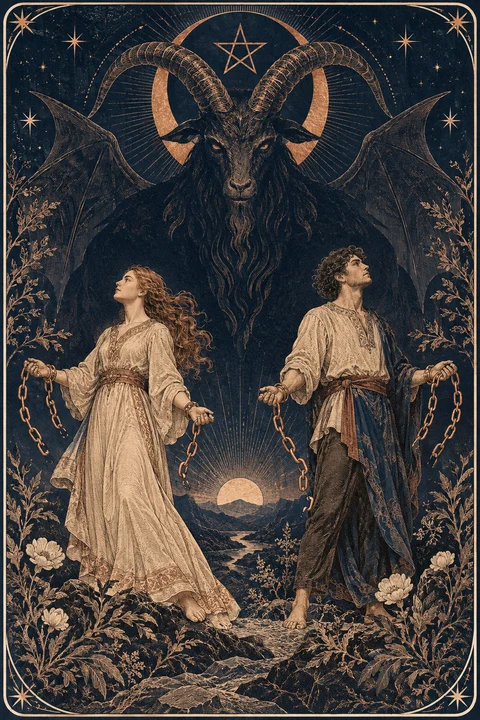
The Devil Tarot card meaning centers on perceived bondage, shadow impulses, and unhealthy attachments rather than literal evil or supernatural doom. Numbered fifteen in the Major Arcana, this card serves as a psychological mirror, highlighting the self-imposed limitations, fears, and material obsessions that keep you feeling trapped. By revealing where you have given your power away, The Devil invites you to recognize that the chains holding you are far looser than you believe.
Visual Symbolism of the Rider-Waite-Smith Card
In the classic Rider-Waite-Smith deck, Major Arcana fifteen presents an imposing, winged creature perched upon an altar. The horned figure blends human, caprine, and bat-like features, drawing inspiration from classical depictions of Pan, Baphomet, and the goat of Mendes. Below this figure stand a nude man and woman, often identified as Adam and Eve after the fall. Both figures are tethered to the stone pedestal by heavy iron chains draped around their necks. Upon closer inspection, however, those iron links are visibly wide enough to slip over their heads at any moment, suggesting their confinement is maintained by compliance rather than physical force.
The background is pitch black, representing the unconscious mind and the psychological depths where ignored desires fester. The inverted pentagram above the creature's forehead symbolizes the domination of matter over spirit, indicating an imbalance where physical cravings eclipse higher wisdom. In his left hand, the figure holds a downward-facing torch that burns without illuminating the room, generating heat and friction rather than clarity. Even the small tails sprouting from the human figures carry symbolic weight: the man's tail ends in flames, representing uncontrolled passion, while the woman's tail ends in grapes, evoking sensual indulgence and drunkenness.
Every element in this traditional visual composition points away from external damnation and toward psychological entrapment. The stone block upon which the creature perches is a half-cube, an incomplete geometrical solid that suggests a truncated perception of reality. When readers fixate on the creature's terrifying visage, they often miss the subtle humor and irony woven into the art by illustrator Pamela Colman Smith. The scene illustrates an optical illusion of the soul, demonstrating that people frequently remain in oppressive situations because familiar bondage feels safer than the uncertainty of genuine liberation.
Astrological Connections: Capricorn and the Shadow of Ambition
Astrologically, The Devil corresponds directly to Capricorn, an earth sign ruled by the planet Saturn. Capricorn embodies discipline, structure, social status, material achievement, and worldly responsibility. In its elevated expression, this cardinal earth energy builds lasting institutions and demonstrates profound perseverance. However, The Devil explores the shadow side of this archetype, where the pursuit of security hardens into greed, status symbols become golden handcuffs, and the desire for control calcifies into rigid authoritarianism or cynicism.
Saturn represents boundaries, time, and the consequences of our choices in the physical realm. When distorted through fear, Saturnian energy can manifest as a deep scarcity mindset, convincing someone that resources, love, and opportunities are profoundly limited. Many practitioners describe The Devil as the moment where an individual sacrifices spiritual authenticity for tangible gain or societal approval. You may stay at a soul-draining corporate job purely for the prestige, or remain in an emotionally bankrupt relationship because dividing assets feels too inconvenient.
Recognizing this Capricornian foundation helps demystify the card during readings. It transforms a frightening omen into a practical assessment of worldly pragmatism taken to an unhealthy extreme. Instead of predicting external catastrophe, the card asks whether your long-term ambitions have quietly turned into a prison of your own design. It challenges you to consider whether the structures you initially erected for self-protection are now suffocating your vitality and preventing personal growth.
Upright Meaning: Confronting Illusions and Dependencies
When The Devil appears upright in a general spread, it shines an uncompromising light on unhealthy patterns, addictions, and codependency. Traditionally, this card points to situations where you feel helpless, manipulated, or trapped by circumstance. The card invites you to look past the surface narrative and examine the secondary gains that keep you attached to destructive habits. Every pattern of avoidance, whether it involves alcohol, social media scrolling, chronic shopping, or toxic romance, offers a temporary numbness that masks deeper discomfort.
In relationship readings, an upright Devil frequently flags intense chemical attraction that lacks emotional health or mutual respect. It can signify relationships driven by possession, jealousy, dynamic imbalance, or trauma bonding. Practitioners often note that while the sexual chemistry under this card can be intoxicating, it frequently functions as an avoidance mechanism to sidestep vulnerability. If you draw this card regarding a partnership, it is prudent to evaluate whether the bond is grounded in mutual growth or mutual dysfunction.
Regarding career and personal finances, the upright card cautions against cutthroat behavior, predatory agreements, or prioritizing wealth at the expense of ethics. You might find yourself bound to an exploitative employer because the financial compensation keeps you compliant, or perhaps you are trapped in an escalating debt cycle fueled by compulsive spending. The Devil urges an honest inventory of your compromises, reminding you that trading personal integrity for external validation always extracts a heavy emotional toll.
Reversed Meaning: Reclaiming Agency and Breaking Chains
When The Devil appears reversed, the prevailing interpretation among modern Tarot readers shifts toward emancipation, awareness, and recovery. In this inverted orientation, the veil of illusion begins to tear, allowing you to clearly see the loose collar around your neck. You are recognizing that the toxic dynamic, self-sabotaging behavior, or dead-end career is no longer sustainable. The reversed card suggests that the initial terror of change is finally outweighed by the unbearable reality of remaining stagnant.
This reversal frequently marks the beginning of recovery from addictive habits or the courage to walk away from a manipulative environment. It signifies the moment an individual stops rationalizing bad behavior and embraces the uncomfortable work of personal accountability. However, liberation is rarely an instantaneous event without friction. Shedding long-standing defense mechanisms can feel disorienting, and walking away from familiar dependencies often requires navigating withdrawal, grief, and temporary emotional instability.
In some contexts, a reversed Devil can also warn of profound denial or clinging desperately to the final threads of an unsustainable habit. A reader must look at surrounding cards to determine whether the subject is actively cutting their ties or fighting tooth and nail to keep their illusions intact. Overall, though, the reversal carries an encouraging undertone of empowerment, suggesting that the door to the cage was never locked and that you are finally ready to step through it.
The Devil in the Fool's Journey: From Materialism to Illumination
Within the overarching narrative of the Major Arcana, The Devil occupies a crucial turning point directly following card fourteen, Temperance, and immediately preceding card sixteen, The Tower. In Temperance, the spiritual seeker learns balance, moderation, and the integration of opposing forces. Yet before the soul can attain authentic enlightenment, it must descend into the underworld of the psyche to confront everything it has repressed, denied, or projected outward onto others.
The Devil represents that descent into the shadow, as described in Jungian psychology. It forces the seeker to acknowledge their basest instincts, primal fears, and obsessive hungers rather than pretending to be pure spirit. If an individual attempts to skip this stage through spiritual bypassing, the unconscious forces do not disappear; they simply govern behavior from behind the scenes. Card fifteen insists that wholeness requires integrating both light and darkness rather than repressing the parts of ourselves that make us uncomfortable.
Once The Devil's illusions are acknowledged, the explosive awakening of The Tower becomes inevitable. When you realize that your perceived security is built on artificial bonds, the false foundations collapse to make way for genuine truth. Understanding this sequence illustrates that card fifteen is not a final destination of despair, but an indispensable threshold of self-awareness. Without confronting The Devil, the seeker can never experience the pure hope of The Star or the profound joy of The Sun.
Practical Self-Reflection and Shadow Work Questions
Working constructively with The Devil requires approaching the card without moral judgment, viewing its difficult imagery as diagnostic rather than punitive. When this archetype emerges in your daily draw, pause to examine where you feel the greatest powerlessness in your life. Ask yourself what you are currently tolerating simply because the alternative feels frightening or inconvenient. Journaling honestly about these friction points can reveal how your own choices contribute to the feeling of restriction.
To engage in meaningful self-reflection, consider several focused inquiry questions: What comforting belief or behavior am I using to numb my anxiety? Where in my daily routine have I traded personal autonomy for temporary security or social approval? If I stopped blaming other people or outside circumstances for my current dissatisfaction, what uncomfortable truth would I have to address? These questions shift the focus from victimhood to agency, initiating the internal process of releasing the chain.
You can also use this card as an anchor for intentional shadow work. Visualize the imposing figure from the card and imagine asking it what unmet need it is attempting to protect. Often, our most destructive vices began as clumsy childhood survival strategies designed to keep us safe from rejection, neglect, or harm. By extending compassion to those wounded parts of yourself while holding firm boundaries around your behavior, you transform the energy of the card from bondage into lasting psychological freedom.
Frequently asked questions
Does The Devil Tarot card predict bad luck or an actual curse?
No, The Devil does not predict curses, demonic presence, or objective bad luck. In traditional Tarot symbolism, the card serves as a psychological metaphor for self-delusion, compulsive habits, and unhealthy attachments. It highlights internal patterns that compromise your personal power rather than external supernatural forces.
What does The Devil card mean for love and romance?
In love readings, The Devil often signals intense physical passion accompanied by codependency, possessiveness, or emotional manipulation. It highlights connections driven by fear of loneliness rather than mutual respect. The card urges you to examine whether a relationship empowers you or locks you into unhealthy behavioral loops.
How should I respond when The Devil appears in my daily draw?
When drawn for your daily reflection, treat The Devil as an invitation to check your habits and emotional triggers. Notice where you reach for quick fixes to avoid uncomfortable feelings, whether through mindless scrolling, overworking, or negative self-talk, and consciously choose a more liberating response.
Why are the chains loose on The Devil card?
The chains around the figures' necks are intentionally depicted as loose to reveal that their bondage is voluntary. In the Rider-Waite-Smith tradition, this visual detail emphasizes that individuals remain trapped by fear, complacency, and habit, possessing the power to remove their chains whenever they choose.