How to Deliver a Ten of Swords Reading for Someone
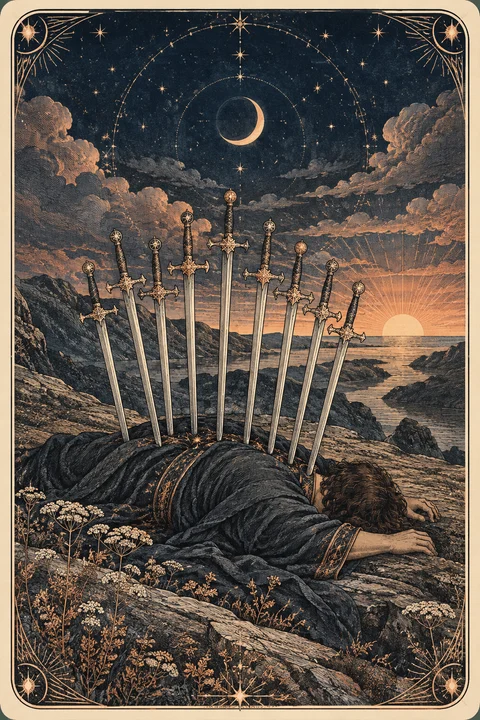
When you encounter the Ten of Swords reading for someone, present the card as an emblem of definitive closure, the passing of an exhausting ordeal, and inevitable renewal rather than impending disaster. In the Rider-Waite-Smith tradition, this card illustrates a situation that has reached its absolute limit, ensuring that the hardest phase is already behind the querent. By framing the card around emotional relief, mental release, and personal agency, you can help them welcome new beginnings without unnecessary anxiety.
Deconstructing the Traditional Rider-Waite-Smith Imagery
The imagery of the Ten of Swords often elicits an audible gasp from a querent who has never studied Tarot. In the classic Rider-Waite-Smith deck, a prone figure lies face down, blanketed in a red shroud, with ten golden pommels protruding from their back beneath an ominous black sky. Because the human brain instinctively registers this visual as graphic defeat or mortality, your primary task as an empathetic reader is to demystify the dramatic tableau before panic takes hold.
Take a moment to guide the querent's eyes away from the swords and toward the lower edge of the horizon. In Pamela Colman Smith's composition, the water is entirely calm, and golden light breaks across the distant mountains beneath the dark clouds. This visual contrast deliberately signals dawn. The storm has reached its peak, the dark night of the soul is fracturing, and sunlight is returning. When readers point this out, querents visibly relax as they recognize the subtle promise of peace.
Point out also that the figure's right hand forms a gentle gesture of release rather than a clenched fist of struggle. In esoteric symbolism, this relaxed hand represents conscious surrender. The fight is over, the painful resistance has ceased, and the person in the card has finally let go of a heavy burden. Breaking down these artistic details grounds the querent in a reflective mindset rather than visceral alarm.
Interpreting the Ten of Swords Reading for Someone with Care
Conducting a Ten of Swords reading for someone requires deep compassion and emotional attunement. When this card appears, the querent is often already feeling deeply depleted, misunderstood, or overwhelmed by a chronic challenge in their personal life. Validating their feelings should always precede any theoretical analysis. Acknowledge that the card honors real fatigue and validates that whatever struggle they have been navigating has genuinely pushed them to their limit.
Emphasize the numerological significance of the ten within the Minor Arcana. Tens represent culmination, finality, and the closing chapter of a journey. Because a suit cannot proceed past ten, the card guarantees that the difficulty cannot escalate any further. It marks rock bottom not as a permanent residence, but as solid ground from which the querent can finally begin to rebuild. This reassurance shifts their focus from dread to quiet relief.
Be careful to avoid sensational language like betrayal, catastrophe, or ruination unless the querent explicitly introduces those terms to describe their circumstances. Instead, describe the energy as an undeniable line in the sand. Explain that this archetype frequently appears when an unsustainable lifestyle, one-sided dynamic, or prolonged mental conflict has finally collapsed under its own weight, freeing the querent from maintaining an exhausting facade.
Grounding the Suit of Swords in the Mental Realm
A vital concept to explain to querents is that the Suit of Swords corresponds to the element of air, which governs intellect, self-talk, assumptions, and belief systems. Swords rarely describe physical injury or literal destruction in modern self-reflection. More often, they represent cognitive fatigue, overthinking, and the stories we construct about our circumstances. When ten swords appear, they often represent overanalyzing a problem to the point of complete mental exhaustion.
Many readers find that this card surfaces when someone has been running an old, agonizing narrative on a mental loop. Querents may be torturing themselves with what-if scenarios, self-blame, or obsessive attempts to solve a problem that is simply outside their direct control. You can explain that the swords symbolize thoughts that have run their course. The mind has exhausted every possible avenue of rumination, and further analysis will yield no additional clarity.
By moving the card into the intellectual domain, you empower the querent to evaluate their own belief patterns. Ask them if they have been carrying expectations that consistently leave them feeling depleted or defeated. When they see that the swords are made of thoughts and outdated expectations rather than inescapable destiny, they can choose to put those thoughts down and reclaim their peace of mind.
Constructive Scripts and Dialogue for Readers
When the card lands face up on your cloth, address the querent with calm authority before they jump to conclusions. You might say, this card looks severe, but its message is fundamentally compassionate and liberating. It tells us that a painful cycle has reached its absolute conclusion, and the hardest part of your journey is already behind you. Starting the interpretation with this framing immediately neutralizes anxiety.
Follow your initial statement with collaborative inquiries that place agency back in the querent's hands. Consider asking, where in your life have you reached a point of complete exhaustion, and what would happen if you stopped fighting that ending? You could also ask, what story about yourself or this circumstance are you finally ready to release? These questions invite self-inquiry rather than passive fear.
Listen actively to their response and bridge their lived experience back to the cards. If they mention leaving a grueling job or acknowledging that a friendship has run its course, affirm that the Ten of Swords celebrates the wisdom of recognizing when something is done. Conclude your dialogue by reminding them that surrendering a lost cause is not failure; it is an intelligent act of self-preservation.
Analyzing Reversals and Neighboring Influences
Contextual placement significantly refines the meaning of the Ten of Swords. If the card appears reversed, many practitioners interpret it as an active recovery phase or, conversely, a stubborn refusal to accept an inevitable end. An upright card marks the definitive ending itself, while a reversal often suggests that the querent is pulling the swords out one by one, slowly standing up, and reclaiming vitality after an extended season of hardship.
Take surrounding cards into account to shade your interpretation accurately. If the Ten of Swords rests beside restorative cards like The Star, the Four of Swords, or the Sun, the overarching message emphasizes deep healing, convalescence, and radiant hope on the other side of an ordeal. In such spreads, the narrative strongly favors relief, reminding the querent that their recuperation is already actively underway.
When the card sits near active Minor Arcana cards like the Eight of Wands or Three of Pentacles, it often denotes that a sudden ending will swiftly clear space for fresh collaborations and creative momentum. Explain to the querent that endings do not occur in an emotional vacuum; rather, they serve as the necessary clearing of ground so that healthier foundations can be established.
Moving Forward: Cultivating Healing and Closure
The ultimate objective of any session is to leave querents feeling resourced, clear-headed, and optimistic about their next steps. Endings can feel grief-inducing even when they are necessary and welcomed. Acknowledge that letting go of a dream, a dynamic, or a lingering habit often requires a period of gentle mourning, and reassure the querent that resting after a long battle is not only allowed, but essential.
Encourage the querent to establish healthy energetic boundaries as they navigate this closing chapter. The figure in the card is entirely still, reminding us that immediate action is rarely appropriate during rock-bottom moments. Suggest that they give themselves grace, prioritize basic self-care, and allow the metaphorical dust to settle before launching into their next endeavor. Solitude and silence are frequently the best remedies.
Whenever you conclude a ten of swords reading for someone, emphasize that the card clears the board completely. The slate is now clean, the past cycle can no longer harm them, and the horizon is brightening. When querents realize that this dramatic archetype actually marks the end of their suffering rather than its beginning, they leave the reading with profound peace and renewed courage.
Frequently asked questions
Does the Ten of Swords predict a physical injury or death?
No, Tarot cards speak in psychological and archetypal symbolism rather than literal predictions. The Ten of Swords belongs to the suit of air, which relates to thoughts, perspectives, and mental frameworks. It indicates the dramatic culmination of an intellectual struggle, the end of a belief, or release from an exhausting emotional cycle.
What if the querent bursts into tears when seeing the card?
Pause the reading and offer a calm, compassionate presence. Validate their emotional response by gently explaining that the card often mirrors profound exhaustion they may have been hiding. Assure them that the card's true purpose is to signal that the hardest part of their trial is finally over, providing permission to stop fighting.
How does the Ten of Swords differ from the Death card?
While both cards indicate definitive endings, Death is a Major Arcana card representing natural transformation, evolution, and inevitable organic change. The Ten of Swords is a Minor Arcana card that focuses specifically on mental exhaustion, rock-bottom thresholds, and the conscious recognition that an unsustainable intellectual or situational trial has finally concluded.
What does the Ten of Swords reversed mean for a querent?
A reversed Ten of Swords traditionally signifies emerging from a prolonged hardship, recovering personal power, and beginning the journey toward renewal. However, it can also warn against clinging to an expired situation or reviving old drama that should be left in the past. It calls for mindful healing and forward motion.