Five of Swords as Advice Feelings Outcome: Tarot Guide
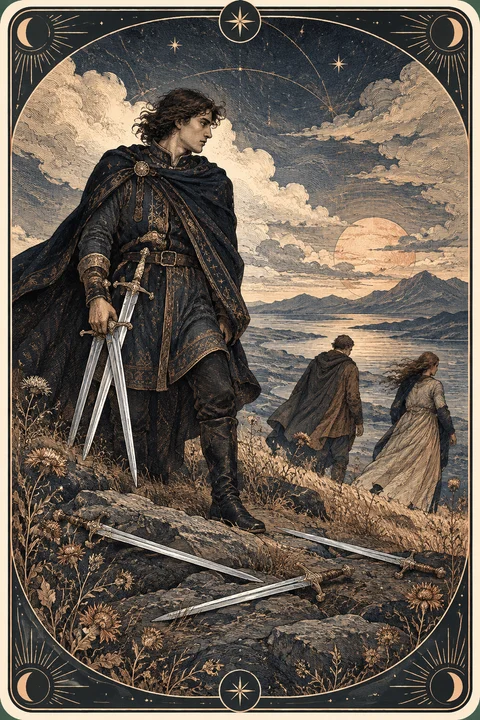
In Tarot, the Five of Swords represents conflict, hollow victory, pride, and the emotional cost of winning at all costs. When interpreted as advice, feelings, or an outcome, this card urges you to examine whether a struggle is truly worth your energy or if walking away protects your peace. Understanding the Five of Swords as advice feelings outcome helps you navigate difficult interpersonal dynamics with self-awareness and tactical restraint.
Understanding the Five of Swords in the Rider-Waite-Smith Tradition
The Five of Swords belongs to the suit of Swords, which is traditionally linked to the element of Air, governing intellect, communication, truth, and mental conflict. In the classic Pamela Colman Smith illustration, a smirking figure collects swords while two defeated opponents walk away in dejection beneath an uneasy, windblown sky. The scene captures the essence of a Pyrrhic victory, where one party technically triumphs, but the victory comes at the severe expense of mutual respect and harmony.
Numerologically, the number five disrupts the stability established by the fours, signaling friction, sudden crisis, and uncomfortable change across the Minor Arcana. In the realm of Swords, this disruption manifests as harsh words, broken trust, hostility, or competitive ambition that disregards empathy. Readers often observe that this card exposes the darker corners of human pride, where the desire to be proven right supersedes genuine connection and fair play.
When this card appears in a reading, it rarely promises gentle comfort, but it offers valuable analytical clarity. Rather than predicting inevitable disaster, practitioners describe the card as a mirror reflecting underlying tensions, unspoken hostilities, or manipulative behavior in your current environment. Recognizing these patterns allows you to evaluate your choices thoughtfully and dismantle patterns of hostility before they inflict lasting damage on your relationships.
The Five of Swords as Advice: Picking Battles and Preserving Energy
When drawn in the advice position, the Five of Swords strongly counsels you to choose your battles with rigorous discipline. Not every disagreement demands a passionate defense, and continuing an escalating quarrel may drain your vitality without producing any constructive result. The card suggests that the most mature response is often stepping away from arguments that do not serve your long-term wellbeing, even if walking away feels unsatisfying to your personal pride.
Alternatively, this card can serve as a firm warning against using unfair methods to achieve your objectives. If you find yourself tempted to manipulate facts, employ stinging insults, or exploit another person's vulnerability to secure an advantage, the advice here is clear: stop and reconsider. Winning through deceit or intimidation will inevitably leave you isolated, surrounded only by lingering bitterness and broken trust that cannot be repaired easily.
Practitioners also interpret the card as guidance to cut your losses when a project, conversation, or alliance is clearly failing. Pouring more emotional energy into an unworkable scenario merely compounds the exhaustion you already feel. By accepting the present setback with dignity, you protect your core boundaries and retain the mental resources required to start fresh in an environment founded on mutual integrity.
The Five of Swords as Feelings: Resentment, Vindication, and Isolation
In the position of feelings, the Five of Swords frequently uncovers painful emotions such as spite, humiliation, defensiveness, and lingering resentment. Someone involved in the situation may feel deeply wounded by sharp remarks, feeling as though their perspective was entirely dismissed during an emotional clash. There is often a palpable sense of injustice present, accompanied by an urge to withdraw completely to prevent further psychological vulnerability.
Conversely, if the person represents the victor in the illustration, the emotional landscape may consist of smug satisfaction tainted by an underlying sense of alienation. A person in this posture may feel that they dominated an exchange or successfully protected their interests, yet they sense the chilling distance their aggressive behavior has introduced. Triumph feels remarkably empty when it leaves nobody left to share your joy or offer honest support.
Many readers also note that this placement can signify pervasive paranoia or an expectation of sabotage. When individuals operate under this influence, they routinely assume bad faith from others, creating a defensive posture that actually provokes the very hostility they fear. Exploring these emotions requires gentle honesty to untangle past traumas from current reality so healthier emotional attachments can slowly replace defensive reflexes.
The Five of Swords as an Outcome: Hollow Triumphs and Stalemate
When the card falls in the outcome position, it warns that pursuing the current trajectory will likely lead to a hollow triumph or an exhausting stalemate. Even if you achieve your stated goals, the resulting environment may prove hostile, alienated, and drained of genuine goodwill. The outcome suggests that aggressive competition or stubborn rigidity could cost more than any prize is actually worth in real life.
In relationship contexts, this outcome frequently signifies persistent arguing, lingering grudges, or an eventual separation characterized by mutual disillusionment. When dialogue descends into scoring points rather than fostering understanding, both partners end up feeling battered and misunderstood. The card cautions that continuing without active mediation or profound empathy will likely crystallize this unpleasant division into permanent estrangement.
In workplace or group dynamics, this outcome denotes team fragmentation, toxic office politics, and declining morale. When individual ambition eclipses collaborative spirit, projects suffer and team members begin viewing each other as adversaries rather than colleagues. Acknowledging this potential outcome early grants you the opportunity to change tactics, prioritize transparent communication, and rebuild damaged working relationships before permanent divisions take root.
Reflective Exercises for Working with Swords Symbolism
Working deeply with Tarot involves personal contemplation and honest self-assessment rather than fatalistic surrender. When the Five of Swords surfaces, set aside quiet time to journal about your current conflicts and the underlying motives that drive them. Inquire within yourself whether you are fighting for truth and justice or simply defending your vulnerable ego against perceived slights that carry little real significance.
Consider asking yourself targeted self-reflection questions to gain objective perspective on your situation. What would happen if I deliberately surrendered the urge to have the final word in this debate? Am I holding onto a grievance that poisons my own thoughts more than it affects anyone else? Are there healthier boundaries I need to establish so that contentious people no longer pull me into their emotional storms?
You might also engage in a conscious visualization exercise where you lay down the metaphorical swords cluttering your mind. Imagine stepping away from an empty battleground and walking toward a quiet, sunlit horizon that represents emotional clarity and self-command. Such exercises reinforce the understanding that true strength frequently manifests as calm non-engagement rather than ferocious combative resistance against unnecessary adversity.
Navigating the Five of Swords as Advice Feelings Outcome in Everyday Life
Synthesizing the Five of Swords as advice feelings outcome across different positions in a spread offers profound psychological insight into challenging circumstances. Whether this symbol highlights bitter emotions, counsels immediate retreat, or flags an undesirable ending, its presence serves as an empowering invitation to cultivate discernment. You hold the authority to decline toxic invitations into conflict and preserve your emotional resources for situations that nurture mutual growth.
In romance, partnership, and professional endeavors alike, this archetype reminds us that how we win matters just as much as whether we win. True success enriches our community and elevates our spirits, whereas aggressive, unprincipled competition consistently breeds isolation and hidden enmity. By choosing thoughtful restraint over reactive wrath, you master the higher lessons embedded within the stormy suit of Swords.
Ultimately, understanding the Five of Swords as advice feelings outcome allows you to transform difficult confrontations into opportunities for profound personal maturation. Rather than fearing the card's stark imagery, treat it as a trusted advisor signaling that it is time to redefine what true victory looks like in your life. With self-reflection and principled communication, you can navigate turbulent interactions with quiet dignity, wisdom, and peace.
Frequently asked questions
Is the Five of Swords always a negative card?
Traditionally, readers view the Five of Swords as a challenging omen due to its themes of conflict and hollow victory. However, it can serve as a positive wake-up call by highlighting unhealthy dynamics, encouraging necessary boundaries, and prompting you to walk away from conflicts that drain your energy.
What should I do if the Five of Swords appears as advice in a love reading?
As relationship advice, the card urges you to drop the urge to win every disagreement. Prioritize listening over scoring verbal points, examine whether unhelpful ego battles are hurting your intimacy, and step back from toxic cycles where hurtful words damage mutual trust and emotional vulnerability.
How does the reversed Five of Swords change its interpretation?
When reversed, many readers interpret the card as moving past conflict, letting go of long-held resentments, or reaching a point of emotional reconciliation. It can also indicate recovering from a painful betrayal or realizing that continuing an old quarrel is no longer serving anyone involved.
Can the Five of Swords suggest manipulation or dishonesty?
Yes, practitioners frequently associate this card with deceptive tactics, unfair competition, or gossiping. It alerts you to be watchful of bad faith in negotiations, verify facts before making commitments, and examine whether anyone around you is pursuing self-interest at the expense of fairness.