Nine of Swords as Advice Feelings Outcome in Tarot
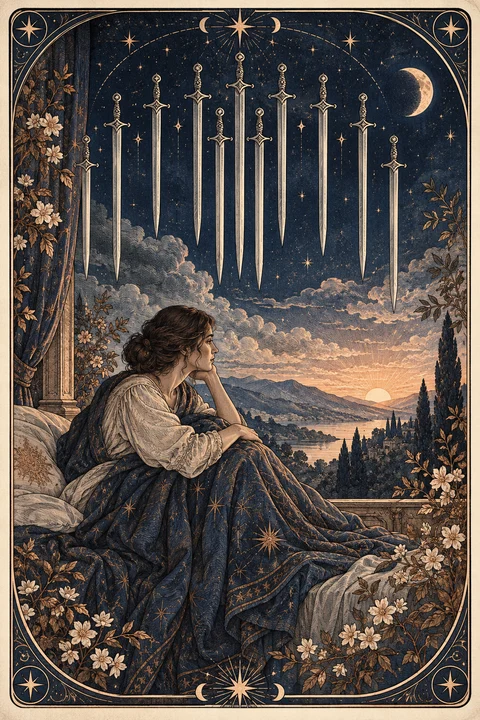
When interpreting the Nine of Swords as advice feelings outcome in a Tarot spread, readers recognize an emblem of acute mental tension, worry, and midnight vulnerability. This card traditionally captures how our thoughts can spiral into agonizing narratives that feel overwhelmingly real yet often lack physical substance. Understanding how this card functions across different spread positions helps you separate productive caution from paralyzing self-doubt.
Understanding the Nine of Swords in the Suit of Swords
In the Rider-Waite-Smith tradition, the Suit of Swords aligns with the element of Air, ruling the conscious intellect, logic, communication, and internal struggle. As the number nine represents the near-culmination of a suit's energetic journey, the Nine of Swords reflects the mind turned entirely against itself. The iconic illustration displays a figure sitting upright in bed with their face buried in their hands, surrounded by total darkness while nine heavy blades hang horizontally on the wall behind them.
A critical visual nuance in this imagery is that none of the nine swords actually pierce or touch the figure. Unlike the grim finality depicted in the subsequent Ten of Swords, the suffering here takes place entirely in the theater of consciousness. The bedspread beneath the figure is adorned with astrological signs and red roses, symbolizing the emotional passions and psychological blueprints that fuel this private nightmare. It is a universal portrait of grief, shame, and insomnia.
Tarot readers frequently view this card as a symbol of manufactured crises rather than inevitable destiny. When Air energy becomes stagnant or ungrounded, analytical thought rapidly degenerates into hyper-fixation and obsessive rumination. The presence of the card asks the seeker to notice where their imagination has crafted a catastrophe that has not yet occurred. It honors the subjective reality of pain while gently questioning whether the external threat is as absolute as the mind claims.
Nine of Swords as Advice Feelings Outcome: Core Interpretations
Reading the Nine of Swords as advice feelings outcome requires an understanding of how positional placement alters a card's voice. A single card carries diverse guidance depending on whether it reflects internal emotion, strategic counsel, or the path ahead. The nine blades can serve as an urgent warning, an empathetic validation of silent grief, or an instructive push to change mental habits before total exhaustion sets in.
When this card falls in a feelings position, it reflects an intensely subjective, raw, and often unspoken experience of dread or sorrow. When it arrives as advice, its tone pivots dramatically from despair into active discernment, urging the querent to bring hidden fears into the light. In the outcome position, the card acts as a cautionary forecast, showing where obsessive patterns will lead if left unaddressed by practical intervention and self-compassion.
Surrounding cards in your spread provide essential context for how this energy operates. Flanked by emotional Cups, the Nine of Swords often indicates remorse over a damaged bond or lingering heartbreak. Beside practical Pentacles, it can suggest panic over financial stability or career demands. Paired with additional Swords, it emphasizes an acute crisis of overthinking that requires immediate grounding and cognitive clarity to unravel.
The Nine of Swords as Advice: Bringing Shadows to Light
When the Nine of Swords serves as your advice card, it does not instruct you to panic or surrender to dread. Instead, it invites you to look directly at the thoughts keeping you awake at night and strip them of their phantom power. Many readers interpret this position as a call to speak your fears aloud to a trusted friend or mentor, because shame and irrational terror wither once exposed to daylight and outside perspective.
Practitioners also describe this card as an invitation to practice reality testing. Take an objective inventory of your current dilemma by separating demonstrable facts from worst-case speculations. If you have made a genuine mistake, the card advises you to own your guilt, make amends where possible, and stop punishing yourself with endless cycles of self-reproach. Punishing yourself in private does not heal a broken situation; only deliberate, grounded action can restore peace.
Finally, this card as advice reminds you to attend to your nervous system. When the mind is caught in a loop of fight-or-flight reactivity, no logical breakthrough can occur until the body feels safe. Prioritize sleep hygiene, reduce exposure to agitating stimuli, and establish gentle evening routines. Recognize that solutions rarely present themselves in the middle of the night, and grant yourself permission to defer major decisions until sunrise.
The Nine of Swords as Feelings: Vulnerability, Guilt, and Worry
In a spread focused on emotions, the Nine of Swords reveals a person experiencing profound distress, self-doubt, or hidden torment. In romantic relationships, this card frequently denotes someone who is terrified of being abandoned, discovered, or judged by their partner. They may be carrying immense regret regarding past choices, constantly replaying conversations, or suffering under the weight of perceived inadequacies that they hide behind a calm external facade.
Because the figure on the card sits alone in a dark room, feelings associated with the Nine of Swords are marked by isolation. The individual often believes that no one understands the depth of their turmoil or that reaching out for help would burden others. This creates a self-fulfilling dynamic where emotional secrecy amplifies the pain. The person may feel utterly overwhelmed by their affection or attachment, interpreting every minor shift in dynamic as a sign of imminent loss.
In professional or creative contexts, drawing this card in the feelings position strongly suggests imposter syndrome. The querent or their colleague feels that disaster is perpetually around the corner, dreading that an overlooked error will soon destroy their reputation. Acknowledging these feelings without judgment is the first step toward realizing that emotional intensity does not equal objective truth.
The Nine of Swords as an Outcome: The Summit of Mental Strain
Arriving as an outcome, the Nine of Swords warns that pursuing your current course without adjustment will lead to emotional burnout and sleepless distress. This is not an omen of physical tragedy, but rather an indicator of severe psychological strain. If you continue to overcommit, harbor unexpressed anxieties, or refuse to confront an unhealthy dynamic, the resulting friction will eventually consume your peace of mind.
Divination readers emphasize that Tarot outcomes represent the natural culmination of existing trajectories rather than immutable fate. Drawing this card as a future outcome is an act of preventative mercy. It reveals the finish line of unchecked worry so you can alter course immediately. By setting firm boundaries, declining untenable obligations, and dismantling catastrophic thought loops today, you can avert the mental collapse shown in the card.
The number nine also signals that this agonizing chapter is nearing its absolute conclusion. While the night depicted in the imagery feels endless, darkness is inherently finite, and the cycle of swords must soon resolve. Facing the truth of your situation may feel daunting, but doing so breaks the hypnotic spell of dread and paves the way toward authentic clarity and gradual renewal.
Reversed Interpretations and Practical Reflection
When the Nine of Swords appears reversed, traditional interpretations diverge into two distinct paths depending on the surrounding reading. Most commonly, the reversal represents liberation: the worst of the mental anguish has passed, dawn is breaking, and the querent is finally seeking help or releasing unwarranted guilt. The figure begins to lower their hands, opening their eyes to the reality that the world has not ended after all.
Alternatively, some practitioners warn that a reversed Nine of Swords can signify deeper suppression of trauma or chronic despair. In this state, an individual refuses to acknowledge their growing anxiety, allowing it to manifest as physical exhaustion or cynical detachment. Assessing which variation applies requires honest reflection on whether you are moving toward vulnerability and healing or retreating further into defensive isolation.
To integrate the teachings of the Nine of Swords as advice feelings outcome into your personal growth, take time to journal on your inner dialogue. Ask yourself what monster you are keeping hidden in the dark, and what simple truth could dissolve it. Remember that while thoughts can feel immense, they are merely passing weather across the vast sky of your awareness.
Frequently asked questions
Does the Nine of Swords predict an actual physical tragedy?
Traditionally, no. The Suit of Swords governs the mind, intellect, and perceptions. The Nine of Swords depicts internal agony, guilt, and imagined catastrophes rather than inevitable physical misfortune. The suffering is deeply real to the person experiencing it, but the swords do not touch the body, meaning the primary challenge is mental rather than circumstantial.
What should I do if the Nine of Swords appears as advice in love?
As relationship advice, this card urges you to voice unspoken fears rather than suffering in silence. Stop projecting worst-case outcomes onto your partner and initiate an honest, compassionate conversation. Confessing your vulnerability or admitting a mistake will dissolve the imaginary walls that excessive worrying has built between you.
Is the Nine of Swords a definitive sign of bad luck?
Tarot does not deal in fixed bad luck. The Nine of Swords serves as an insightful psychological mirror, revealing where stress and cognitive distortion are running rampant. Rather than an omen of doom, consider it an early-warning signal urging you to practice grounding, rest your mind, and address unresolved emotional burdens.
How does the Nine of Swords differ from the Three of Swords?
While both cards depict pain, the Three of Swords represents a direct emotional wound, heartbreak, or sorrow caused by an external event or harsh truth. In contrast, the Nine of Swords represents the ongoing psychological torment, guilt, anxiety, and sleepless rumination that the mind generates after the initial hurt has occurred.