Seven of Swords as Advice Feelings Outcome
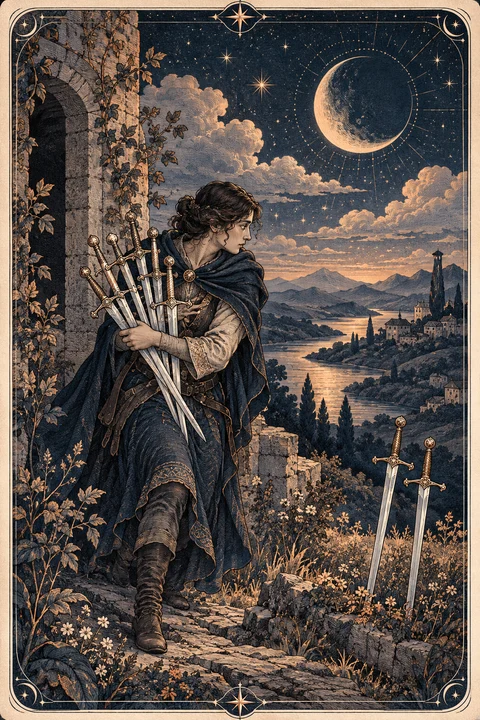
When interpreting the Seven of Swords as advice feelings outcome in a Tarot reading, this card reflects strategic maneuvering, self-reliance, unspoken motives, and calculated risks. In Rider-Waite-Smith symbolism, the figure sneaking away from a military camp clutching five stolen blades while leaving two behind represents tactical stealth rather than straightforward confrontation. Understanding whether it appears as guidance, an emotional state, or an eventual result clarifies whether you should act with discretion, confront hidden mistrust, or prepare for half-measures.
The Core Symbolism of the Seven of Swords
In the traditional Rider-Waite-Smith deck, the Seven of Swords depicts a man tiptoeing away from a collection of colorful tents under a yellow sky. He holds five upright swords by their bare blades in his arms while glancing over his shoulder at two swords planted firmly in the ground behind him. This imagery directly connects to the suit of Swords, governed by the element of Air, which rules the intellect, communication, belief systems, and social conflict. Rather than engaging in an overt battle like the Five of Swords, this character chooses evasion, cunning, and unconventional methods to achieve an objective.
Tarot readers traditionally interpret this scene as a study in strategy, resourcefulness, and divided focus. Taking five blades leaves two behind, symbolizing an incomplete victory or the reality that one person cannot carry every burden alone without cutting their bare hands. While popular interpretations often label this card as simple deception or dishonesty, experienced practitioners view it as a neutral study in pragmatism. Sometimes situations demand secrecy, independent problem-solving, or an exit strategy away from hostile environments where direct confrontation would guarantee total defeat.
Reflecting on the Seven of Swords requires looking past simplistic labels of good and bad to examine personal motivations and accountability. Is the figure taking back what was rightfully theirs, or are they escaping responsibilities under cover of darkness? In personal self-reflection, this card often surfaces when someone feels like an outsider operating on the margins of a social group or workplace. It prompts you to question your relationship with transparency, your tactical instincts, and whether your current approach serves your long-term integrity.
Seven of Swords as Advice: Working Smart and Setting Boundaries
When the Seven of Swords appears in the advice position of your spread, the cards counsel you to choose discretion and strategic intellect over open confrontation. You do not need to display all your plans to everyone around you, nor do you need to fight every battle head-on. Many readers view this card as a gentle nudge to work quietly behind the scenes, develop your plans in private, and protect your original ideas before presenting them publicly. Tactical independence and clever problem-solving will yield far better results right now than forceful demands or rigid compliance.
In professional and creative matters, this advice often translates into establishing firm personal boundaries and gathering information before making a major announcement. If you find yourself in a competitive or toxic workplace environment, the card advises you to protect your personal interests, document communications meticulously, and make thoughtful plans for your future without creating unnecessary drama. Instead of wasting energy attempting to reform a broken system from within, focus on safeguarding your own resources, meeting your core obligations, and gracefully exiting situations that compromise your well-being.
On an interpersonal level, Seven of Swords as advice asks you to consider whether total transparency is truly helpful or potentially counterproductive in your current situation. Being honest does not require oversharing your vulnerabilities with individuals who have not earned your trust. The card urges you to examine where you might be taking on battles that are not yours to fight. Choose your commitments wisely, prioritize your mental peace, and remember that stepping away from toxic dynamics is an act of self-preservation rather than cowardice.
Seven of Swords as Feelings: Guarded Emotions and Emotional Evasion
Interpreting the Seven of Swords in the feelings position reveals a state of mental guardedness, emotional self-preservation, and cautious ambivalence. When someone feels this card toward you or a situation, they are likely holding back their true thoughts and keeping their cards close to their chest. Rather than opening up fully, they may feel the need to protect themselves from judgment, rejection, or control. Practitioners often note that this energy indicates a person who feels emotionally exposed and uses aloofness or intellectual detachment as a shield against potential harm.
In romantic relationships, this card frequently signals feelings of mistrust, evasiveness, or imposter syndrome. One or both partners may feel that showing their authentic self will lead to disappointment or conflict, prompting them to hide their deeper needs behind polite smiles or superficial banter. It can also point to a lingering fear of commitment where an individual feels an urge to keep one foot out the door. The emotional focus here is on maintaining an escape route, ensuring that if things go wrong, they can depart without losing their personal autonomy.
If this card reflects your own internal state, it invites honest contemplation about why you feel hesitant to be open with the people around you. You might be harboring secret resentments, hiding personal doubts, or avoiding difficult conversations out of fear that they will disrupt the status quo. Recognizing these guarded feelings allows you to examine whether your defense mechanisms are actively protecting you or simply preventing meaningful intimacy and genuine connection. Acknowledging your underlying fears is the first step toward building relationships rooted in mutual trust.
Seven of Swords as Outcome: Compromise, Evasion, and Strategic Shifts
When the Seven of Swords arrives as the final outcome card, it suggests a resolution characterized by partial success, clever compromises, or an unconventional exit. The matter at hand is unlikely to conclude with absolute, public triumph or complete consensus among all parties involved. Instead, the final result will probably involve salvaging what is most important while leaving lesser details behind, much like the figure carrying away the majority of the swords. You may achieve your primary goal, but the process may require accepting certain trade-offs along the way.
In practical matters such as business contracts, legal disputes, or creative endeavors, an outcome represented by this card often denotes someone quietly walking away with the prize or renegotiating terms off the record. It can point to an independent breakthrough achieved by finding a clever loophole rather than following the standard administrative playbook. While this outcome can represent successful problem-solving, it also warns against cutting corners that could undermine your reputation later. Long-term stability requires ensuring that your methods remain ethical and sustainable over time.
In relationship readings, the Seven of Swords as an outcome cautions that unresolved misunderstandings or unspoken grievances will persist if both individuals continue to avoid direct communication. If neither person is willing to address underlying tensions openly, the dynamic may eventually fade through gradual disengagement or sudden departures. However, if handled with conscious self-reflection, this card can simply signify that you will successfully extricate yourself from an unhealthy partnership, taking your self-worth and valuable life lessons with you as you move forward.
Navigating the Seven of Swords as Advice Feelings Outcome in Life Spreads
Synthesizing the Seven of Swords as advice feelings outcome across different positions in a spread offers a comprehensive map of mental habits and coping mechanisms. In career spreads, drawing this card as advice urges strategic autonomy, while seeing it as feelings points to burnout from workplace politics, and encountering it as an outcome highlights a quiet job transition. Recognizing how these perspectives interact helps you distinguish between healthy tactical discretion and unhealthy escapism, ensuring you remain the deliberate author of your own choices.
In love readings, reading this card across the spread highlights the balance between personal freedom and emotional vulnerability. When drawn as advice, it suggests setting healthy emotional limits; as feelings, it illuminates guarded hesitation; and as an outcome, it underscores the need for mutual transparency to avoid growing apart. Tarot practitioners encourage querents to treat these card placements as reflective mirrors rather than fixed destinies, using the insights to start honest dialogues with partners or rebuild self-confidence after past betrayals.
Ultimately, working with the suit of Swords requires developing mental clarity and intentional speech. Whenever the Seven of Swords appears in your layout, take time to write down what you feel compelled to hide, protect, or slip away from. Are you acting out of wisdom, or are you acting out of fear? By examining your motivations without self-judgment, you can transform evasive tendencies into conscious, strategic decision-making that honors your personal integrity.
Reversed Seven of Swords: Confession, Clarity, and Dropping the Mask
When the Seven of Swords appears reversed in a reading, the energy of stealth, evasion, and concealment begins to unravel into open disclosure. The burden of carrying stolen blades becomes impossible to maintain, forcing secrets into the daylight and prompting individuals to drop their defenses. Many readers view the reversal as an encouraging sign that evasive tactics are being abandoned in favor of straightforward communication, shared accountability, and genuine problem-solving. It marks the moment when living a double life or hiding one's true thoughts becomes more exhausting than facing the truth.
In the advice position, the reversed Seven of Swords urges you to confess mistakes, come clean about your hesitations, and seek constructive help from trusted colleagues or loved ones. Rather than trying to slip away or handle everything independently, the card advises you to seek mediation, surrender unworkable schemes, and embrace absolute transparency. When appearing as feelings, it signifies relief from overcoming guilt, growing weary of pretense, or finally feeling ready to trust someone after a prolonged period of hyper-vigilance and skepticism.
As an outcome, the reversed card warns that hidden maneuvers, shortcuts, or attempts to avoid responsibility will likely be brought into clear view. While this exposure may feel uncomfortable initially, it ultimately clears the air and prevents toxic misunderstandings from festering further. It can also signify a clean break where all cards are laid on the table, allowing for genuine reconciliation or an honest parting of ways. Embracing the lesson of the reversed Seven of Swords ensures that your future paths are grounded in clarity, authenticity, and peace of mind.
Frequently asked questions
Does the Seven of Swords always mean cheating or betrayal in love readings?
No, it does not automatically indicate infidelity. While traditional lore connects the card to deceit, modern readers often see it as a sign of emotional guardedness, conflict avoidance, privacy needs, or fear of vulnerability. Always evaluate the surrounding cards and context before assuming dishonesty.
What should I do if the Seven of Swords appears as advice in my career spread?
Focus on working independently, safeguarding your ideas, and avoiding unnecessary office politics. Plan your moves quietly behind the scenes rather than announcing every intention. Use intellect and strategic thinking to solve problems rather than resorting to direct confrontation.
How does the Seven of Swords differ from the Five of Swords?
The Five of Swords represents overt conflict, hostile arguments, and winning at all costs through direct aggression. The Seven of Swords represents covert action, evasive maneuvers, stealth, and quiet strategy, aiming to bypass open warfare altogether.
What does the Seven of Swords suggest about someone's intentions toward me?
It suggests they are keeping their plans private, holding back their true thoughts, or acting defensively. They may be protecting their own interests or avoiding a difficult conversation rather than being openly malicious, so open inquiry is helpful.