Three of Swords as Advice Feelings Outcome: Tarot Guide
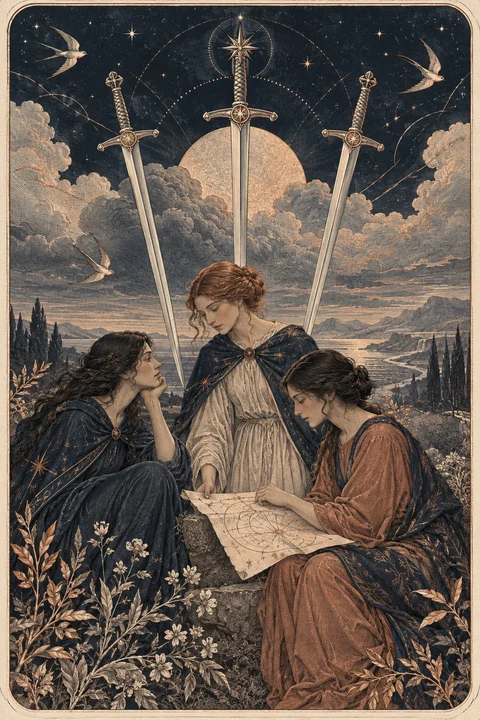
When interpreting the Three of Swords as advice feelings outcome, this archetype centers on facing difficult facts, processing emotional sorrow, and severing ties with unhelpful illusions. In the advice position, the card urges direct truthfulness and intentional boundaries; when showing feelings, it reflects heartbreak, rejection, or raw vulnerability; and as an outcome, it signifies a sorrowful but clarifying breakthrough. Grounded in the intellectual suit of Swords, this card guides querents to treat grief not as a permanent state, but as a catalyst for honest renewal.
The Symbolism and Element of the Three of Swords
In the traditional Rider-Waite-Smith deck, the Three of Swords presents one of the most recognizable and striking images in Tarot. A vibrant crimson heart hangs suspended in midair, pierced through by three clean steel blades against a background of driving rain and gray storm clouds. Unlike many cards that depict human figures interacting with their environment, this card isolates the emotional organ itself, portraying a direct confrontation between tender feeling and sharp metal. The visual elements emphasize that the pain depicted here is not hidden or ambiguous; it is immediate, exposed, and undeniable.
To understand the deeper currents of the card, readers look to its elemental association. The suit of Swords corresponds to the element of Air, governing thought, communication, intellect, and conflict. Hearts represent our desires and emotional bonds, while swords represent mental discernment and truth. When swords pierce the heart, the card portrays the shock of a painful realization or a difficult truth cutting through sentimental wishful thinking. In the progression of the Minor Arcana, this follows the blindfolded stalemate of the Two of Swords, marking the moment when denial breaks and reality must finally be acknowledged.
Astrologically, practitioners traditionally associate the Three of Swords with Saturn in Libra. Saturn introduces discipline, boundaries, limitations, and karmic realism, while Libra seeks harmony, partnership, and fair balance. When these forces meet, the archetype highlights the sorrow that occurs when an imbalance must be corrected through sober appraisal. The downpour in the card reminds us that rain is essential for clearing the atmosphere and nourishing future growth. The card does not depict permanent destruction, but rather the temporary, sharp sting of necessary emotional surgery.
Interpreting the Three of Swords as Advice Feelings Outcome in Spreads
Encountering this card often provokes anxiety for querents because its imagery evokes sorrow and separation. However, modern Tarot practitioners emphasize that divination serves as a tool for self-reflection and personal agency rather than a script of unavoidable catastrophe. Reading the Three of Swords as advice feelings outcome requires looking beyond surface discomfort to analyze what the mind needs to understand. The swords invite you to look at circumstances with clear eyes, removing subjective wishful thinking so that you can navigate difficult chapters with dignity and self-possession.
Context determines whether the card highlights an internal psychological state, a suggested line of conduct, or the natural culmination of current dynamics. Because the card belongs to the mental realm of Air, the suffering it describes frequently originates from words spoken, contracts broken, or illusions punctured. By examining where the card lands in your spread, you can isolate whether you are actively grieving, holding on to an unsustainable hope, or being asked to make a clean, ethical cut. This structured framework keeps you from feeling helpless when difficult cards appear.
Working constructively with this card means honoring both logic and emotional vulnerability without letting either overwhelm your judgment. The heart remains whole despite being pierced, showing that your capacity to love and connect survives even acute disappointment. As you explore the Three of Swords across advice, feelings, and outcome positions, remember that its primary purpose is liberation through truth. It demands that you stop defending situations that injure you, creating space for authentic healing to begin.
Three of Swords in the Advice Position: Embracing Painful Clarity
When the Three of Swords appears as advice, it issues a call for radical honesty. The card suggests that lingering in ambiguity or making excuses to preserve an artificial peace is doing more damage than the truth ever could. It urges you to rip off the bandage, address the elephant in the room, and deliver or accept difficult messages directly. For example, if you have remained in an unfulfilling creative partnership out of fear of hurt feelings, this card advises you to voice your reservations clearly and begin disentangling your commitments.
This placement also advises you to give yourself permission to grieve rather than putting on a brave face. Many readers observe that suppressing grief causes emotional tension to calcify into bitterness or anxiety. The advice of the Three of Swords is to let the rain fall: cry if you need to, journal your disappointments, and honor the fact that something meaningful did not turn out as planned. Acknowledging your pain cleanly allows the emotional wound to breathe, preventing prolonged suffering born from denial.
To apply this card's guidance in your daily life, consider what boundaries you have hesitated to enforce because you feared disappointing others. Ask yourself: Where am I sacrificing my peace to protect someone else's comfort? What difficult fact am I avoiding out of fear of grief? The card recommends adopting the precision of the sword by being concise, fair, and firm in your decisions, knowing that temporary discomfort is the price of long-term integrity.
Three of Swords in the Feelings Position: Navigating Grief and Hurt
In the feelings position, the Three of Swords reflects an emotional atmosphere marked by sorrow, rejection, or profound disappointment. If this card represents your own internal state, it validates that your current emotional pain is real and poignant. You may feel blindsided by critical feedback at work, wounded by thoughtless words from a friend, or raw following a romantic parting. The card does not judge these reactions as weaknesses; instead, it mirrors the natural, human response to broken trust or shattered expectations.
When reading feelings for another person, the Three of Swords suggests they are experiencing distress, defensive hurt, or deep remorse. They might feel wounded by past exchanges or guarded because they anticipate further criticism. It is helpful to remember that people who feel pierced often lash out or withdraw entirely to protect their vulnerability. Recognizing this dynamic can prevent you from taking their coldness personally, encouraging a more measured and empathetic approach to communication if the relationship is one you wish to maintain.
Reflecting on the Three of Swords in this position invites you to separate raw emotion from the stories your mind builds around it. Swords symbolize thoughts, so ask yourself: What narrative am I spinning about this disappointment? Am I treating a temporary rejection as proof of my personal worth? By observing your feelings with kind curiosity, you can experience the sorrow without allowing it to distort your self-esteem or close your heart permanently.
Three of Swords in the Outcome Position: Necessary Endings and Resolution
When the Three of Swords lands in the outcome position, it indicates that current circumstances are heading toward a definitive rupture or an unavoidable moment of truth. This is rarely what a querent hopes to see, yet it represents an essential threshold. The outcome described here is the puncturing of a bubble: false promises collapse, incompatible goals become obvious, and hidden facts emerge into the light. While the immediate experience may sting, this outcome brings an end to the agonizing limbo of chronic uncertainty.
In practical readings, this outcome often manifests as a difficult conversation, the formal dissolution of a partnership, or the sober realization that a long-held project must be restructured. For instance, in a business reading, it may signal that two founders must separate due to incompatible visions. Although the separation causes initial regret, the clarity it produces prevents worse losses down the line. The outcome is not wanton disaster, but the natural consequence of tensions that could no longer be sustained.
The reassuring dimension of the Three of Swords as an outcome is its finality. The sharpest pain occurs at the moment of impact; after that, the healing process begins. Because the card is ruled by Air, the clarity gained during this crisis becomes your greatest asset. Once you know exactly where you stand, you can stop wasting energy managing false hopes and begin directing your focus toward rebuilding a grounded, self-directed future.
Integration, Healing, and Conscious Moving Forward
Integrating the lessons of the Three of Swords requires acknowledging that pain is an inevitable facet of human life, whereas prolonged suffering is often the result of resisting reality. The swords piercing the heart do not mean the heart has stopped beating; they simply demonstrate that truth has pierced sentimental defenses. By allowing the element of Air to bring clarity to your emotional life, you learn that disappointment carries valuable information about your values, your boundaries, and your non-negotiable needs.
Whenever you work with the three of swords as advice feelings outcome in your personal practice, treat it as a supportive tool for emotional hygiene. If you encounter the card during a period of transition, support yourself with grounding habits, truthful conversations, and patient self-compassion. If you feel overwhelmed by deep grief or persistent sadness, remember that consulting a doctor, counselor, or mental-health professional is a wise and grounded way to care for your emotional health.
Ultimately, the Three of Swords reminds us that storm clouds always pass. The rain that drenches the heart also cleanses the air, leaving behind crisp visibility and renewed perspective. By facing the card's stark truths with courage and self-respect, you reclaim your personal agency, knowing that honest sorrow is often the doorway to an authentic and resilient life.
Frequently asked questions
Does the Three of Swords always predict a relationship breakup or divorce?
No, the card does not guarantee a breakup. While it frequently highlights relationship tension, it can also represent misunderstandings, professional setbacks, or disillusionment with an idea. It points to a painful realization that requires addressing, not a mandatory end to your relationship.
What is the difference between the upright and reversed Three of Swords?
Upright, the card indicates acute grief, active truth-telling, or a fresh emotional wound that requires attention. Reversed, practitioners often read it as recovery from past heartbreak, releasing old grudges, or, alternatively, an unhealthy refusal to let go of pain and move forward.
How can I take constructive action when the Three of Swords appears as advice?
Act by communicating honestly, establishing firm personal boundaries, and ending commitments that cause continuous distress. Stop avoiding uncomfortable conversations, allow yourself to feel your natural sorrow, and choose short-term discomfort over long-term emotional exhaustion.
Why is the Three of Swords considered an Air card if it depicts a heart?
Swords belong to the element of Air, representing intellect, words, and clarity. The heart represents our emotional desires. The card depicts Air piercing the heart to show how intellectual truth, spoken words, or cold facts can cut through our subjective feelings.