Two of Swords as Advice Feelings Outcome in Tarot
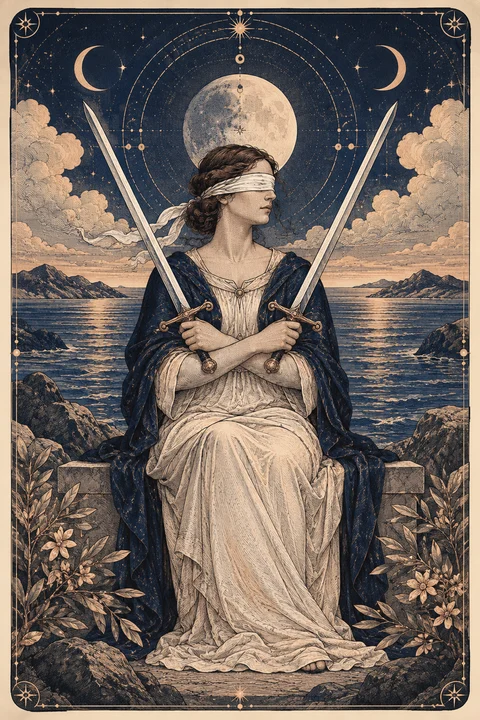
Understanding the Two of Swords as advice feelings outcome reveals how avoidance, balance, and quiet deliberation influence your current life path. When this card appears, it traditionally highlights a temporary stalemate where the intellect struggles to choose between two competing options. By evaluating this card across different spread placements, readers can determine whether to pause for clarity, acknowledge guarded emotional states, or prepare for unresolved tension.
The Core Symbolism of the Two of Swords
In the traditional Rider-Waite-Smith system, the Two of Swords belongs to the suit of Swords, which corresponds to the element of Air. Air governs the intellectual realm of reason, communication, logic, and internal conflict. In this illustration, Pamela Colman Smith depicted a blindfolded figure seated on a stone bench, balancing two heavy swords crossed symmetrically over her chest. Behind her lies a calm body of water dotted with craggy rocks beneath a crescent moon. Every element in this imagery reflects an deliberate attempt to shut out the outside world in favor of internal assessment.
The blindfold indicates that the current dilemma cannot be resolved simply by relying on surface observations or external demands. Instead, practitioners describe this posture as an intentional sensory deprivation that forces the querent to look inward. The crossed swords protect the heart center, implying that logic has been summoned to guard against painful emotions. While this defensive posture maintains temporary stability, it requires continuous physical and mental effort to sustain, showing that an unresolved decision cannot be delayed indefinitely.
The tranquil yet rocky sea represents the emotional undercurrents that continue to flow beneath a rational exterior. Water symbolizes the subconscious, intuition, and heartfelt desires, which the figure attempts to ignore by turning her back on the ocean. Modern readers often note that this card embodies a state of cognitive dissonance. You may possess all the pertinent facts, yet you hesitate to move forward because every available path demands a sacrifice. Recognizing this balance helps illuminate whatever role the card plays in your spread.
Two of Swords as Advice
When the Two of Swords appears in the advice position, it counsel patience, neutrality, and emotional detachment before committing to a major choice. Rather than rushing headlong into a confrontation or making a hasty promise, many readers interpret this card as an invitation to call a temporary truce with reality. You are being encouraged to filter out conflicting outside opinions and take quiet stock of your own principles. Like the seated figure, you may need to close your eyes to distractions so you can hear your inner reasoning without interference.
This card also offers practical guidance regarding boundaries. If you feel pressured by peers, family members, or colleagues to declare an immediate loyalty, the Two of Swords advises maintaining an impartial stance. Avoid choosing sides simply to ease external social tension. Practitioners often suggest adopting a balanced viewpoint by writing down the distinct pros and cons of your options. Striving for objective neutrality prevents rash emotional reactions, allowing you to weigh the ethical and logical consequences of your pending decision with a steady hand.
At the same time, the advice of the Two of Swords carries a quiet warning against perpetual denial. While taking time to reflect is essential, using self-imposed isolation as an excuse to ignore difficult truths will ultimately work against you. Treat this period of reflection as a deliberate, time-bound pause rather than an indefinite retreat. Ask yourself which fundamental facts you are actively overlooking. Once you achieve internal equilibrium and acknowledge both sides of the dilemma, you will possess the mental strength required to lower your defenses and choose a path.
Interpreting the Two of Swords as Feelings
In a spread focused on emotional dynamics, the Two of Swords in the feelings position indicates guardedness, mixed signals, or a deliberate refusal to confront emotional reality. If you are asking how someone feels about you, this card suggests that they are feeling conflicted and may be actively repressing their affection or frustration. They might appreciate your presence while simultaneously fearing the vulnerability that closeness requires. Consequently, they draw a clear boundary to protect their peace, prioritizing intellectual control over spontaneous emotional expression.
When this card represents your own feelings, it frequently points to a state of painful ambivalence. You might find yourself torn between what makes logical sense and what your deeper intuition desires. Many readers view this placement as a sign of emotional paralysis, where the fear of making the wrong romantic or interpersonal move leaves you feeling numb. You may be convincing yourself that you do not care about an outcome when, beneath the surface, you simply wish to avoid the discomfort of heartbreak or disagreement.
This dynamic can also point to a conscious decision to maintain distance following a past hurt. The crossed swords over the heart serve as an energetic shield against further disappointment. Practitioners describe this mindset as one of cautious observation, where the individual chooses not to engage fully until absolute safety is assured. If you recognize this posture within your own relationships, gently ask yourself what vulnerability you are attempting to suppress, and whether maintaining that rigid boundary is actually serving your emotional well-being.
The Two of Swords as an Outcome
When the Two of Swords lands in the outcome position, it points toward an ongoing stalemate, an unresolved standoff, or a fragile truce that requires continuous maintenance. It suggests that unless the current approach changes, the situation will conclude in a draw where neither party gains total clarity. While this result avoids an immediate blowup, it also delays genuine progress. You may find that both sides agree to disagree, burying the central conflict beneath a veneer of polite silence rather than doing the hard work of finding authentic common ground.
In career and financial matters, an outcome characterized by this card signifies that a pending decision will remain up in the air. A contract may stall in negotiation, or leadership may hesitate to implement an initiative due to competing executive visions. Practitioners describe this outcome as a holding pattern where circumstances demand compromise. You will likely need to give up something meaningful on both ends of the scale to break the deadlock, as waiting for a flawless, risk-free alternative will only prolong the stagnation.
Importantly, Tarot outcomes reflect the trajectory of present energies rather than an unchangeable fate. Receiving this card at the conclusion of a reading invites you to examine what needs to be acknowledged so the situation does not freeze into permanent immobility. The outcome reminds you that remaining at an impasse is itself a choice. To move forward into greater vitality, someone must eventually be brave enough to remove the blindfold, put down the swords, and accept the consequences of moving in a definitive direction.
Reading Two of Swords as Advice Feelings Outcome Across Life Areas
Context determines nuance, and examining the Two of Swords as advice feelings outcome across different areas of life reveals how mental friction manifests uniquely in love, career, and personal growth. In romantic consultations, seeing this card as advice encourages taking space to evaluate relationship values before having a difficult conversation. As a feeling, it warns that emotional walls are preventing mutual intimacy. As an outcome, it points toward a quiet separation or a plateau where partners avoid discussing their real needs to dodge an argument.
In workplace and professional readings, the Two of Swords takes on a pragmatic tone centered on diplomacy and strategic patience. Positioned as advice, it recommends staying neutral amid office politics and gathering concrete data before pitching a project. When appearing as feelings, it reflects professional disillusionment, confusion over career choices, or skepticism regarding a supervisor's promises. As an outcome, it forecasts stalled projects or protracted contract revisions, signaling that you must renegotiate terms before full momentum can be restored.
For inner development and spiritual exploration, this card challenges you to reconcile your rational ego with your intuitive wisdom. As personal advice, it invites meditation, journaling, and sensory quietude to settle an overactive mind. As feelings, it points to the intellectual anxiety that arises when two personal values clash, such as freedom versus security. When concluding a personal reflection spread, it shows that inner serenity depends on your willingness to drop mental resistance and embrace the truth you have been avoiding.
Reflective Questions to Break the Stalemate
Because the Two of Swords is fundamentally an invitation to cultivate deeper self-awareness, working consciously with its archetypal energy can help you navigate difficult choices with poise. When you find this card in your spread, journaling on focused questions helps uncover the hidden beliefs fueling your indecision. Consider asking yourself what specific reality you are refusing to see, and identify which fears arise when you imagine making a firm, irrevocable choice. Confronting these doubts openly weakens their hold on your judgment.
Another powerful area of reflection centers on the protective boundaries you have established around your heart. Ponder whether your current emotional guard is providing healthy sanctuary or simply isolating you from vital connection. You might ask yourself what practical compromise you have been unwilling to entertain simply out of stubbornness. Identifying where you are clinging to intellectual control helps you determine whether it is time to maintain your defensive boundary or courageously lower your weapons.
Ultimately, the message of the Two of Swords reminds us that truth rarely emerges from hasty panic or chronic avoidance. By granting yourself the grace to pause, examine all evidence without bias, and listen to the emotional currents flowing beneath your thoughts, you can navigate any intellectual impasse. Use this card not as an excuse to remain frozen, but as an empowering tool to cultivate the profound inner quiet required to make wise, balanced, and compassionate choices for your life.
Frequently asked questions
Does the Two of Swords always mean a breakup in love readings?
No, the card does not guarantee a breakup. Traditionally, it indicates that partners are avoiding a difficult conversation or guarding their feelings. It suggests emotional standoff, ambivalence, or a temporary stalemate. Resolving this tension requires both individuals to lower their defensive barriers and openly address the issues they have been ignoring.
What is the difference between the Two of Swords and the Moon?
Both cards deal with obscured truth, but through different mechanisms. In the Two of Swords, the figure chooses to wear a blindfold, representing self-imposed denial or logical avoidance. In The Moon, the obscurity stems from subconscious illusions, deceptive conditions, and emotional instincts that lie outside direct rational control.
How can I resolve the deadlock shown by the Two of Swords?
Resolving this stalemate requires acknowledging the feelings you have set aside. Many readers advise writing out your conflicting priorities, gathering necessary facts, and accepting that any path will require minor trade-offs. Once you confront the underlying reality, remove the figurative blindfold and make a conscious, definitive choice.
Is the Two of Swords considered a positive or negative card?
Tarot practitioners generally view this card as neutral and situational. While it highlights uncomfortable indecision, defensiveness, and delayed communication, it also praises mental discipline, peace under pressure, and the wisdom of withholding rash judgment until you can evaluate your circumstances with complete fairness.