Surrealist Tarot Decks: Symbolic Art and Intuitive Work
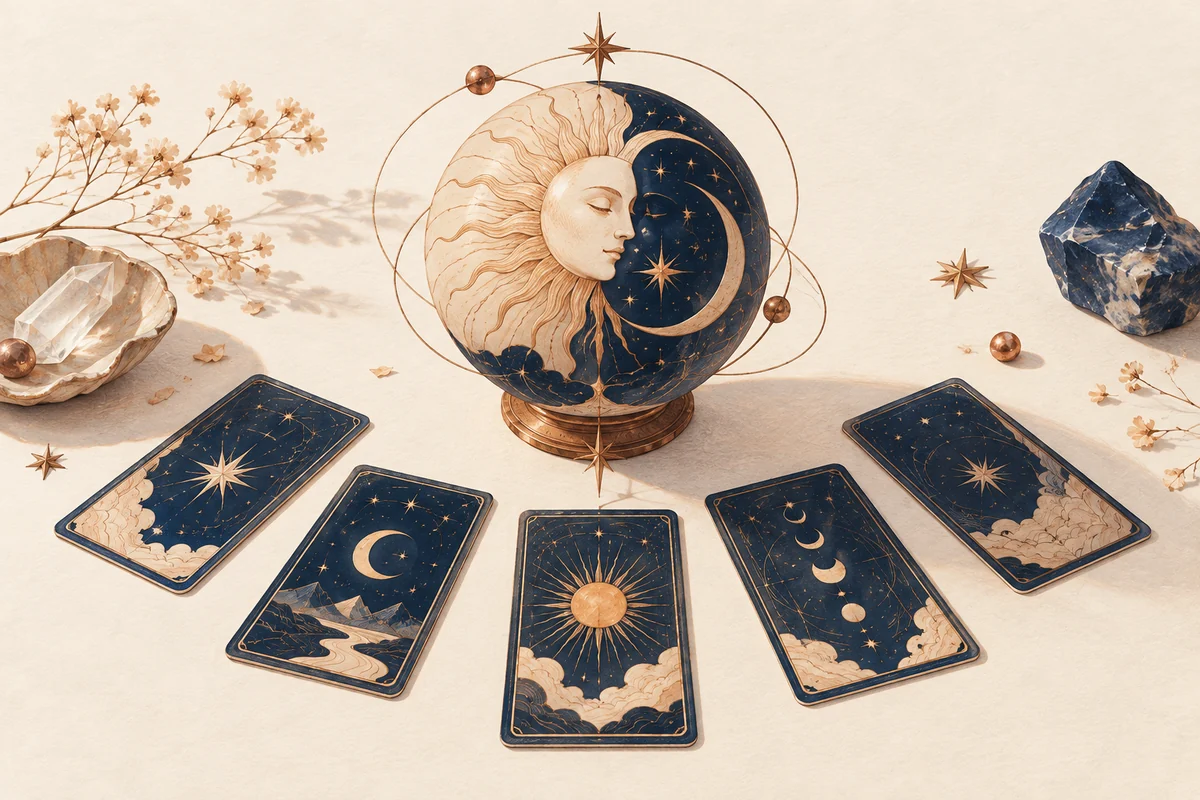
Surrealist tarot decks invite readers into dreamscapes where subconscious visual metaphors replace rigid systems, encouraging non-linear and deeply intuitive readings. By bypassing the rational mind with juxtaposition, floating figures, and disorienting scale, these decks prompt you to project personal meaning onto archetypal forms. They offer a reflective mirror for self-discovery rather than concrete predictions about the future.
What Makes Surrealist Tarot Decks Different?
Surrealist tarot decks depart from standard visual structures, inviting the querent to engage with archetypes through an unfiltered psychological lens. Traditional cards like the Rider-Waite-Smith system rely heavily on established allegories, consistent color coding, and biblical or esoteric emblems. In contrast, surrealism challenges sensory expectations by disrupting conventional spatial laws and logic. Figures might merge with architecture, clocks may melt, and eyes frequently peer out from unexpected flora. This destabilization dismantles automatic mental habits, forcing you to experience each image organically rather than reciting rote definitions learned from a textbook.
Many readers find that these idiosyncratic presentations evoke sudden emotional epiphanies that standard decks cannot reach. Because the imagery is inherently open-ended, your subconscious mind projects its current anxieties, desires, and unresolved tensions directly onto the canvas. Instead of asking what an author intended a symbol to mean, you are prompted to notice which subtle detail catches your attention first. In this way, divination shifts from an exercise in external decryption to an internal psychological dialogue, turning every reading into a quiet meditation on personal perception.
This subjective approach honors the historical roots of the surrealist movement, which emerged in the early twentieth century alongside psychoanalysis. Pioneers like André Breton emphasized automatic expression and the liberation of the unconscious mind from societal rationalism. When applied to cartomancy, surrealism treats the cards as psychological inkblots. The reading space becomes an exploratory sandbox where paradoxes can coexist peacefully, helping you examine complex emotional dynamics without needing to force every card into an overly tidy narrative arc.
Decoding Subconscious Metaphors and Dream Logic
Dream logic operates through condensation, displacement, and unexpected juxtapositions, mechanisms that surreal decks employ with striking visual power. Condensation occurs when multiple complex ideas fuse into a single striking image, such as a heart sprouting roots inside an iron birdcage. Displacement shifts emotional importance from an obvious focal point to an otherwise insignificant peripheral detail. When reading with dream-inspired cards, you might find that an unassuming snail crawling along the margin of the card carries far more emotional weight for your inquiry than the towering figure dominating the center.
Engaging with these visual metaphors requires unlearning the urge to categorize symbols into rigid dualities of good and bad. In classical systems, The Tower traditionally signifies sudden upheaval, while The Sun signals warmth and success. Surrealist decks often complicate these archetypes, presenting The Tower as an egg gently cracking open under starless skies, or The Sun as a blinding optical glare that casts deep, confusing shadows. These paradoxical portrayals ask you to sit with nuance, acknowledging that growth often involves discomfort and clarity can occasionally overwhelm the senses.
To interpret these evocative symbols effectively, practitioners describe letting the analytical intellect quiet down so the somatic body can respond. Notice your physical reactions as you draw a card: do your shoulders tighten, or does your chest expand? What memories or stray thoughts flash across your awareness before you even recall the card title? The subconscious communicates through sensation and mood long before it produces clear sentences, making your immediate visceral impression the most valuable compass for navigating surreal iconography.
Historic and Contemporary Surrealist Decks
The intersection of surreal art and tarot boasts a fascinating lineage, highlighted prominently by Salvador Dalí's Tarot Universal, conceived in the 1970s. Dalí blended classical art history, occult motifs, and his signature paranoiac-critical method, famously casting himself as The Magician and his muse Gala as The Empress. His deck demonstrates how high art can redefine standard cartomancy, weaving collage and hyper-realist flourishes into traditional structures. The resulting cards feel decadent, theatrical, and slightly unhinged, offering dramatic entry points for readers drawn to theatrical grandeur and psychological depth.
Another historic milestone is the Tarot of Leonora Carrington, which reveals the artist’s lifelong fascination with esoteric mysticism, alchemical transmutation, and feminist myth. Carrington’s cards feature spectral beasts, luminous color washes, and ethereal entities that defy traditional gender roles and spatial hierarchies. Her compositions evoke the quiet, enigmatic atmosphere of ancient folklore rather than loud modern spectacle. Reading with her artwork feels akin to deciphering cryptic manuscript fragments, encouraging practitioners to contemplate the hidden, magical dimensions operating beneath daily routines.
Contemporary independent creators continue pushing these boundaries by adopting collage, digital collage, and dreamscape minimalism. Modern decks frequently combine vintage botanical illustrations with anatomical diagrams, surreal landscapes, and celestial cartography. These modern indie releases invite contemporary sensibilities into the tarot tradition, addressing psychological themes such as dissociation, identity fluidity, and ecological grief. By continually reinventing how symbols interact, current deck creators ensure that the surrealist tradition remains an active, evolving tool for self-reflection rather than a static museum relic.
Non-Linear Techniques for Intuitive Reflection
Conventional card layouts like the Celtic Cross rely on linear positioning, where each placement corresponds to a predetermined question or chronological sequence. While this method offers clarity, it can stifle the fluid associations that surreal art naturally stimulates. Non-linear readings, by contrast, focus on the visual conversation happening across the cloth. You might lay out three or four cards without assigning them fixed roles, observing where the figures gaze, how color palettes bleed into each other, and where tension builds within the collective space between the cards.
One effective exercise involves following sightlines and physical gestures across the spread. If a masked figure on the leftmost card points a telescope toward an inverted landscape on the far right, that trajectory forms a conceptual bridge. Ask yourself what kind of search or longing connects those two cards in your own life. Practitioners also experiment with layering cards physically, partially overlapping images so that new composite hybrid symbols emerge organically on the reading table. This tactile approach honors the playful, rebellious ethos of early surrealist parlor games.
You can also incorporate free association into your reading rhythm. Instead of consulting a guidebook, set a timer for two minutes and write down every noun, verb, and sensation that surfaces while studying a single card. Do not filter your thoughts for coherence or relevance to your initial query. When the timer finishes, read through your notes to identify underlying themes. Often, the apparent nonsense written during free association reveals the genuine emotional core of your situation far more quickly than deliberate, logical contemplation.
Navigating the Discomfort of Abstract Imagery
Reading with abstract or unsettling decks can occasionally induce interpretive paralysis, especially for practitioners accustomed to clear symbolic roadmaps. When faced with an image that appears nonsensical, such as a faceless floating torso holding an hourglass filled with feathers, the brain naturally scrambles for footing. It is completely normal to feel frustrated or intimidated when standard meanings seem entirely inapplicable. Recognizing this friction as an intentional part of the creative process helps you relax your expectations and remain curious in the presence of ambiguity.
To move past this initial discomfort, ground yourself in basic formal elements rather than searching for complex allegorical riddles. Notice the temperature of the color palette, the density of the background, and the balance between empty space and crowded forms. Does the card feel heavy or weightless? Is the mood contemplative, chaotic, or serene? By stripping the interpretation down to sensory aesthetics, you bypass intellectual overwhelm. You can then gently ask: where in my current life do I recognize this specific atmosphere or emotional texture?
Remember that divination functions as a contemplative mirror rather than an absolute source of truth. Surrealism specifically exists to challenge our obsession with certainty and definitive conclusions. If a card remains utterly mysterious after quiet reflection, permit yourself to leave it unsolved. Sit with the mystery throughout your day like a poetic riddle. Many readers discover that the meaning of an elusive card surfaces hours later during an unrelated task, illustrating how the subconscious works quietly in the background when given sufficient space.
Grounding Your Intuition with Surrealist Tarot Decks
Integrating surrealist tarot decks into your ongoing contemplative routine can profoundly reshape your relationship with personal intuition. While standard decks reinforce orderly structures, surreal imagery stretches your imagination and builds tolerance for the unresolved paradoxes of human existence. Working with these cards regularly trains you to trust subtle intuitive whispers before your analytical mind rushes to categorize them. You learn that feelings, fleeting memories, and artistic resonances carry profound validity, offering legitimate perspectives when navigating complex personal dilemmas.
To maintain balance, anchor these abstract card sessions with clear reflective journaling. After each reading, record your immediate sensory impressions alongside one practical insight you can embody during the week. This keeps the experience grounded in everyday reality rather than floating away into ethereal daydreaming. For instance, if an unsettling card evokes the sensation of boundary dissolution, your practical takeaway might involve saying no to an exhausting social commitment. The cards highlight internal landscapes, but your daily conscious choices remain entirely in your hands.
Ultimately, surrealist tarot decks remind us that self-understanding is rarely a tidy, straightforward progression. Our inner lives are populated by contradictory desires, forgotten memories, and sudden flashes of creative inspiration that defy straightforward narrative logic. By embracing decks that reflect this wild psychological diversity, you cultivate a compassionate and flexible mindset. Divination then becomes a sacred space for genuine wonder, where every shuffle offers an invitation to peer beneath the ordinary surface of life and converse directly with your deepest self.
Frequently asked questions
Can beginners read with surrealist tarot decks?
Beginners can certainly read with these decks, though the experience differs markedly from studying traditional decks like the Rider-Waite-Smith. While standard decks teach established allegorical systems, surreal decks encourage direct visual interpretation from the very start. Beginners who prefer trusting intuition, poetry, and gut reactions over memorizing symbol charts often thrive with surreal imagery, while those who want clear guidebook rules may feel temporarily disoriented.
How do I interpret cards that do not follow traditional symbolism?
When a card abandons conventional iconography, focus entirely on visual elements, mood, and emotional resonance. Notice the balance of light and shadow, the interactions between figures, and any feelings evoked in your body. Treat the artwork as an abstract dream landscape. Ask yourself what emotional climate the card depicts and how that matches your current circumstances, allowing personal association to lead your interpretation.
Are surrealist tarot decks suitable for everyday questions?
These decks are ideal for psychological exploration, creative unblocking, and emotional processing, but they may feel overly ambiguous for straightforward, practical queries. If you are seeking clear timing or concrete answers regarding practical tasks, highly literal decks often serve better. Surreal cards excel when exploring relational dynamics, internal conflicts, subconscious motivations, and mindset shifts that require lateral thinking.
What spreads work best with dreamlike or surreal tarot cards?
Open-ended and non-linear spreads work best with surreal cards. Instead of rigid multi-card spreads, try drawing two or three cards without predetermined positions. Observe how the characters glance across borders, where colors harmonize or clash, and what visual narrative forms between them. Intuitive freewriting spreads and single-card daily contemplations also allow the card's subconscious metaphors to unfold naturally without structural constraints.