Thoth Tarot Review: Deck History, Art, and Reading Style
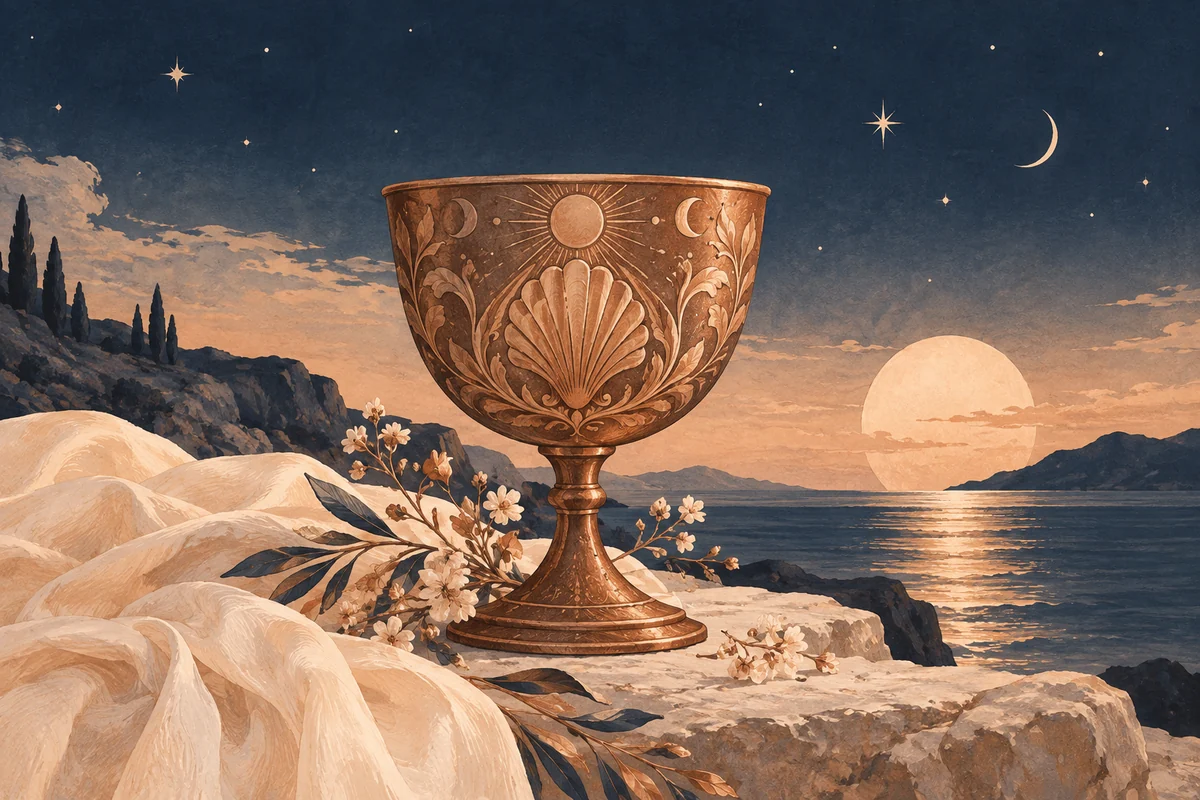
This comprehensive Thoth Tarot review explores one of the most influential esoteric decks in modern divination, examining its distinct history, complex symbolism, and unique visual architecture. Designed by occultist Aleister Crowley and painted by artist Lady Frieda Harris, the deck blends astrology, alchemy, and sacred geometry into a rigorous meditative framework. While it diverges significantly from the familiar Rider-Waite-Smith system, it offers profound psychological clarity for readers seeking depth over simple fortune-telling.
The Origins and Creation of the Thoth Tarot
The story of the Thoth Tarot began in London in 1938 when Lady Frieda Harris, an accomplished painter and esoteric student, began working with Aleister Crowley. Originally conceived as a brief project to re-illustrate the traditional Golden Dawn Tarot, the undertaking expanded into a five-year collaborative masterpiece. Harris committed considerable financial support and creative labor to the deck, producing multiple watercolor studies for many cards. The pair completed the paintings in 1943, though neither lived to see the completed deck printed as an independent card set.
Crowley published the artwork alongside his extensive theoretical commentary in 1944 under the title The Book of Thoth. The physical deck was not officially published in card format until 1969, when it was issued posthumously through the efforts of the Ordo Templi Orientis and publisher Samuel Weiser. Because the deck originated during the turmoil of World War II, its imagery reflects a dramatic tension between destruction and cultural reinvention that remains palpable in every reading.
Historically, the partnership between Crowley and Harris combined intricate esoteric theory with advanced fine art techniques. Crowley provided the dense web of astrological decans, Qabalistic paths, and mythological references, while Harris translated those cerebral concepts into vibrant visual compositions. Today, historians recognize Harris not merely as an illustrator following instructions, but as an indispensable co-creator whose artistic decisions defined the spiritual atmosphere of the entire deck.
The Visual Style and Geometry of Lady Frieda Harris
The visual signature of the Thoth Tarot stands out immediately from any other traditional deck. Harris drew heavily on projective synthetic cubism, dynamic symmetry, and anthroposophical ideas influenced by Rudolf Steiner. Rather than placing figures on flat theatrical stages, she constructed multi-dimensional planes that evoke motion, vibration, and translucent light. Lines of force intersect across every composition, inviting the eye to move inward rather than resting on surface details.
Color in the Thoth deck functions as an active language rather than mere decoration. Harris utilized the complex four-color scales developed by the Hermetic Order of the Golden Dawn, representing the king, queen, emperor, and empress color palettes across the elements. Fiery crimsons clash with cool emerald greens, and shimmering opalescent highlights create a feeling of living energy. This deliberate color theory ensures that cards provoke an emotional and intuitive response before the reader even analyzes their formal meaning.
These aesthetic choices turn each card into a portal for active contemplation rather than a simple storytelling scene. Harris painted sweeping curves and geometric lattices that symbolize cosmic laws, celestial movements, and inner psychological states. When practitioners engage with these images, the visual architecture encourages them to reflect on the unseen structures beneath their daily challenges rather than searching for literal characters.
Key Structural Differences from the Rider-Waite-Smith Deck
Readers transitioning from the Rider-Waite-Smith system will encounter several notable structural differences. Crowley restored the Major Arcana order favored by the Golden Dawn, placing Adjustment at card VIII and Lust at card XI. In the Rider-Waite-Smith tradition, these slots contain Strength and Justice respectively. The renaming of these trumps signifies a philosophical shift: Adjustment represents dynamic cosmic equilibrium, while Lust evokes ecstatic passion and vital animal power rather than gentle restraint.
Other Major Arcana trumps received modern titles reflecting Crowley's spiritual doctrine of the New Aeon. Temperance became Art, emphasizing the alchemical marriage of opposites and creative synthesis. Judgement was reimagined as The Aeon, portraying the emergence of a new psychological era rather than a final day of reckoning. Finally, The World was renamed The Universe, highlighting the endless, evolving cosmos rather than a static terrestrial realm.
The court cards also follow an entirely distinct hierarchical structure. The Thoth system replaces the familiar Kings, Queens, Knights, and Pages with Knights, Queens, Princes, and Princesses. The mounted Knight corresponds to the dynamic fiery father figure, while the Prince drives a chariot as the airy son. The Princess stands ground as the earthly daughter, grounding the lineage. Understanding these family dynamics is essential for accurate character and situational analysis in readings.
Interpreting the Minor Arcana and the Suit of Disks
The Minor Arcana represents perhaps the biggest adjustment for readers accustomed to narrative cards. Unlike Pamela Colman Smith's famous illustrated scenes showing people interacting in recognizable settings, the Thoth pip cards feature symbolic configurations of suit emblems surrounded by astrological signs. Swords float through swirling air currents, Cups manifest as delicate vessels receiving energetic streams, and Wands appear as burning torches and geometric staves.
To aid interpretation, each pip card bears a titled keyword inscribed directly on the bottom border. Cards like the Two of Swords (Peace), the Three of Swords (Sorrow), and the Four of Swords (Truce) provide clear thematic anchors rooted in Golden Dawn astrological decans. These titles should not be viewed as rigid verdicts. Instead, experienced readers treat the keyword as a central meditation theme, considering how harmony or tension operates within the inquirer's current circumstances.
The suit of Pentacles is renamed the suit of Disks, reflecting rotating wheels of physical force rather than static coins. Disks represent manifest reality, physical health, material projects, and biological rhythms. The designs incorporate sacred geometry, coins, and alchemical emblems that emphasize the continuous movement of matter. Reflecting on cards like the Three of Disks (Works) or the Seven of Disks (Failure) encourages honest examination of practical efforts and resource management.
Thoth Tarot Review: Practical Strengths and Challenges
In this Thoth Tarot review, several clear practical strengths emerge for the modern practitioner. The deck excels at deep psychological inquiry, spiritual shadow work, and root-cause analysis. Because the symbols are derived from universal archetypes, astrology, and elemental dignity rules, readings tend to bypass superficial day-to-day gossip and strike directly at fundamental patterns of consciousness. Practitioners frequently describe the deck as uncompromisingly direct, revealing hidden motives and unconscious blocks with remarkable clarity.
However, the deck presents genuine challenges for beginners. The sheer density of occult correspondence can feel overwhelming to those unfamiliar with planetary rulerships, zodiacal signs, or Qabalistic spheres. Without study, readers may struggle to interpret pip cards that lack figurative human drama, relying too heavily on the printed keywords. This can lead to overly fatalistic readings if terms like Ruin, Cruelty, or Defeat are taken as absolute predictions rather than symbolic descriptions of mental states.
Another consideration is the intense energetic tone of the deck. Crowley infused his worldview into the card concepts, which some sensitive readers find confrontational or austere compared to gentler, modern decks. Yet this raw honesty is precisely what makes the deck enduring. When approached with curiosity and critical discernment, the Thoth Tarot acts as a mirror that respects the reader's intellect and invites serious personal growth.
Who the Deck Suits and How to Practice With It
The Thoth Tarot suits intermediate and advanced readers who crave a structured, esoteric framework that rewards rigorous intellectual and intuitive study. It is particularly well-suited for practicing astrologers, who will immediately recognize the planetary decans assigned to each minor card. It also appeals to artists, designers, and students of sacred geometry who find inspiration in Lady Frieda Harris's dynamic, luminous compositions.
If you are drawn to this deck, begin your practice slowly by focusing on single-card daily reflections rather than complex Celtic Cross spreads. Select one card each morning, observe its geometric forms and color palette, and examine its astrological symbol. Ask yourself questions like: How does this card's dynamic keyword manifest in my emotional world today? Where do I notice these elemental forces interacting within my environment?
Ultimately, this thoth tarot review concludes that the deck remains a towering achievement in modern divination. It does not promise fixed outcomes or supernatural certainties, but it provides an unmatched symbolic mirror for personal contemplation. By treating its cards as allegorical maps rather than rigid prophecies, you can develop a deeply rewarding relationship with one of the twentieth century's greatest esoteric creations.
Frequently asked questions
Is the Thoth Tarot suitable for complete beginners?
While complete beginners can learn with the Thoth Tarot, it has a steeper learning curve than narrative decks like the Rider-Waite-Smith. Beginners must learn astrological decans and abstract symbolism rather than reading human scenes. However, committed newcomers who appreciate structured esoteric study can still succeed by taking their time.
Why are the Thoth court cards different from traditional decks?
Crowley aligned the court cards with Golden Dawn elemental hierarchies, replacing Kings and Pages with Knights and Princesses. In this system, Knights represent active fiery energy, Queens symbolize reflective watery wisdom, Princes drive airy intellectual movement, and Princesses embody earthly physical manifestation, creating a balanced fourfold elemental dynamic.
Do I need to understand Kabbalah to read the Thoth deck?
You do not need an advanced mastery of Kabbalah to read the Thoth deck effectively, although basic knowledge enhances your understanding. Beginners can start by working with the elemental suits, the printed keywords, and astrological symbols before gradually exploring the deeper Tree of Life correspondences at their own pace.
What is the best way to handle negative card keywords like Ruin or Sorrow?
Treat challenging keywords as descriptions of temporary psychological states or developmental challenges rather than literal prophecies. In divination practice, cards like Sorrow or Ruin highlight where old perspectives must be released, inviting constructive self-reflection on emotional patterns rather than predicting inevitable distress.