Universal Waite Tarot Review: Art, Symbolism, and Uses
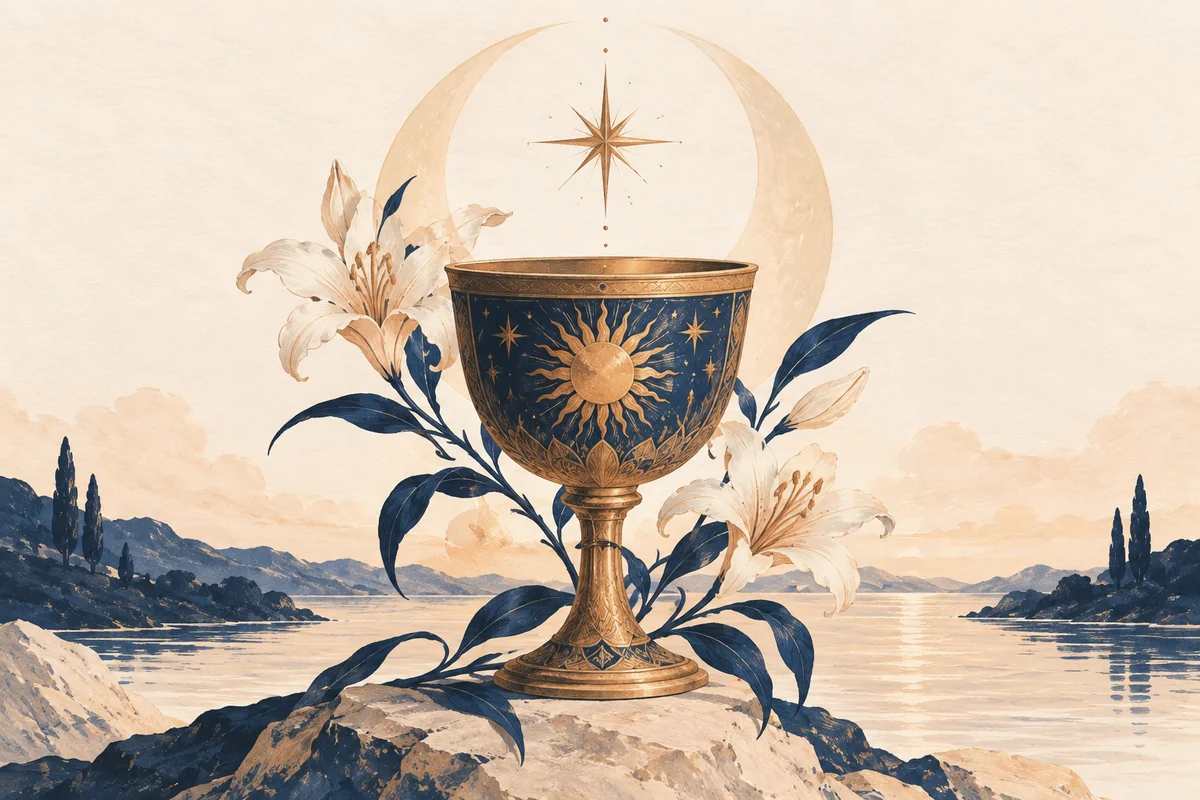
The Universal Waite Tarot is a recolored edition of the classic Rider-Waite-Smith deck, featuring softened pencil drawings rendered by artist Mary Hanson-Roberts over Pamela Colman Smith's iconic line art. In this Universal Waite Tarot review, readers discover an accessible, visually soothing deck that preserves traditional esoteric symbolism while offering approachable imagery for daily contemplation. It serves as an ideal bridge for beginners and seasoned practitioners who want the clarity of the 1909 system without its harsh printing artifacts.
The Origins of the Universal Waite Tarot
The Universal Waite Tarot emerged in 1990 through publisher U.S. Games Systems, conceived as a gentler reinterpretation of the foundational 1909 Rider-Waite-Smith deck. The original cards, designed by occultist Arthur Edward Waite and illustrated by artist Pamela Colman Smith, relied on heavy black ink outlines and flat primary colors driven by early twentieth-century commercial printing constraints. While historically significant, modern practitioners frequently found those early printings visually stark or abrasive during delicate personal readings.
To refresh the classic imagery, illustrator Mary Hanson-Roberts was commissioned to redraw and recolor Smith's original line work using colored pencils. Hanson-Roberts was already respected in the divination community for her own eponymous deck, celebrated for her mastery of light, gentle modeling, and delicate portraiture. Her delicate touch brought depth to Smith's visionary allegories without altering the fundamental composition, astrological correspondences, or ceremonial framing established in Waite's original system.
Today, the Universal Waite stands as one of the most widely circulated editions in global Tarot history. It does not attempt to reinvent the wheel or inject idiosyncratic philosophies into the seventy-eight cards. Instead, it honors the collaborative heritage of Smith and Waite by making their archetypal vocabulary feel welcoming and visually coherent for modern generations of reflective practitioners.
Artistic Style: Color, Shading, and Expressive Detail
The primary distinction of the Universal Waite lies in its medium. Where traditional historic printings feature solid fills of primary yellow, red, and blue, Mary Hanson-Roberts applied layered colored pencils to create gradual gradients and soft highlights. The sunbeams in The Sun card glow with warm radiance rather than sharp chemical ink, and the nocturnal skies in The Star feel atmospheric and vast rather than flat and uniform.
Facial expressions also undergo a meaningful transformation under Hanson-Roberts's hand. In Pamela Colman Smith's initial sketches, figures often displayed stoic, severe, or ambiguous stares that could alienate clients unfamiliar with turn-of-the-century illustration. Hanson-Roberts softened these features, giving cards like the Queen of Cups and the Three of Swords an air of compassionate humanity rather than stern detachment, which helps readers connect directly with the psychological underpinnings of each scene.
Textural rendering across drapery, landscapes, and architectural masonry further enriches the deck's aesthetic appeal. Foliage in the Nine of Pentacles possesses dimensional weight, while the stony walls of the Four of Pentacles show subtle weathering. These granular artistic choices preserve visual clarity, allowing quiet symbols such as salamanders on the King of Wands or tiny pomegranates on the High Priestess to remain effortlessly legible across the reading table.
Universal Waite Tarot Review: Tabletop Reading Experience
Evaluating the Universal Waite Tarot review experience requires assessing how comfortably the imagery translates into real-time interpretation. At the table, the cards convey their traditional meanings with remarkable fluidity. Because Hanson-Roberts maintained the precise symbolic arrangements crafted by Waite and Smith, you do not need to memorize new card structures, altered suits, or nonstandard elemental associations. The four suits remain Wands, Cups, Swords, and Pentacles, anchored by standard Major Arcana titles.
The muted visual register shifts the emotional atmosphere of a consultation. In decks featuring high-contrast black line work, cards traditionally associated with crisis, such as the Tower or the Ten of Swords, can produce immediate alarm in a querent. The Universal Waite renders these difficult archetypes with softer tonality, framing them as opportunities for personal inventory, transition, and psychological renewal rather than catastrophic declarations of unavoidable doom.
Card handling is equally dependable across various editions, including standard pocket and tin formats commonly produced for this title. The card stock typically provides a clean balance between flexibility and resilience, shuffling smoothly without excessive stiffness. For long study sessions or multi-card spreads like the Celtic Cross, the cohesive pastel color balance prevents eye fatigue and fosters a meditative, grounded mindset.
Comparing the Universal Waite with the Rider-Waite-Smith
When comparing the Universal Waite directly against traditional Rider-Waite-Smith printings, the differences center on visual warmth rather than esoteric mechanics. The original 1909 deck—often encountered today as the Pamela Colman Smith Commemorative Set or the standard yellow-box Rider deck—features bold graphic linework reminiscent of vintage block prints. That starkness carries antique charm, but it can feel emotionally distant compared to Hanson-Roberts's soft, blended surfaces.
Another key contrast is the treatment of background lighting and elemental mood. In Smith's original art, flat yellow grounds dominate many scenes, creating high-key brightness that unifies the cards but flattens physical perspective. The Universal Waite replaces these flat expanses with modeled skies that suggest specific times of day, from pale dawn light in the Fool to quiet dusk in the Eight of Cups. This environmental shading assists intuitive readers who rely on atmospheric impressions.
Despite these visual variations, the intellectual framework remains identical. A reader trained on the Universal Waite can pick up any historic or contemporary clone deck without missing a beat. Every astrological glyph, Kabbalistic cue, and heraldic banner remains in its assigned spot, ensuring that your study builds lasting, universally transferable foundational knowledge across the wider divination landscape.
Who the Universal Waite Tarot Deck Suits Best
This deck serves beginners exceptionally well because it eliminates visual confusion while maintaining total fidelity to standard instructional literature. When you consult introductory books by authors such as Rachel Pollack or Joan Bunning, the descriptions match the Universal Waite line for line. New students can build confidence identifying core symbols, Court Card attributes, and pip progressions without stumbling over idiosyncratic artistic liberties.
Professional readers and counselors also favor the Universal Waite for client-facing consultations. When working with people who are anxious or encountering divination for the first time, aggressive visuals can provoke unnecessary apprehension. The deck's comforting pastel palette creates a neutral, gentle container where querents feel safe examining sensitive challenges around relationships, vocational transitions, and internal emotional conflicts.
Finally, the deck appeals to experienced practitioners seeking a reliable daily driver for personal reflection and journaling. If you find standard RWS reproductions visually loud or poorly reproduced on modern presses, the thoughtful draftsmanship of Hanson-Roberts offers a soothing, elegant alternative. It invites slow contemplation, making it a peaceful companion for morning draws and quiet evening reviews.
Practical Ways to Read and Reflect with This Deck
To begin working with the Universal Waite, start by examining the cards without relying immediately on written definitions. Place the Fool beside The Magician and observe how Hanson-Roberts uses light and posture to contrast youthful innocence with intentional mastery. Ask yourself: What emotional tone does the softened color palette evoke, and how does the character's facial expression alter my initial reaction to the card?
A practical daily three-card layout works wonderfully with this deck to explore everyday dynamics. Designate card one as your present mindset, card two as an unseen environmental influence, and card three as an empowering action step. Because the colored pencil details highlight delicate natural textures, pay attention to elements like growing plants, moving water, and resting animals in each image as visual mirrors for your current vitality and inner tempo.
Consider maintaining a dedicated study journal where you record your responses to challenging cards. When you draw the Five of Pentacles or the Eight of Swords, reflect on how the compassionate artwork reframes hardship into an invitation for support and psychological clarity. Divination operates best as a symbolic tool for honest introspection, and the Universal Waite provides an orderly, comforting lens for discovering self-awareness over time.
Frequently asked questions
Is the Universal Waite Tarot suitable for absolute beginners?
Yes, it is widely considered one of the best choices for beginners. Because it faithfully preserves Pamela Colman Smith's original imagery while softening the lines and colors, every classic Rider-Waite-Smith learning guide applies directly to this deck without any confusion.
What is the main difference between Universal Waite and the original Rider deck?
The primary difference lies in the artistic medium. The original 1909 deck uses bold ink outlines with flat primary colors, whereas the Universal Waite features colored pencil shading by Mary Hanson-Roberts, creating gentle gradients, softer facial expressions, and more realistic environmental lighting.
Who illustrated the Universal Waite Tarot?
The imagery was originally drawn by Pamela Colman Smith in 1909 under the guidance of Arthur Edward Waite. In 1990, artist Mary Hanson-Roberts recolored and re-rendered Smith's line art using colored pencils for U.S. Games Systems.
Can I use standard Tarot books to read the Universal Waite?
Absolutely. Because the deck maintains the exact iconography, suit titles, and card numbering of the 1909 Rider-Waite-Smith tradition, virtually every classic and contemporary Tarot instructional book will match this deck's symbolism card for card.