Ace of Cups Reversed Meaning: A Tarot Guide
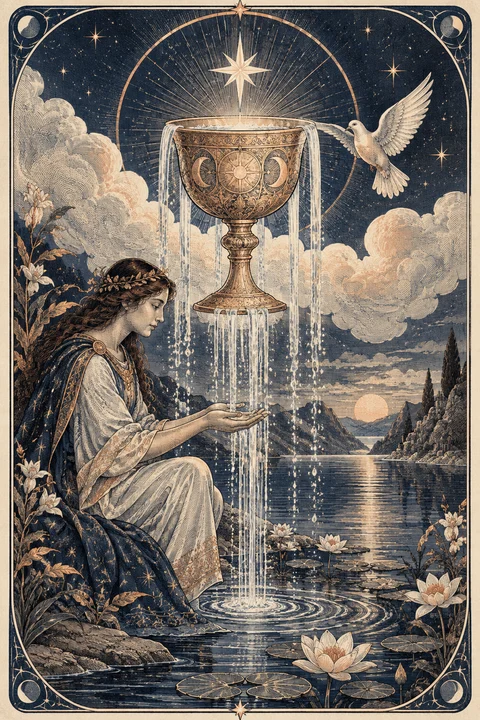
The Ace of Cups reversed meaning centers on emotional depletion, blocked feelings, or love that needs to be directed inward rather than shared outward. In the Rider-Waite-Smith tradition, an upright cup overflows with divine grace and creative renewal, but when inverted, the card suggests that your emotional reservoir has run dry or is being withheld. Many readers view this card as a gentle call to heal past wounds, replenish personal boundaries, and cultivate self-compassion before seeking external connection.
Understanding the Ace of Cups and the Suit of Cups
In the Minor Arcana, the suit of Cups corresponds to the element of Water, governing the fluid realms of emotion, psychic intuition, love, and imaginative expression. Aces represent the purest, most concentrated seed of their suit. While numbered cards chronicle complex circumstances, an Ace introduces raw potential waiting to take root. The standard Rider-Waite-Smith imagery depicts an angelic hand emerging from a cloud, cradling a golden chalice that pours forth five streams of living water into a lily-covered pond, crowned by a dove bearing a communion wafer.
When upright, the Ace of Cups signals a new beginning saturated with empathy, spiritual inspiration, and open-hearted vulnerability. It signifies an awakening of deep compassion, whether through a burgeoning romantic partnership, a sudden spark of artistic passion, or an intuitive breakthrough. The chalice offers an inexhaustible spring of connection that asks the querent to receive freely and let affection spill outward without fear of loss.
Turning this card upside down alters the movement of that sacred current. An inverted chalice can no longer hold water in the traditional manner; the liquid either spills away or remains trapped within an inaccessible container. Consequently, the core inquiry shifts from celebrating an effortless outpouring of affection to examining where the natural current of feeling has stalled, evaporated, or turned back upon itself.
Core Themes of the Ace of Cups Reversed Meaning
At its foundational level, the Ace of Cups reversed meaning reflects a state of emotional vulnerability that feels unsafe or unsustainable. When this card appears, practitioners frequently describe an internal feeling of emptiness or exhaustion. You may feel as though you have given everything to family members, romantic partners, or professional duties, leaving nothing behind for your own restoration. The vessel is tipped, and its vital resources have drained away without being replenished by meaningful reciprocity.
A second common theme involves emotional repression and self-protection. Following heartbreak, disappointment, or childhood trauma, many individuals construct rigid walls around the heart center. The inverted cup suggests that tender feelings are locked down out of self-preservation. While guarding your heart may shield you from immediate pain, it simultaneously obstructs authentic joy, artistic inspiration, and intimacy, leaving life feeling unexpectedly flat or mechanical.
Finally, the card frequently highlights emotional overflow or instability. Water without boundaries becomes a flood that erodes stable ground. When an individual experiences overwhelming waves of grief, jealousy, or romantic obsession, the Ace of Cups reversed warns that unanchored sentimentality can drown rational discernment. In this context, the card asks you to pause, stabilize your perspective, and rebuild sturdy emotional structures.
How Different Tarot Traditions Read the Reversal
Tarot readers do not share a single universal formula for interpreting reversed cards, and the Ace of Cups provides an illuminating example of divergent methodologies. One influential school of thought views reversals strictly as blocked energy. Within this framework, the upright potential of the card remains present, but external obstacles or conscious hesitation prevent it from manifesting in everyday reality. The love or creativity is waiting just beneath the surface, yet something obstructs its flow.
A second major tradition views reversed cards as internalized energy. Rather than signifying a lack of affection or an outright obstacle, the inverted cup draws attention to the inner landscape. Under this perspective, the card emphasizes self-love, solitary spiritual contemplation, and private emotional recovery. You are not necessarily meant to initiate a public romance or launch a collaborative project; instead, you are invited to direct compassion toward your own healing journey.
A third interpretive approach examines reversals as extremes, either as a deficiency or an excess of the suit's elemental nature. As a deficiency, the card signifies apathy, emotional numbness, or cynicism. As an excess, it signifies intense codependency, overwhelming mood swings, or emotional martyrdom. Recognizing these different interpretive frameworks allows you to select the perspective that aligns most authentically with the narrative context of your reading.
Ace of Cups Reversed in Love and Relationship Readings
When exploring romantic dynamics, the Ace of Cups reversed often highlights imbalances in how affection is shared and received. For individuals navigating committed partnerships, this card may reveal an underlying current of emotional detachment or quiet resentment. One or both partners may feel taken for granted, holding back authentic disclosures because past attempts at vulnerability were met with dismissal or misunderstanding.
In some readings, the card surfaces when a relationship has become an emotional sponge rather than an inspiring fountain. You might find yourself managing your partner's moods while neglecting your core happiness, fostering codependent habits that ultimately breed exhaustion. The card prompts honest dialogue: Are you speaking your truth openly, or are you withholding affection to maintain a fragile, artificial peace?
For single querents, the reversed card frequently advises against jumping into new partnerships out of a fear of loneliness. It can signify that old relationship scars have not fully closed, creating an unconscious reluctance to trust someone new. Taking dedicated time to nurture self-worth and establish firm personal boundaries ensures that your next emotional commitment begins from wholeness rather than deficit.
Career, Finances, and the Creative Process
In professional and financial inquiries, the Ace of Cups reversed addresses inspiration, vocation, and emotional fulfillment within your daily labor. If you feel chronically uninspired, unmotivated, or detached from your chosen career path, this card mirrors that disillusionment. It often emerges during severe workplace burnout, indicating that you have depleted your creative enthusiasm on tasks that provide little authentic meaning or personal resonance.
Creative practitioners—including writers, painters, musicians, and designers—often encounter this card during frustrating artistic blocks. The well of imagination feels dry, and attempts to force creative production only increase self-doubt. In these moments, the card advises stepping away from high-pressure demands. Inspiration cannot be coerced; it returns when you give your subconscious mind space to rest without evaluation or rigid deadlines.
Financially, while Coins govern tangible currency, Cups illuminate your relationship with security and abundance. The reversed Ace can caution against impulsive retail therapy used to soothe underlying emotional distress. When you attempt to mend sadness or anxiety through material spending, the comfort is fleeting. Addressing the underlying emotional void directly offers lasting relief and prevents unnecessary financial strain.
Reading the Card in Context: Surrounding Cards and Spreads
Tarot cards rarely speak in isolation; their messages become sharp and nuanced through their neighbors in a spread. When the reversed Ace of Cups appears alongside challenging Swords, such as the Three of Swords or Nine of Swords, the card emphasizes acute heartache, mental anguish, or painful isolation. Here, the challenge involves facing painful truths and seeking patient healing rather than intellectualizing your sorrow away.
Conversely, if the card is flanked by restorative cards such as The Star, the Four of Swords, or the Queen of Cups, the tone softens dramatically. This configuration confirms that emotional withdrawal is not a failure, but a necessary period of therapeutic retreat. You are being encouraged to step back from social demands, replenish your nervous system, and allow your emotional reserves to rebuild in absolute peace.
When paired with active Wands or Pentacles, such as the Eight of Pentacles or the Ace of Wands, the card suggests that practical dedication or a new physical project can serve as a grounded anchor. By channeling energy into tangible craft or healthy routines, you create a stable container that allows your unsettled emotions to gently recalibrate over time.
Reflective Practices and Living with the Ace of Cups Reversed Meaning
Interpreting the Ace of Cups reversed meaning offers a valuable opportunity for personal introspection and restorative self-care. Rather than viewing the inversion as an unwelcome sign of loss, you can treat it as a supportive mirror reflecting the present state of your inner reservoir. Divination functions best as a contemplative instrument that illuminates unconscious habits, helping you make conscious, empowered adjustments in your daily life.
To work constructively with this card, consider sitting quietly with a journal and exploring targeted questions. Ask yourself where you have been overextending your emotional energy without receiving nourishment in return. Inquire whether there are tender feelings you have tucked away out of fear, and examine what small, gentle acts of self-compassion could restore your sense of peace today.
Ultimately, an inverted cup reminds us that empty vessels cannot pour indefinitely. By honoring your personal limitations, establishing resilient emotional boundaries, and tending to your quietest needs, you gradually right the chalice. In time, the natural springs of empathy, love, and creativity will gather anew, ready to flow effortlessly outward once more.
Frequently asked questions
What is the primary message of the Ace of Cups reversed?
The primary message is one of emotional depletion, internal healing, or guarded vulnerability. It invites you to pause, nurture your own well-being, and replenish your spiritual cup before giving your energy to others.
Does the Ace of Cups reversed always indicate a romantic breakup?
No, it does not guarantee a breakup. While it can highlight emotional distance or unexpressed grievances in a partnership, it often points to temporary burnout, personal insecurity, or a mutual need for better emotional boundaries.
Can the Ace of Cups reversed represent a positive message?
Yes. When read as internalized energy, it is a powerful symbol of deep self-love, emotional sovereignty, and private recuperation, signaling a crucial phase where you rebuild your inner foundation away from external distractions.
How can I unblock the energy of an inverted Ace of Cups?
You can unblock this energy by practicing honest self-compassion, stepping away from draining social obligations, expressing suppressed feelings through journaling or creative arts, and allowing yourself adequate time to rest without judgment.