Eight of Swords Reversed Meaning: Freedom and Clarity
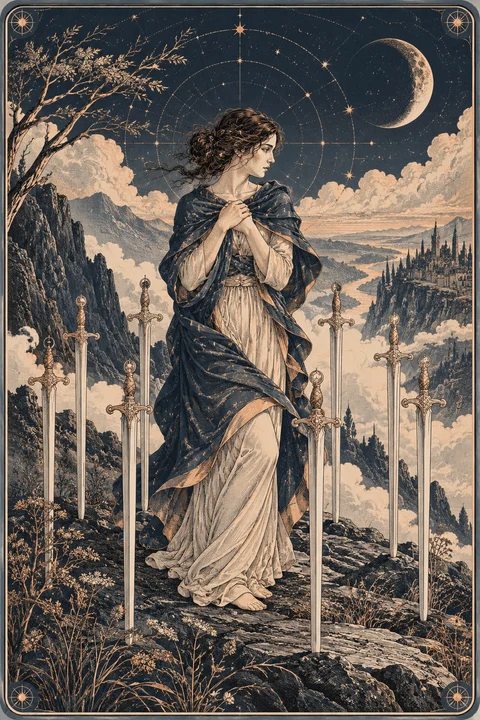
The eight of swords reversed meaning centers on liberation, emerging mental clarity, and the release from self-imposed limitations. While the upright card represents feeling trapped by anxiety or external circumstances, the reversal traditionally indicates that the blindfold is slipping off and you are beginning to see your way out. Most Tarot readers interpret this card as an invitation to claim personal agency and dismantle old fears that no longer serve you.
The Core Symbolism of the Eight of Swords
In the standard Rider-Waite-Smith deck, the Eight of Swords belongs to the suit of Swords, which corresponds to the element of Air. Air governs the intellectual realm, including thoughts, communication, beliefs, and conflict. The classic illustration displays a woman bound with loose cords, surrounded by eight planted swords, standing blindfolded in shallow water. Her bindings are noticeably slack, suggesting that her entrapment is sustained by perception rather than impenetrable physical barriers.
When the card is viewed upright, it reflects the painful sensation of being cornered by catastrophic thinking, victimization, or paralyzing indecision. Practitioners describe the water at her feet as the emotional subconscious, while the grey sky emphasizes intellectual bleakness. The scene depicts a crisis of perspective, where a person believes every exit is barred, despite having room to navigate carefully toward safety.
Turning the card upside down alters this visual narrative profoundly. Gravitationally, the swords seem to fall away, the blindfold loosens, and the figure steps onto firmer ground. This visual shift captures the psychological transition from feeling helpless to recognizing that the doors of your cage were unlocked all along.
Understanding the Eight of Swords Reversed Meaning
When exploring the eight of swords reversed meaning, readers look first at the restoration of personal accountability. Rather than waiting for an outside savior, you are beginning to cut your own ropes. You might experience an epiphany that disproves a longstanding fear, or you might finally admit that staying stuck was a defense mechanism against the vulnerability of making a genuine decision.
This reversal often surfaces after an extended period of stress, depression, or intellectual burnout. It marks the dawn of mental stamina and renewed optimism. Many readers describe this moment as the quiet realization that previous anxieties were blown out of proportion by fatigue or self-doubt. You begin to question your inner critic and replace irrational assumptions with factual observations.
However, liberation does not guarantee instantaneous comfort. Removing a blindfold after dwelling in darkness can cause sensory shock, requiring deliberate adjustment. Acknowledging that you are free means taking ownership of your choices, which demands courage. The reversed Eight of Swords invites you to welcome that responsibility with grace rather than apprehension.
Four Interpretive Lenses for the Reversal
Tarot readers interpret card reversals using distinct frameworks, each offering nuanced insight into the querent's current journey. One common approach views the reversal as the release of blocked energy. Here, the stagnancy of the upright card dissolves entirely, allowing clear thinking and swift resolution to return to an intractable problem.
A second perspective examines the card as an internal experience. If an upright card reflects external drama, the reversed Eight of Swords can indicate quiet mental labor taking place behind closed doors. You may look composed to colleagues and loved ones, but internally, you are actively deconstructing deep-rooted insecurities, shame, or phobias without sharing that fight publicly.
The third framework views reversals as an excess of the card's essential qualities. In this scenario, the reversal warns of extreme self-sabotage or catastrophic overthinking that paralyzes the individual completely. The person may surrender their agency so thoroughly that they refuse to acknowledge tangible opportunities for escape, clinging stubbornly to a familiar narrative of victimhood.
Finally, the lens of lack suggests an inability to recognize genuine danger. In trying to avoid feeling trapped, a person might rush forward impulsively, ignoring necessary warnings or practical risks. Balancing these frameworks requires looking at surrounding cards to determine whether the reversal indicates true liberation, quiet internal struggle, or lingering denial.
The Eight of Swords Reversed in Love and Relationships
In relationship spreads, the Eight of Swords reversed frequently points to honest breakthroughs and broken silences. If you have felt suffocated by codependency, unspoken resentment, or fear of abandonment, this card suggests that the truth is ready to be spoken. Partners who have felt paralyzed by repetitive arguments may suddenly identify the underlying insecurity driving their conflict.
For those trapped in toxic or unfulfilling partnerships, this card often signals the decisive moment of departure. Many readers interpret the card as the inner resolve required to end an unhealthy dynamic. The realization that you deserve respect and mutual care outweighs the dread of being alone, allowing you to establish firm, protective boundaries.
Single seekers drawing this card are often moving past historical heartbreak. You may be dismantling defensive walls erected after past rejections or recognizing how low self-esteem influenced previous dating patterns. By releasing outdated narratives about your worthiness, you open your life to healthier, more reciprocal romantic connections.
Career and Financial Implications of the Reversal
In professional readings, the Eight of Swords reversed signifies career autonomy and innovative problem-solving. You may have spent months feeling trapped in an unrewarding position, under the thumb of a micromanaging supervisor, or paralyzed by impostor syndrome. The reversal indicates that you are finding practical routes around workplace obstacles or preparing to pursue new opportunities.
This card frequently mirrors the moment an entrepreneur or employee stops asking for permission to innovate. You realize that bureaucratic delays or self-doubt were the only things stalling your progress. By speaking up in meetings, pitching original ideas, or applying for advanced roles, you actively shed professional inertia.
Financially, this reversal advises stripping away anxious avoidance in favor of realistic accounting. If monetary obligations have felt overwhelming, ignoring bank statements only amplifies stress. The card encourages facing budgets directly, consulting reputable resources, and implementing a methodical strategy to regain fiscal balance and peace of mind.
How Different Traditions Interpret the Card
Divination systems treat reversals according to their historical roots and underlying philosophy. In the Hermetic Order of the Golden Dawn tradition, the Eight of Swords corresponds to the first decan of Gemini and is designated the 'Lord of Shortened Force,' ruled by Jupiter. Upright, it signifies intellect restricted by circumstance; reversed, traditional Golden Dawn practitioners viewed it as unexpected release, unforeseen assistance, or small strokes of fortune breaking a stalemate.
Modern psychological Tarot, developed heavily in late twentieth-century American esoteric circles, moves away from fateful events and focuses on cognitive patterns. In this school, the card represents the conscious deconstruction of cognitive distortions like catastrophizing, black-and-white thinking, and learned helplessness. Readers view the reversed card as a milestone in cognitive reframing.
Conversely, traditional European cartomancy systems sometimes viewed reversals as simple aggravations of bad omens. When traditions disagree, modern practitioners generally favor psychological empowerment over fatalism. Viewing the cards as symbolic mirrors encourages seekers to use the imagery for reflection and intentional living rather than predictive certainty.
Reflecting on Your Path to Freedom
Working constructively with the eight of swords reversed meaning requires evaluating where you hold unexercised power. Begin by writing down the situations in your life where you feel most helpless. Beside each item, ask yourself which aspects are genuinely beyond your control and which aspects are shaped by fear of change or discomfort.
Consider practical questions during your personal journaling or meditation sessions. What story about yourself are you finally ready to drop? Who benefits when you stay small, passive, or quiet? What is the very first small step you can take today that proves you are not helpless? Answering these prompts grounds the card's lofty symbolism in tangible action.
Remember that Tarot operates as a symbolic framework for contemplative self-reflection rather than an unchangeable script. The Eight of Swords reversed reminds you that mental sovereignty is an ongoing practice. Whenever self-doubt tempts you to slip the blindfold back on, trust your resilience, step across the threshold, and walk forward into the open field.
Frequently asked questions
What does the Eight of Swords reversed mean in a yes or no reading?
In a simple yes or no spread, the Eight of Swords reversed leans toward a clear yes, particularly regarding questions about overcoming obstacles, leaving bad situations, or finding clarity. It suggests that previous stagnation is clearing away, allowing you to move forward. However, it advises taking active responsibility rather than expecting things to resolve without personal effort.
Is the Eight of Swords reversed always positive?
Not necessarily. While many readers celebrate it as a symbol of release and awakening, some frameworks interpret it as severe mental overload, complete surrender to anxiety, or reckless disregard for legitimate boundaries. Contextual card combinations and the querent's current emotional state determine whether the card represents liberation or an intensified crisis.
How does the Eight of Swords reversed compare to the upright card?
The upright Eight of Swords depicts being mentally trapped, immobilized by fear, and unable to see obvious avenues of escape. The reversed card signifies the turning point where the blindfold slips, perspective returns, and the seeker takes active steps to remove their bonds, transforming passive suffering into empowered self-determination.
What cards commonly reinforce the Eight of Swords reversed?
Cards like The Fool, The Star, or the Ace of Swords strongly reinforce themes of fresh beginnings, mental clarity, and liberation when paired with this reversal. Conversely, cards like the Nine of Swords or The Moon may highlight ongoing anxiety, indicating that while freedom is available, deep emotional healing is still underway.