Knight of Pentacles Reversed Meaning in Tarot Readings
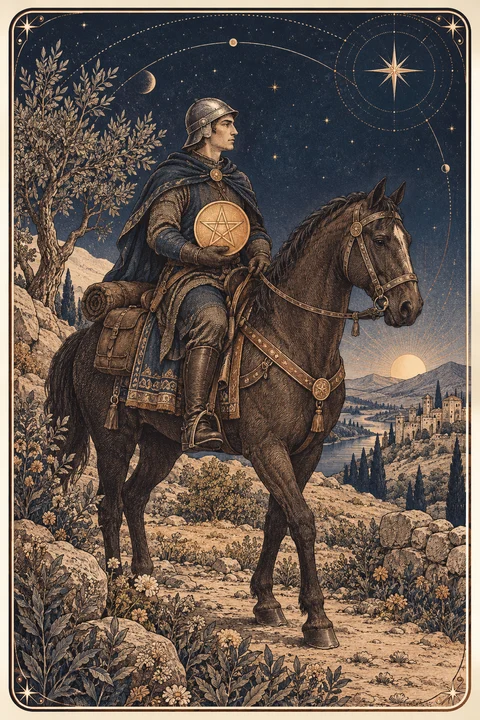
The Knight of Pentacles reversed meaning centers on stalled momentum, stubborn resistance, or an imbalance in your practical efforts. When this card appears upside down, it traditionally suggests that steady diligence has deteriorated into rigid perfectionism, apathy, or chronic procrastination. Rather than moving forward with patient determination, you may feel stuck in a tedious rut or drained by unrewarding labor.
Visual Symbolism and Rider-Waite-Smith Traditions
In the traditional Rider-Waite-Smith deck illustrated by Pamela Colman Smith, the upright Knight of Pentacles sits atop a heavy, motionless draft horse in a plowed field. He gazes thoughtfully at a single golden coin held carefully in his hand. Unlike the fiery Knight of Wands or the rushing Knight of Swords, this figure is grounded, deliberate, and deeply tied to the element of Earth. He embodies perseverance, practical craftsmanship, dependable loyalty, and the steady labor required to cultivate a bountiful harvest over time.
When the card is inverted, that stationary posture takes on a shadow expression. The heavy horse no longer represents patience waiting for the right moment to advance; instead, it symbolizes complete immobility, inertia, and resistance to necessary change. The fertile furrowed field behind him can suggest barren ground, neglected duties, or effort poured into unyielding soil. Readers often observe that the coin in his hand risks slipping away, pointing to financial oversights, wasted energy, or a loss of material focus.
Elemental associations deepen this reversed portrait. Pentacles correspond to the element of Earth, governing the physical body, finances, career, and tangible structures. When inverted, the grounding nature of Earth can tip into stagnation, narrow-minded materialism, or stubborn refusal to adapt. Conversely, it can indicate an unstable foundation where basic discipline collapses into carelessness. Interpreting the visual reversal reminds us to examine where our practical life has grown either excessively rigid or completely unanchored.
Core Knight of Pentacles Reversed Meaning and Interpretive Lenses
To understand the core Knight of Pentacles reversed meaning, readers often evaluate the card through several primary diagnostic lenses: blocked energy, internal experience, excess, or lack. When viewed as blocked energy, the card suggests that your hard work has encountered an external obstacle or bureaucratic delay. You may be putting in the necessary hours, but progress feels grindingly slow. External systems or stubborn individuals may be impeding your plans, requiring tactical patience rather than brute force.
Through the lens of internal experience, the reversed Knight often reflects private feelings of chronic fatigue, aimlessness, or disillusionment. You might still be going through the motions of your daily schedule while internally feeling emotionally disconnected from the end goal. This inward tension frequently surfaces when long-term duties stop offering personal meaning. Rather than an outright failure, the inverted card asks you to investigate whether your daily routines still align with your authentic values and spiritual vitality.
Finally, readers differentiate between the extremes of excess and lack. In excess, the Knight becomes a compulsive workaholic who micromanages every detail, obsesses over trivial flaws, and sacrifices joy for duty. In lack, the Knight manifests as laziness, broken promises, missed deadlines, and reckless disregard for basic responsibilities. Determining whether your situation suffers from hyper-fixation or underperformance helps you pinpoint the exact adjustment required to restore your personal equilibrium.
Work, Career, and Financial Stagnation
In professional readings, the reversed Knight of Pentacles frequently points to job dissatisfaction, career plateaus, or disrupted workplace dynamics. You might find yourself trapped in a repetitive position where there is little room for advancement or creative contribution. Alternatively, this card can highlight your own reluctance to take initiative, manifesting as procrastination on critical assignments. It serves as a gentle diagnostic warning that enduring a deadening routine out of fear of change will eventually drain your professional ambition.
Financial interpretations of this card usually address two contrasting financial behaviors. On one hand, it can warn against neglecting financial records, accumulating late fees through disorganization, or failing to follow through on a sensible savings plan. On the other hand, it can represent extreme stinginess and scarcity anxiety, where you cling tightly to resources and refuse to invest in necessary tools or modest pleasures. It reminds us that healthy financial stewardship requires both sensible caution and confident circulation.
If you are launching a business venture or independent project, the reversed Knight cautions against premature burnout. Trying to control every operational nuance without delegating can quickly exhaust your energy. Step back to evaluate whether your production timelines are realistic and whether your perfectionism has become an excuse to delay sharing your work with the public. Sustainable success relies on steady execution rather than flawed, unyielding rigidity.
Love, Relationships, and Interpersonal Patterns
When appearing in relationship inquiries, the inverted Knight of Pentacles often signifies emotional stagnation, predictable boredom, or unfulfilled promises. Long-term partnerships may have lapsed into domestic monotony where romantic partners feel more like roommates managing logistics than loving companions. The card invites couples to recognize when stability has hardened into complacency, encouraging intentional effort to introduce shared novelty, heartfelt appreciation, and emotional warmth into the partnership.
In some instances, this card can describe an individual partner or suitor who displays emotional unavailability, excessive stubbornness, or a refusal to commit to shared milestones. This person might prioritize career obligations to an extreme degree, leaving their companion feeling neglected and undervalued. Alternatively, it can indicate someone who struggles with basic adult responsibilities, relying on their partner to shoulder emotional labor, domestic management, and financial coordination.
For single individuals seeking connection, this card frequently suggests personal readiness blocks. You might be protecting yourself by clinging so tightly to rigid criteria that nobody can meet your exacting standards. Alternatively, you may be feeling too physically depleted from work and chores to dedicate energetic presence to dating. Taking time to revitalize your own daily well-being creates the emotional space needed to welcome a balanced relationship.
Personal Growth and Habit Realignment
On a personal and self-development level, this card highlights your relationship with habits, wellness, and self-discipline. It often surfaces when self-care practices have been abandoned in favor of relentless productivity, or conversely, when daily chaos has eroded your physical stamina. Neglecting balanced nutrition, restorative sleep, and physical movement often accompanies this reversal, as the bodily vessel demands the same conscientious tending that the upright Knight readily provides.
Perfectionism remains one of the card's most poignant themes in psychological Tarot practice. Many seekers struggle with an all-or-nothing mindset that paralyzes progress before a creative project or healthy habit can even take root. The reversed Knight teaches that small, imperfect efforts sustained over days yield far better outcomes than intermittent bursts of frantic overachievement followed by debilitating exhaustion. Embracing modest consistency helps dismantle the fear of making mistakes.
Consider using this card as a catalyst for life auditing. Take stock of your recurring calendar commitments and ask whether each obligation still deserves your finite hours and physical vitality. Clearing away outdated responsibilities creates immediate room for rejuvenating activities. True discipline is not mindless self-punishment; it is an organized act of self-respect that protects your time, preserves your energy, and honors your personal limitations.
Reading the Card in Context and Conclusion
A reversed card never operates in isolation within a Tarot spread; neighboring cards clarify whether the Knight represents external conditions or your own internal stance. For instance, paired with the Three of Swords or Ten of Wands, it strongly underscores severe physical exhaustion and mental overload that require immediate rest. Surrounded by cards from the suit of Cups, it suggests that practical stubbornness is currently interfering with genuine emotional communication and intimacy.
Different interpretive traditions also approach this card with unique nuances. Classical French and esoteric traditions sometimes treat the reversed Knight as an untrustworthy, idle messenger who brings news of missed opportunities or practical negligence. Contemporary psychological readers, by contrast, view the card as an internal summons to heal the inner critic, reconcile self-worth with productivity, and cultivate sustainable self-compassion across life's mundane duties.
Ultimately, understanding the knight of pentacles reversed meaning empowers you to break free from stagnation without abandoning your long-term dreams. Divination functions best as an intuitive mirror for personal reflection rather than a fixed prediction of destiny. By recognizing where your daily efforts have become unbalanced, you can release rigid expectations, recommit to nourishing routines, and proceed forward with steady, renewed confidence.
Frequently asked questions
Does the reversed Knight of Pentacles mean complete failure?
No, it does not mean failure. In traditional Tarot symbolism, this reversal simply indicates an interruption in momentum, poor pacing, or an unworkable routine. It serves as a practical diagnostic prompt to adjust your methods, rest if you are exhausted, or overcome procrastination before proceeding.
How can I tell if the card represents laziness or overwork?
Context from neighboring cards and honest self-reflection provide clarity. If surrounding cards depict stress and heavy burdens, the card usually points to burnout and perfectionism. If surrounding cards show hesitation or passivity, it often highlights inertia, boredom, or a lack of personal follow-through.
What action should I take when this card appears reversed?
Review your daily habits and simplify your priorities. Break large, intimidating tasks into small, manageable steps to counter procrastination. If you have been working relentlessly, schedule deliberate rest and release unrealistic standards of perfection so your energy can recover naturally.
Is the reversed Knight of Pentacles always about work and money?
While the suit of Pentacles corresponds to the material world, this card frequently describes emotional, domestic, or relational dynamics. It can point to emotional stubbornness, boring routines within a romantic partnership, neglected bodily wellness, or an inability to honor shared commitments.