Knight of Swords Reversed Meaning in Tarot Readings
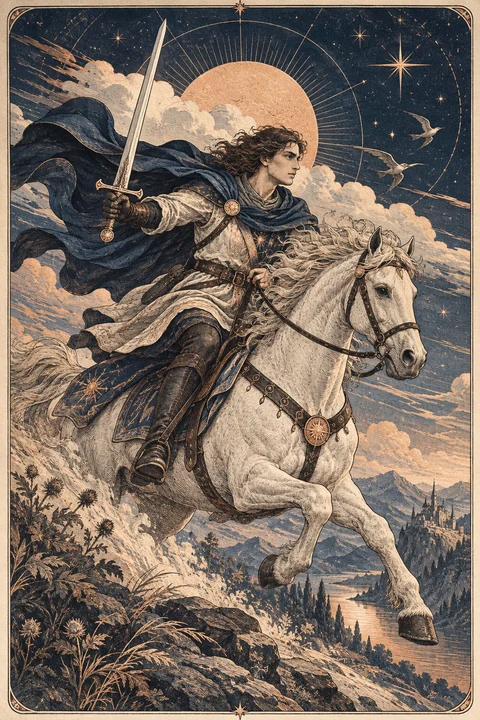
The Knight of Swords reversed meaning points to intellect and ambition that have lost their grounding, manifesting as reckless impatience, abrasive speech, or scattered mental energy. When upright, this knight charges forward with sharp clarity, but inverted, the energy either burns out of control through hasty actions or turns inward as paralyzing overthinking. In a Tarot reading, this card serves as a warning to pause, evaluate your intentions, and temper sharp impulses before charging ahead.
Understanding the Suit of Swords and Knight Energy
In the Rider-Waite-Smith tradition, the suit of Swords corresponds to the element of Air, governing intellect, truth, communication, and conflict. Knights in the court cards embody outward motion, dedication, and the pursuit of a cause. When the Knight of Swords appears upright, he represents a sharp intellect pursuing a distinct objective with relentless velocity. He cuts through confusion with honesty and analytical vigor, embodying decisive movement.
However, Air energy without balance easily turns volatile or destructive. The Knight of Swords lacks the nurturing depth of Water or the grounded practicality of Earth, relying purely on momentum and logic. When this figure is placed upside down, the natural balance of clear thought is disrupted. The seeker is left dealing with either an overwhelming torrent of chaotic thoughts or a sudden freeze in mental confidence.
Tarot readers view court cards not only as external personalities, but also as internal mindsets and behavioral patterns. Encountering this knight reversed asks you to look honestly at how you wield your mental gifts. Are you using intellect to solve problems, or are you swinging verbal weapons at windmills out of sheer frustration and restlessness?
Core Interpretations of the Knight of Swords Reversed Meaning
The primary knight of swords reversed meaning revolves around recklessness, arrogance, and poorly directed energy. Instead of thoughtful strategy, the reversed knight acts on impulse without considering the consequences for himself or others. You might notice a tendency to jump into arguments simply to win, or to make sweeping life decisions without reviewing basic facts. The analytical mind becomes an antagonistic weapon rather than a constructive guide.
A second common expression is the feeling of running in circles. You may have dozens of sharp ideas and immense urgency, yet produce zero meaningful results. This manifestation reflects fragmented focus, where mental hyperactivity leads to burnout and half-finished projects. You start projects with passionate fury, only to discard them the moment immediate obstacles demand patient labor.
Finally, this reversal can point to missed opportunities caused by impatience. Charging into situations prematurely can ruin delicate negotiations and alienate natural allies. Readers often view this card as a gentle caution that speed does not equal progress. Moving quickly in the wrong direction simply takes you further away from your intended goal.
Reversal Frameworks: Excess, Deficit, and Internalized Energy
Modern readers interpret card reversals through diverse analytical lenses, and the Knight of Swords provides a clear study in these differing frameworks. One traditional school reads reversals as an excess of the upright card's traits. Under this view, the knight becomes excessively blunt, ruthless, fanatical, or aggressive. He talks over others, refuses compromise, and allows righteous conviction to turn into destructive hostility.
Another school views reversals as a deficit or lack of the upright qualities. Here, the Knight of Swords reversed represents intellectual lethargy, a fear of speaking truth, or paralyzing confusion. Instead of boldness, the seeker experiences cowardice or an inability to make tough calls. The mind feels foggy, direction is absent, and the person avoids necessary confrontations out of fear or apathy.
A third widely used approach treats reversals as internalized energy. Rather than directing critical scrutiny outwardly at the world, the individual turns the sharp sword inward. This manifests as brutal self-criticism, chronic imposter syndrome, and racing anxious thoughts. Recognizing which framework applies depends on self-reflection and the specific issues currently unfolding in your personal life.
Love, Relationships, and Interpersonal Dynamics
When exploring relationships, the reversed Knight of Swords often highlights communication breakdowns characterized by sharp tongues, sarcasm, or defensive posturing. Conversations quickly devolve into debates where being technically right matters more than emotional connection. One or both partners may lash out during minor disagreements, leaving lingering emotional wounds that undermine basic trust.
If you are single, this card can warn against chasing romantic prospects hastily or falling for charming individuals who turn out to be hot-headed and unreliable. It suggests evaluating whether you are rushing into commitments without taking time to know the person. Alternatively, it might indicate that your own cynical skepticism is driving potential romantic partners away before connections have room to develop.
In family and social dynamics, this card can represent an argumentative acquaintance who constantly stirs up needless discord. The advice of the reversed knight is to avoid feeding the drama. Stepping away from unproductive debates protects your peace, reminding you that silence is often far wiser than an impulsive retort.
Career, Ambition, and Work Environment
In a professional context, the Knight of Swords reversed cautions against hasty career maneuvers and poorly planned initiatives. You might feel a desperate drive to prove your competence, leading to overpromising on deadlines or pitching ideas before vetting logistical details. Charging ahead without backing data can damage professional credibility and frustrate colleagues.
The card also highlights toxic workplace communication. It can indicate a workplace culture driven by cutthroat competition, gossip, and micromanagement where employees speak sharply and dismiss collaboration. Alternatively, it may reflect your own impatience with institutional bureaucracy, tempting you to burn bridges that you might need in future career chapters.
If you are experiencing creative paralysis, this card indicates that perfectionism is stalling execution. You may spend excessive time anticipating failure, generating endless theoretical critiques instead of taking practical, incremental steps forward. Streamlining your workload, clarifying priorities, and focusing on one task at a time will restore your productive momentum.
How to Work with the Card in a Reading
When the reversed Knight of Swords appears in your spread, treat it as an invitation to slow down and inspect your mental state. Begin by asking yourself where you are rushing without adequate foresight. Are you reacting out of fear or impatience rather than reasoned deliberation? Taking three deep breaths before replying to challenging messages can immediately shift this turbulent energy.
Context from adjacent cards is essential for an accurate reading. If paired with Swords cards like the Three of Swords or Five of Swords, the warning about hurtful words and bitter conflict is amplified. Conversely, if grounded by cards from the Pentacles suit, such as the Four of Pentacles, it suggests that practical routines and physical grounding will help calm your agitated mind.
Consider journaling on questions that test your current focus. Where am I directing my mental energy, and does it serve my genuine well-being? Can I separate objective facts from defensive emotional reactions? By answering these prompts honestly, you transmute the chaotic turbulence of the reversed knight into balanced, discerning clarity.
Frequently asked questions
Is the Knight of Swords reversed always a negative card?
Tarot cards are neutral symbols rather than purely positive or negative omens. While the reversed Knight of Swords highlights friction, impulsiveness, and stress, it also offers constructive guidance. It encourages you to slow down, rethink hasty plans, soften harsh communication, and reclaim your composure before minor misunderstandings escalate into larger problems.
Does this card represent a specific person in my life?
It can signify an individual who embodies impatient, erratic, or argumentative traits, such as an aggressive colleague or a temperamental friend. However, many readers view court cards as reflections of your own internal attitudes, warning you against becoming reckless, overly critical, or prematurely dismissive in current situations.
What should I do when I pull the Knight of Swords reversed?
Pause your current momentum and take time to think before speaking or making major commitments. Review your plans for overlooked details, release the urge to win petty arguments, and find healthy physical outlets to release excess nervous tension, allowing mental clarity to return naturally.
How does this card differ from the Knight of Wands reversed?
Both reversed knights carry chaotic and impatient energy, but their elements shape their expression. The Knight of Swords deals with Air, focusing on sharp intellect, communication, and ideology. The Knight of Wands deals with Fire, emphasizing frustrated passion, restless physical vitality, and volatile creative drives.