Page of Cups Reversed Meaning in a Tarot Reading
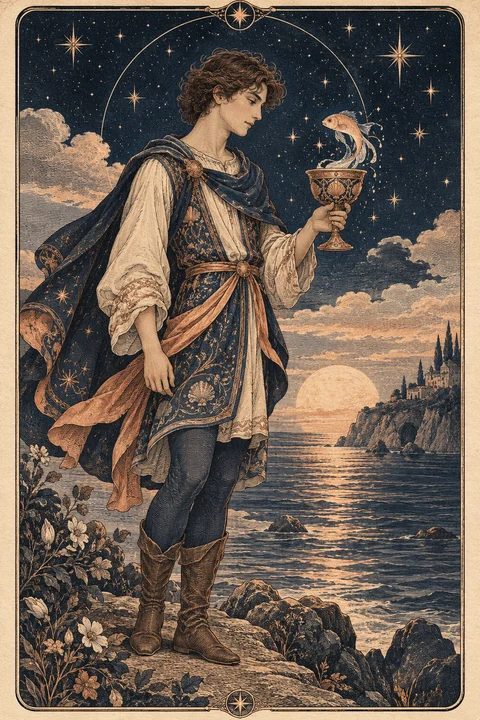
The Page of Cups reversed meaning typically points to emotional vulnerability, creative blocks, or difficulty processing tender feelings in a grounded way. While the upright Page brings curious creative sparks and heartfelt messages, the reversal often suggests emotional overwhelm, suppressed intuition, or escapist daydreams that distract from reality. In a reflective Tarot reading, this card invites you to look inward and reconnect gently with your personal needs and emotional boundaries.
Symbolism of the Page of Cups in the Rider-Waite-Smith Tradition
The Page of Cups is traditionally associated with the element of Water, which governs feelings, dreams, and spiritual instincts. In Pamela Colman Smith's iconic illustration, a youthful figure stands on a seashore wearing a floral tunic, holding a golden chalice from which a fish curiously emerges. This fish symbolizes spontaneous insight and the unexpected nature of intuitive thought rising from the unconscious mind. When upright, this messenger encourages openhearted curiosity and artistic play.
As a court card, the Page represents both a stage of development and a particular facet of personality. Pages traditionally embody the student archetype, eager to learn yet still developing maturity and mastery. In the suit of Cups, this manifests as someone discovering their emotional landscape or stepping into a new creative craft. They do not yet wield the seasoned emotional wisdom of the Queen or King, but their fresh vulnerability brings genuine warmth and intuitive receptivity to any spread.
Recognizing the visual language of the card helps clarify what happens when the image is inverted. When the chalice is tipped upside down, the playful fish risks tumbling out, and the supportive waters behind the figure feel unstable. Instead of joyful exploration, the emotional water threatens to spill uncontrollably or dry up entirely. Understanding this core visual metaphor provides the foundation for interpreting the nuanced dynamics of the reversal.
The Core Page of Cups Reversed Meaning in a Spread
When interpreting the card, readers often categorize reversed cards through four primary dynamics: internal focus, energetic blockage, an excess of the suit, or a complete lack thereof. When the Page of Cups appears reversed as an internal experience, it suggests that your artistic ideas and tender feelings are gestating quietly beneath the surface. You may not feel ready to share your creations with the outside world, requiring private space to nurture your intuition before presenting it publicly.
Alternatively, the card can represent a temporary block in emotional expression or creative flow. You might experience writer's block, doubt your intuitive hunches, or feel disconnected from what once inspired your spirit. The playful fish remains trapped within the cup, unable to speak its creative message. This stagnation often stems from fear of judgment or past criticism, leading you to withhold your genuine feelings from trusted friends, creative collaborators, or romantic partners.
When the reversal indicates excess or deficit, the Page of Cups manifests as emotional volatility or childish escapism. In excess, one might fall into constant daydreams, hyper-sensitivity, or dramatic mood swings to avoid confronting mundane responsibilities. In deficit, there is emotional numbness, cynicism, or a stubborn refusal to honor personal feelings. Many readers note that identifying whether you are feeling too much or too little helps clarify the specific guidance this inverted messenger offers.
How Different Tarot Traditions Interpret the Reversal
Throughout the history of modern Tarot, different schools of thought have developed unique frameworks for reading reversals. Traditional nineteenth-century French and British occult systems, such as the Golden Dawn, often viewed inversions as an affliction or corruption of the card's elemental dignity. In these strict classical approaches, the reversed Page of Cups was frequently described in moralistic terms, warning of deception, seduction, or an unreliable individual who brings false promises and disingenuous flattery.
Contemporary psychological Tarot approaches, popularized by authors like Rachel Pollack and Mary K. Greer, shifted the focus toward personal growth and shadow integration. In these modern frameworks, reversals are rarely considered inherently negative omens. Instead, they reflect internalized dynamics, unresolved inner child wounds, or subjective states of consciousness. A psychological reading treats the reversed Page as an invitation to examine how you respond to vulnerability and whether you protect yourself by withdrawing emotionally.
Modern intuitive and holistic readers often synthesize these perspectives by treating reversals as subtle adjustments in energetic flow. Rather than predicting dramatic betrayal or total creative failure, holistic practitioners suggest the card simply highlights an imbalance that requires mindful attention. Recognizing how your preferred reading style shapes your interpretation allows you to engage with the card constructively, without slipping into unnecessary fatalism or dismissive oversimplification.
The Page of Cups Reversed in Love, Career, and Creative Work
In relationship spreads, the inverted Page frequently reflects difficulties with emotional maturity and communication. For couples, it may point to passive-aggressive tendencies, brooding silences, or insecurity that triggers jealous reactions. One partner might be idealizing the connection through romantic fantasies while neglecting the daily work of practical compromise. For singles, it often suggests a reluctance to open the heart due to past heartbreaks, or conversely, becoming so swept up in infatuation that red flags are ignored.
In professional and academic environments, this card usually speaks to workplace disillusionment, procrastination, or feeling overwhelmed by collaborative pressure. You might feel unappreciated for your imaginative contributions, leading to resentment and low motivation. It can also signify receiving disappointing news regarding an application, project pitch, or artistic venture. When this occurs, practitioners advise taking time to process any sadness before jumping into a reactive response or abandoning your professional ambitions altogether.
For artists, writers, and spiritual seekers, the reversal is a classic symbol of the creative drought. Your muse may feel distant, or you may judge your early drafts so harshly that you abandon projects halfway through completion. Rather than forcing productivity, the card advises returning to low-stakes experimentation. Reconnecting with art simply for the joy of creation, without worrying about commercial success or external validation, can slowly coax your inspiration back into the light.
Practical Prompts and Contextual Reading Strategies
Interpreting court cards effectively requires paying close attention to the surrounding cards in the layout. If the reversed Page of Cups sits beside heavy Swords cards, such as the Three of Swords or Nine of Swords, the emotional vulnerability is likely accompanied by painful self-criticism and anxious thoughts. Conversely, alongside grounding Pentacles cards, the reading suggests that practical structures, structured routines, and tangible physical care can help stabilize your fluctuating emotional tides.
If the card is surrounded by dynamic Wands, it may indicate a clash between intuitive daydreams and energetic action, resulting in impulsive decisions driven by unexamined feelings. When neighboring Major Arcana cards appear, such as The Moon or The High Priestess, the Page's reversal underscores profound subconscious shifts, signaling that deep intuitive truths are struggling to penetrate your conscious waking awareness through symbolic dreams or quiet gut feelings.
To deepen your engagement with the card, reflective journaling provides an accessible and grounding tool. You might ask yourself where in your life you feel emotionally exposed, or whether you are expecting someone else to rescue you from your uncomfortable feelings. Reflecting on whether you dismiss your intuitive hunches as silly fantasies can also illuminate hidden patterns. These self-inquiries transform the card from an abstract symbol into an empowering mirror for emotional maturity.
Navigating the Page of Cups Reversed Meaning with Self-Compassion
Integrating the page of cups reversed meaning into your personal practice ultimately centers on self-compassion and gentle boundary work. Tarot symbolism reminds us that emotional sensitivity is not a flaw to be eradicated, but a gift that requires conscious stewardship. When this sensitive Page turns upside down, it often acts as a compassionate signal that your inner reservoir is depleted and requires patient, uninterrupted replenishment before you can support others.
Establishing clear emotional boundaries is one of the most constructive ways to work with this card's energy. If you find yourself soaking up the moods of people around you, the reversal encourages stepping back to discern where your feelings end and others' emotions begin. Practicing small acts of emotional honesty, such as admitting when you feel hurt instead of hiding behind sarcasm or silence, helps align your actions with your genuine heart.
Ultimately, this minor card serves as a reminder that emotional maturity is a lifelong learning process rather than an immediate destination. By meeting your creative blocks, sensitivities, and inner child with warmth rather than frustration, you turn the chalice upright once again. Embracing both the joyful leaps and the quiet hesitations of your intuition allows your creative and relational life to flourish with authentic depth.
Frequently asked questions
What does the Page of Cups reversed mean for a future outcome?
As an outcome, the reversed Page suggests that emotional clarity or creative breakthroughs may be delayed until you address underlying insecurities. It often highlights the need to cultivate realistic expectations rather than relying on idealistic fantasies. Practitioners suggest viewing this outcome not as a fixed fate, but as an invitation to build stronger emotional boundaries and communicate your needs transparently moving forward.
Can the Page of Cups reversed indicate a specific person in a reading?
Yes, court cards frequently signify specific people in the querent's life. In its reversed state, the Page can represent a young person, student, or emotionally immature individual who struggles with moodiness, oversensitivity, or dependency. Alternatively, it may represent someone who conceals their true intentions behind sweet words, highlighting the importance of looking at actions rather than romantic promises alone.
How does the upright Page of Cups compare to the reversed card?
Upright, the Page of Cups embodies openhearted curiosity, delightful creative news, and intuitive trust, symbolized by the curious fish emerging peacefully from the chalice. When reversed, this emotional flow is typically disrupted. Instead of confident creative expression, one encounters self-doubt, creative blocks, or emotional escapism. The reversal does not negate the card's innate sensitivity, but shows that its expression is currently strained.
What should I do when I pull the Page of Cups reversed in a daily draw?
If you draw this card for your daily reflection, take it as an invitation to check in with your emotional boundaries. Notice whether you feel particularly vulnerable or tempted to distract yourself through excessive daydreaming. Grounding activities, such as journaling your feelings, engaging in simple creative play without judgment, and speaking gently to yourself, can help restore your emotional equilibrium throughout the day.