Seven of Pentacles Reversed Meaning in a Tarot Reading
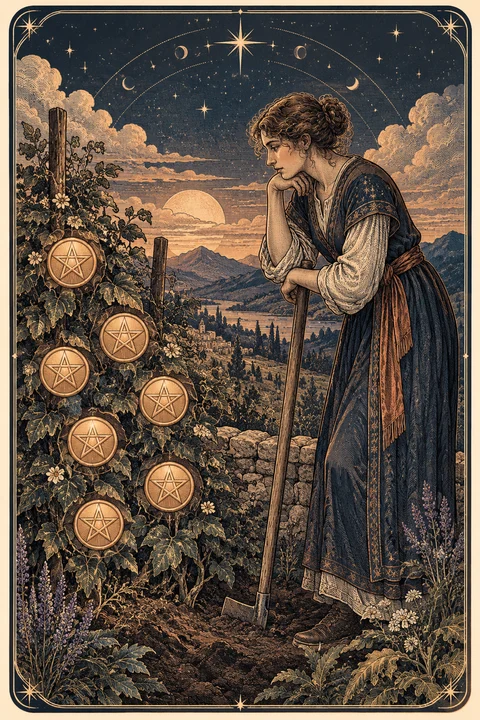
The Seven of Pentacles reversed meaning centers on frustration, misdirected energy, and a perceived lack of return on your personal investments. In a reading, this card suggests that your hard work may feel unrewarded, or that impatience is tempting you to abandon a worthwhile endeavor before it has time to mature. It invites you to step back, re-evaluate where you direct your resources, and determine whether a project needs a revised strategy or an intentional release.
Understanding the Seven of Pentacles in the Suit of Pentacles
In the traditional Rider-Waite-Smith Tarot, the suit of Pentacles corresponds to the element of Earth, which governs tangible realities, labor, financial security, and long-term cultivation. Number seven in numerology frequently introduces a moment of assessment, contemplation, and choice after an initial cycle of steady development. When upright, the Seven of Pentacles depicts a laborer resting on his hoe, observing the abundant greenery he has nurtured with patience and deliberate care. The imagery embodies deliberate evaluation, encouraging the seeker to inspect what has grown and decide if the current harvest aligns with their initial expectations.
When this card appears reversed, the organic harmony between labor and reward falls out of balance. The patient contemplation of the upright figure turns into restless irritation, exhaustion, or genuine dismay over lackluster outcomes. Instead of quietly appreciating progress, the seeker might obsess over how slowly the vines are creeping upward. The grounding nature of the Earth element becomes either rigid stubbornness or unstable neglect, signaling that the material foundations of the query require immediate, clear-eyed examination.
Practitioners often interpret this card as a gentle mirror held up to our expectations regarding time and labor. Modern culture frequently demands immediate gratification, yet natural cycles operate on their own calendar. The reversed posture reminds us that crops cannot be coerced into blooming overnight through anxiety alone. It highlights the friction that occurs when human will collides with the slower rhythms of reality, urging us to differentiate between natural pauses and genuine stagnation.
Core Themes of the Seven of Pentacles Reversed Meaning
The primary Seven of Pentacles reversed meaning revolves around wasted effort, impatience, and unreciprocated dedication. When the card turns upside down, many readers identify a sensation of pouring valuable energy into a barren plot of land. You may feel as though you have checked every box, fulfilled every obligation, and waited dutifully, only to find the results underwhelming or nonexistent. This dynamic can evoke deep disappointment, leading you to wonder whether your original goals were flawed or if your methods simply missed the mark.
Another vital interpretation focuses on the danger of premature surrender. In this scenario, the seeds have taken root beneath the soil, but because tangible sprouts have not yet emerged, the seeker risks abandoning the field right before growth becomes visible. Impatience can convince us that nothing is happening, prompting us to dig up the soil repeatedly to check on the roots. This behavior disrupts the natural maturation process and guarantees the very failure we fear, transforming minor delays into self-fulfilling prophecies.
Conversely, the reversed card can signal the opposite extreme: the stubborn refusal to cut losses on a venture that has clearly run its course. Continuing to water artificial plants will never bring them to life, no matter how much emotional devotion you provide. In this light, the card serves as a compassionate reality check, asking you whether you are remaining committed out of true optimism or merely because of the sunk cost fallacy. Recognizing when to walk away is just as courageous as knowing when to persist.
Four Analytical Lenses: Blocked, Internal, Excess, and Lack
To interpret the reversed Seven of Pentacles with nuance, professional readers frequently apply four distinct analytical lenses: blocked energy, internal experience, excess, and lack. When viewed as blocked energy, the card suggests that external circumstances, supply chain issues, or logistical hurdles are preventing your labor from producing a crop. You may have done everything right, yet bureaucratic delays or unfavorable market conditions stall your momentum. Here, the card advises patience while external bottlenecks clear, rather than self-recrimination.
As an internal experience, this reversal points toward imposter syndrome, chronic self-doubt, and the inability to appreciate personal milestones. You might actually be making substantial progress toward your goals, but your internal critic minimizes every achievement because the final outcome has not yet arrived. The card asks you to pause and acknowledge the quiet resilience you have cultivated along the journey, reminding you that inner maturity is often the most significant fruit of sustained effort.
When manifesting as an excess, the card warns against micromanagement, obsessive productivity, and workaholism. You may be overworking the soil to the point of depleting its vital nutrients, leaving no space for organic development. In contrast, reading the card as a lack indicates inadequate effort, poor preparation, or daydreaming without practical application. You cannot expect a bountiful harvest if you neglected to plant seeds during the appropriate season. Both angles demand that you recalibrate your actions toward balance.
How Different Tarot Schools Interpret the Reversal
Interpretive traditions across the Tarot community approach reversals through varied frameworks, enriching our understanding of this card. In the traditional French and early Golden Dawn lineages, reversals were frequently treated as total opposites of the upright card or as harbingers of material anxiety and bad investments. Historical guidebooks often assigned harsh keywords such as insolvency, financial ruin, or squandered fortunes to this position. These older perspectives treated the card as an urgent warning about fiscal mismanagement and reckless speculation.
Modern psychological and intuitive traditions, championed by twentieth-century American authors, view the reversal in a far more constructive, introspective light. Rather than predicting objective failure, modern practitioners read the card as an inner invitation to adjust your strategic alignment. They emphasize personal agency, suggesting that feeling dissatisfied with your current yield is a useful diagnostic signal that can redirect your focus toward more fulfilling pursuits. The card shifts from an omen of disaster to a practical prompt for reassessment.
Esoteric readers also consider the card's astrological correspondence: Saturn in Taurus. Saturn represents discipline, structure, time, and boundaries, while Taurus embodies earthly persistence, sensory appreciation, and material abundance. In an upright posture, Saturn provides the necessary discipline to ground Taurean growth. When reversed, the rigid, restrictive side of Saturn can overpower Taurean patience, generating deep pessimism, or Taurus's stubborn inertia might resist Saturn's call for structured accountability. Understanding this dynamic helps readers synthesize the card within broader esoteric systems.
Reading the Seven of Pentacles Reversed Across Life Areas
In career readings, the reversed Seven of Pentacles frequently surfaces when an individual experiences chronic burnout or feels stuck on a dead-end professional trajectory. You may have spent years climbing a corporate ladder only to realize it rests against the wrong wall. Alternatively, it can point to a business venture where operational expenses far outstrip incoming revenue, requiring an immediate audit of daily expenditures. The card encourages you to evaluate your return on investment realistically before committing further labor to a draining enterprise.
Within love and relationship spreads, this reversal highlights emotional imbalances, unmet expectations, and partner fatigue. One person may feel as though they carry the entire emotional load, doing all the compromising and communication while receiving indifference in return. It can also reflect a partnership that has settled into dull complacency, where neither person puts in the conscious effort required to sustain intimacy. In either case, the cards invite a candid conversation about mutual goals and shared emotional responsibility.
Regarding personal development and creative pursuits, the card highlights creative blocks born of perfectionism. You may feel discouraged because your current skill level does not match your artistic vision, tempting you to abandon a craft altogether. The reversed card reminds you that developing mastery requires moving through awkward, clumsy stages of practice. Be gentle with your learning curve, and consider whether taking a temporary break from the work could restore your natural curiosity and enthusiasm.
Interpreting the Card in Surrounding Context
A Tarot card never speaks in complete isolation; its surrounding cards provide the vital narrative context necessary for an accurate reading. When the reversed Seven of Pentacles appears alongside active, initiating cards such as the Eight of Wands or The Chariot, it strongly suggests that the period of waiting is ending and swift action will break the logjam. In this combination, the reversal advises you to stop overthinking and start moving, as active momentum will resolve the lingering uncertainty far faster than passive observation.
Conversely, if the card rests beside restrictive or heavy cards like the Eight of Swords, the Five of Pentacles, or the Ten of Wands, it points directly toward chronic depletion and trapped thinking. You may be persevering in an unhealthy situation out of stubborn pride or a misplaced belief that suffering equals virtue. Here, the cards collectively suggest that continuing down the current path without systemic changes will only deepen your exhaustion, making rest and restructuring essential priorities.
When paired with transformative cards such as Death, the Tower, or the Three of Swords, the reversed Seven marks an overdue reckoning with reality. It signifies the moment you finally accept that a specific investment—whether financial, professional, or romantic—has reached its conclusion. Embracing that ending allows you to clear the field, enrich the soil, and prepare the ground for a completely new season of planting that aligns with who you are today.
Reflective Questions for the Seven of Pentacles Reversed
Tarot serves as a profound mirror for self-reflection, offering archetypal imagery that helps us clarify our deepest thoughts and feelings. When the reversed Seven of Pentacles appears in your spread, it offers a valuable opportunity to sit quietly with your choices and assess your daily routines. Instead of reacting with anxiety or self-judgment, use the card's presence as a deliberate sanctuary for honest, compassionate self-inquiry.
Consider asking yourself where your energy has produced genuine joy and where it has merely produced resentment. Are you continuing a specific habit or project because it truly serves your long-term well-being, or simply because you have already invested substantial time into it? Reflect on whether your expectations regarding timing are realistic, or if you are demanding immediate perfection from a process that requires patience. Writing down your answers in a journal can bring surprising clarity to complicated dilemmas.
Ultimately, integrating the Seven of Pentacles reversed meaning into your personal practice is about developing intentional discernment. By taking stock of your resources, honoring your limits, and making thoughtful adjustments, you transform frustration into wisdom. The card reminds us that pruning away unproductive growth is not an admission of defeat; it is an essential act of care that allows your healthiest branches to flourish.
Frequently asked questions
What is the Seven of Pentacles reversed meaning in a career reading?
In a career reading, this reversal typically indicates burnout, lack of recognition, or poor returns on professional labor. It suggests evaluating whether your current job offers genuine growth or if you are exhausting yourself for a company that cannot meet your goals. It can also point to hasty business decisions that overlooked vital operational details.
Does the Seven of Pentacles reversed always mean failure?
No, the card does not signify guaranteed failure. Divination reflects symbolic possibilities rather than unchangeable destiny. In many traditions, this reversal simply marks a necessary pause to adjust your strategy, cut unnecessary losses, or cultivate patience. It often serves as a helpful warning that redirects your energy toward more fruitful endeavors before total burnout occurs.
How does this reversed card relate to love and relationships?
In love, the card points to feelings of emotional exhaustion, one-sided effort, or dissatisfaction with relationship progress. One partner may feel their dedication goes unnoticed, or both partners may realize they have grown apart despite years together. It encourages open communication to determine whether the bond can be revitalized or if it requires a compassionate ending.
What should I do when I pull the Seven of Pentacles reversed?
Take an honest inventory of your current commitments. Identify which projects or relationships drain your energy without giving anything meaningful back. Give yourself permission to pause, rest, and adjust your plans. Remember that stepping away from unproductive efforts frees up valuable time and resources to invest in opportunities that truly support your long-term happiness and peace.