Ten of Pentacles Reversed Meaning in Tarot
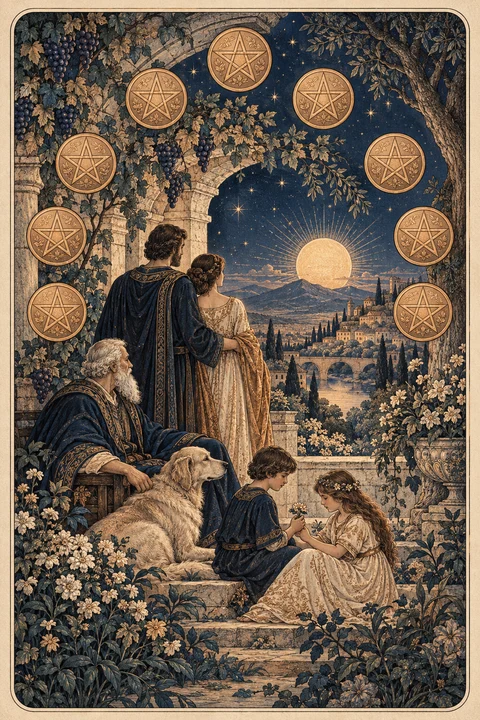
The ten of pentacles reversed meaning points to disruptions in long-term security, family harmony, or material foundations. When this card appears upside down, it often reflects tension surrounding inheritance, conflicting domestic values, or a sudden realization that conventional milestones do not guarantee emotional fulfillment. Rather than predicting permanent ruin, practitioners describe this reversal as an invitation to reevaluate what genuine legacy and lasting stability mean to you.
Understanding the Suit of Pentacles and Card Symbolism
In the Rider-Waite-Smith tradition, the suit of Pentacles aligns with the classical element of Earth. This realm governs concrete reality, including physical vitality, real estate, commerce, family lineage, and tangible achievements. Tens mark culmination, representing the fullest manifestation of a suit's potential. In an upright posture, the Ten of Pentacles depicts an arched stone entryway leading into a vibrant courtyard, where three generations and two loyal hounds gather beneath ten gold coins arranged in the sacred pattern of the Tree of Life.
When the card turns upside down, this portrait of ancestral prosperity shifts into question. The sturdy stone archway can feel constrictive rather than protective, suggesting the weight of family expectations or outmoded societal traditions. The golden pentacles, once anchored in the geometric harmony of the Kabbalistic Tree of Life, now seem precariously suspended. Readers often view this inverted posture as a sign that material success has lost its grounding, prompting the seeker to examine whether their domestic security rests on genuine connection or superficial conformity.
Symbolically, the older patriarch seated in the foreground may transform from a wise, benevolent benefactor into an emblem of rigid control or stubborn traditionalism. The playful hounds and young child in the image remind us that true inheritance includes emotional warmth and creative vitality, not merely legal deeds or monetary assets. A reversal in this card invites us to look past the surface appearance of affluent domesticity and observe the quieter, unresolved tensions running beneath the family foundation.
Core Ten of Pentacles Reversed Meaning Across Tarot Traditions
Every reader approaches inverted cards with their own interpretive framework, and the ten of pentacles reversed meaning shifts depending on which method you favor. One prominent school treats reversals as blocked or suppressed energy, suggesting that the seeker possesses the potential for enduring stability but faces temporary resistance, bureaucratic delays, or unspoken family friction that halts progress. In this light, abundance exists in theory, but practical hurdles prevent everyone involved from enjoying the harvest.
Another school views reversals as reflections of internal experiences. Rather than pointing toward outer financial ruin, the inverted Ten of Pentacles can indicate a profound personal disillusionment with traditional measures of wealth. You might hold a comfortable position or own a home, yet feel an interior emptiness because your daily work fails to align with your personal ethos. Here, the card invites an internal reckoning with inherited scripts about status, urging you to construct an authentic definition of achievement.
A third school interprets reversed cards as expressions of excess or deficiency. In an excess reading, the card warns against greed, obsessive hoarding of generational assets, or prioritizing public reputation over personal relationships. In a deficiency context, it points toward neglected foundations, poor estate planning, or an acute lack of communal support. Recognizing these distinct perspectives allows practitioners to adapt their reading to the unique emotional landscape of the person seeking guidance.
Family Dynamics, Inheritance, and Ancestral Patterns
Historically and symbolically, the Ten of Pentacles is deeply intertwined with family institutions, tribal bonds, and ancestral inheritances. When inverted, it frequently highlights friction between different generations. Grandparents, parents, and children may clash over ethical differences, life paths, or the equitable distribution of shared resources. These disputes often conceal deeper emotional grievances, where monetary gifts or inheritance bequests carry unspoken emotional conditions that limit the recipient's personal autonomy and free expression.
Practitioners also connect this card to breaking generational cycles. Growing up under the shadow of strict familial doctrines can leave lasting behavioral imprints, such as chronic scarcity mindsets, fear of unconventional careers, or an aversion to genuine vulnerability. The reversed card frequently surfaces when a seeker actively chooses to dismantle unhealthy lineage patterns. Although stepping away from conventional family expectations can feel lonely, many find it to be an essential passage toward claiming their own sovereignty.
Reflecting on these domestic themes helps clarify the symbolic guidance of the card. You might ask yourself where guilt keeps you bound to a tradition that no longer serves your spiritual growth. Consider whether you are managing shared family resources with honesty and clarity, or if unresolved resentment is quietly sabotaging an otherwise supportive domestic environment. Cultivating emotional honesty is often the primary remedy suggested by this card.
Financial and Career Implications of the Reversal
Within professional readings, the Ten of Pentacles reversed often warns against placing complete trust in large, bureaucratic systems or speculative financial ventures. It may signal organizational instability within a long-established company, restructuring that threatens pension security, or disagreements among business partners regarding the long-term mission of their venture. Rather than guaranteeing financial loss, the card suggests that systems once thought impregnable require careful auditing and conservative management.
In day-to-day career settings, this card can reflect a working environment characterized by nepotism, rigid corporate hierarchies, or stagnant growth. A seeker might realize that climbing the traditional ladder within their organization will never yield the personal autonomy or creative freedom they desire. It encourages a grounded reassessment of professional contracts, partnerships, and long-range investments, highlighting the danger of cutting corners or committing to deals lacking structural integrity.
This card also offers a valuable cautionary note against keeping up appearances. Seeking external prestige by purchasing expensive symbols of prosperity can create a fragile façade that collapses under financial pressure. When the card appears, practitioners recommend simplifying budgets, reviewing basic emergency savings, and ensuring that professional commitments are built on legal and ethical clarity rather than unspoken verbal agreements.
Love, Partnerships, and Domestic Stability
In relationship contexts, the inverted Ten of Pentacles indicates that domestic harmony may be strained by external pressures or mismatched values. A couple might find themselves disagreeing on significant milestones such as homeownership, wedding expenses, long-term living arrangements, or financial support for extended relatives. The card does not necessarily point to separation, but it does reveal that foundational agreements require candid renegotiation before moving forward together.
Extended family interference is another common manifestation of this reversed energy. In-laws or relatives may impose unsolicited opinions regarding how partners should manage their home, raise children, or spend their hard-earned income. When marital boundaries blur to accommodate the demands of extended kin, romantic intimacy suffers. The card serves as a reminder that a couple must construct their own domestic sanctuary before attempting to appease the broader family network.
For single individuals, this card often suggests examining romantic standards conditioned by societal or parental expectations. You may have spent years looking for a partner who checks every box on paper, yet find that those attributes fail to spark meaningful connection. Releasing rigid expectations regarding background, social class, or conventional timelines can open the door to genuine emotional partnerships that nourish the spirit.
How to Read the Card in Context and Spreads
Tarot cards rarely speak in isolation, and interpreting the reversed Ten of Pentacles requires close attention to surrounding symbols. If it appears beside supportive cards such as the Four of Wands or The Empress, the reversal usually points to minor domestic adjustments or temporary renovation stress rather than deep emotional rupture. The underlying love remains intact, but practical logistics need patient cooperation and thoughtful delegation among partners.
Conversely, if the card sits near more challenging Major Arcana archetypes like The Tower or the Three of Swords, it suggests systemic disruption that demands radical restructuring. A long-standing family agreement or commercial arrangement may need to conclude completely so a healthier framework can emerge. Examining the elemental dignities in the spread also provides valuable clues: heavy Air influences may point to legal or communication issues, while Fire implies rapid ideological disputes.
Always tailor your interpretation to the exact question asked by the seeker. In a reading about personal spirituality, this card rarely relates to real estate; instead, it indicates a longing to reconnect with earthly, ancestral wisdom without subscribing to dogmatic religious structures. By weighing the query against the overall narrative of the spread, readers can deliver compassionate, nuanced insights that empower personal agency.
Integrating the Ten of Pentacles Reversed Meaning in Daily Reflection
Working constructively with the ten of pentacles reversed meaning involves embracing accountability and conscious restructuring. Instead of viewing the card as an omen of disappointment, treat it as a gentle diagnostic tool highlighting where your energetic and material foundations need reinforcement. True legacy is not built overnight, and acknowledging current weaknesses is the first step toward lasting durability and self-reliance.
Begin by conducting an honest inventory of your tangible and emotional resources. Identify where you might be tolerating dysfunctional habits simply because they are familiar or endorsed by family tradition. Writing your thoughts down in a journal can clarify whether your present goals genuinely belong to you or reflect the unfulfilled ambitions of parents or mentors. Honest self-inquiry transforms inherited burdens into fertile ground for self-discovery.
Ultimately, this card reminds us that real wealth comprises spiritual contentment, honest relationships, and physical well-being alongside material abundance. By courageously addressing domestic friction, securing your financial affairs, and forging an ethical path that honors your values, you reclaim the true essence of the Pentacles. When approached with patience and clear eyes, the inverted ten points the way forward to a renewed sense of belonging.
Frequently asked questions
Does the Ten of Pentacles reversed always mean financial loss?
No, the card does not guarantee financial loss. In standard Tarot symbolism, it more often signifies poor financial communication, speculative risks, disputes over shared assets, or dissatisfaction with corporate structures. Many readers view it as an invitation to audit spending habits, clarify contracts, and create realistic, sustainable budgets rather than an announcement of unavoidable catastrophe.
What does this card suggest about family arguments?
The card frequently highlights generational tension, inheritance disagreements, or conflicting moral philosophies between relatives. It suggests that conditional expectations or rigid traditions are creating distance among family members. Readers often recommend setting compassionate boundaries, communicating transparently, and refusing to allow material assets to become tools for emotional manipulation within the domestic sphere.
Can the reversed Ten of Pentacles be a positive sign?
Yes, it can be deeply liberating. When a seeker feels trapped by ancestral expectations, outdated domestic models, or an unfulfilling corporate career, this card signals the courage to break free. It encourages individuals to forge their own paths, establish unique traditions, and build an authentic life defined by personal joy rather than inherited social convention.
How can I reflect on this card during a personal Tarot pull?
When drawing this card in a daily pull, reflect on the stability of your home life and personal routines. Ask yourself what legacy you want to leave behind and whether your current financial habits support long-term peace of mind. Consider where family traditions nurture you and where they may be hindering your growth.