Ten of Swords Reversed Meaning in a Tarot Reading
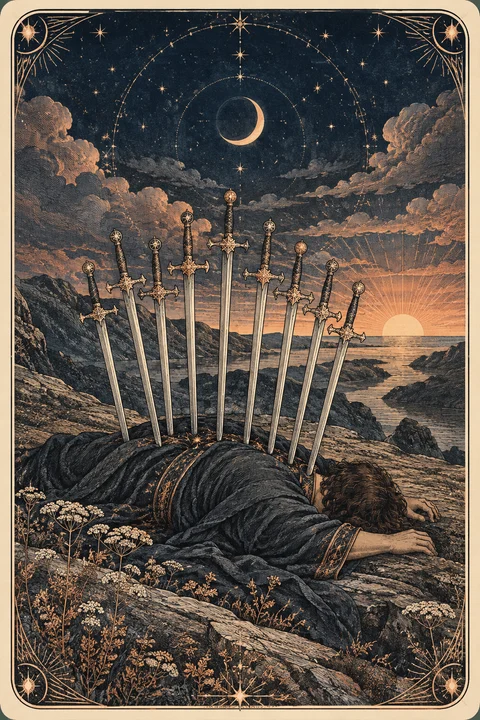
The ten of swords reversed meaning generally points to recovery, survival, and the gradual release of an intense emotional or mental trial. While the upright card portrays hitting rock bottom, the reversed orientation shows that the worst of the storm has passed and renewal is beginning. In some readings, it can also reflect lingering trauma, fear of moving forward, or an unwillingness to let a painful cycle conclude.
The Symbolism of the Suit of Swords and Number Ten
In the Minor Arcana, the suit of Swords corresponds to the classical element of Air, which rules the intellect, communication, truth, and mental discernment. Because thoughts can create clarity just as easily as they create conflict, Swords cards often mirror our psychological confrontations. The number ten symbolizes the absolute culmination of a suit's journey, marking the ultimate expression of that energetic frequency before the cycle resets.
The standard Rider-Waite-Smith artwork for the Ten of Swords depicts a fallen figure pinned by ten gold-hilted blades, set beneath a pitch-black sky. Despite the severe imagery, a golden sunrise appears across the calm water in the background, subtly promising renewal. When inverted, the card shifts the dynamic of this tableau, indicating that the weight of those conceptual blades is beginning to slip away.
Divination systems interpret the Swords not as physical events set in stone, but as representations of our internal architecture. Understanding this card requires recognizing that the primary battlefield is usually within our own thinking. When the cycle concludes at ten, no further damage can occur, signaling that change is inevitable.
Understanding the Ten of Swords Reversed Meaning
When unpacking the ten of swords reversed meaning in a spread, readers often view it as a card of emergence and survival. You have endured a crushing emotional blow, a major betrayal, or an exhausting period of mental overwork, and the clouds are finally breaking. You are pulling the blades from your back, dusting yourself off, and realizing that the collapse did not destroy you.
This reversal frequently appears when someone is ready to break free from victimhood or catastrophic thinking. Many readers observe that individuals who draw this card are transitioning out of despair and into pragmatic acceptance. The narrative that everything is ruined begins to lose its grip, opening up space for genuine healing and emotional reinvention.
However, the card can carry a cautionary tone if surrounded by challenging cards like the Five of Swords or the Moon. In such contexts, the reversal may indicate resisting the natural end of a situation, clinging to obsolete pain, or constantly reopening old wounds rather than allowing them to scar over and heal.
Four Interpretive Angles: Blocked, Internal, Excess, and Lack
Modern cartomancy often analyzes reversed cards through four distinct lenses: blocked energy, internalized expression, excess, and lack. When viewed as blocked energy, the Ten of Swords reversed suggests a refusal to accept that a chapter is finished. You may be staying in a draining dynamic because admitting defeat feels harder than remaining in familiar misery.
As an internalized experience, this card highlights invisible grief and psychological self-sabotage. The upright card can represent public or external endings, while the reversal frequently lives entirely within your private cognitive patterns. You may be agonizing over old conversations, nursing silent resentments, or criticizing yourself relentlessly without anyone in your external life realizing how much distress you carry.
Viewed through excess and lack, the card reveals clear boundaries between drama and detachment. In excess, it warns against playing the martyr, exaggerating personal suffering, or using past mistreatment as an excuse to avoid personal accountability. In lack, it highlights an inability to recognize danger, where someone minimizes severe emotional harm instead of acknowledging that a situation has reached a critical breaking point.
Interpretive Differences Across Tarot Schools
Different historical and modern schools of Tarot handle the Ten of Swords reversed in contrasting ways. Classical nineteenth-century European traditions, including esoteric interpretations derived from the Hermetic Order of the Golden Dawn, often viewed reversals as mere attenuations of the upright card. In those older frameworks, the reversed card was sometimes read as temporary benefit, fleeting advantage, or a short reprieve from grief.
In contrast, mid-twentieth-century intuitive traditions and contemporary American psychological Tarot treat the reversal as an active process of psychological liberation. Writers in these modern schools emphasize Carl Jung's concept of the shadow, reading the reversed Swords as unconscious thought patterns breaking into conscious awareness. Rather than seeing a doomed figure, contemporary readers see an individual who is reclaiming personal power.
Some European decks like the Tarot de Marseille do not rely on illustrated scenes for the numbered Minor Arcana, meaning interpretations focus heavily on numerology and elemental dignity instead. Knowing these historical nuances allows you to choose an interpretive approach that aligns with your intuition rather than feeling bound to rigid, dogmatic definitions.
The Reversed Ten of Swords in Everyday Life Contexts
In relationship readings, the card often indicates that the painful aftermath of a breakup, betrayal, or long argument is finally subsiding. If you are coupled, it can suggest that you and your partner have weathered a severe rough patch and are now willing to discard toxic patterns. If you are single, it indicates that you are finally untangling your identity from an ex-partner.
In career and financial contexts, this card frequently signals the end of chronic workplace burnout, toxic company culture, or prolonged unemployment anxiety. A project may have failed, or a role may have ended abruptly, but the reversal confirms that the operational damage has peaked. You are now in a position to evaluate your skill set objectively and plan your next venture with pragmatic optimism.
On a spiritual level, this card represents the dissolution of restrictive dogmas and mental cages. Many practitioners describe it as a milestone card marking the moment a seeker stops punishing themselves for past errors. It reminds you that suffering is not an inherent prerequisite for wisdom, allowing you to embrace peaceful clarity instead.
Reflective Exercises for the Ten of Swords Reversed Meaning
Whenever this card surfaces in your personal study, treating it as an open question can unlock powerful shifts in perspective. Take a moment to journal about the specific situations where you feel emotionally exhausted or stuck in mental loops. Ask yourself whether you are actively participating in your recovery, or if you are habitually rehearsing past betrayals out of sheer familiarity.
Consider evaluating what needs to be permanently laid to rest in your current schedule or lifestyle. Are there grudges you have outgrown, relationships that have run their course, or perfectionist demands that keep you depleted? Letting these burdens dissolve is the fundamental task required by this card's quiet, sunrise symbolism.
Ultimately, integrating the ten of swords reversed meaning into your life centers on celebrating your survival. You have traversed the darkest midnight your thoughts could conjure, and the light is returning. By choosing clarity over resentment and releasing old mental wounds, you allow the suit of Swords to fulfill its highest purpose: truth, liberation, and profound inner peace.
Frequently asked questions
Is the Ten of Swords reversed always a positive sign?
Not automatically. While it frequently signifies recovery and surviving a crisis, surrounding cards matter significantly. If paired with other challenging Swords cards, it can suggest lingering resentment, clinging to past victimhood, or refusing to accept that a painful situation has ended.
What does this card indicate about personal healing?
It indicates that the worst phase of your ordeal has concluded and the regenerative process has started. You are encouraged to let go of catastrophic thinking, care for your mental well-being, and recognize that you are stronger than the difficulties you endured.
How does the reversed card differ from the upright version?
The upright Ten of Swords portrays hitting rock bottom, abrupt endings, and profound exhaustion. The reversed card shifts the focus toward the aftermath, emphasizing either the gradual journey back into the light or internal psychological resistance to letting an ending stand.
Can the Ten of Swords reversed mean getting back with an ex?
Occasionally it reflects attempts to revive a concluded partnership, but it usually warns that doing so may simply restart a painful cycle. Most readers view it as a sign to heal from the split rather than trying to restore what collapsed.