The Devil Reversed Meaning: Freedom, Shadow Work, and Release
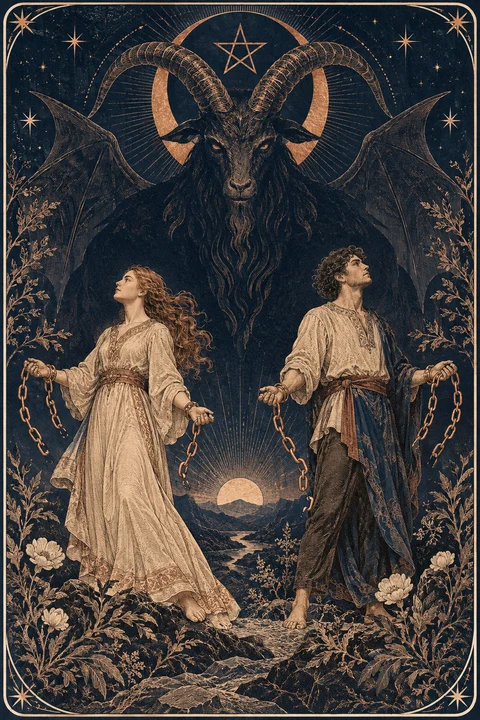
In a Tarot reading, the devil reversed meaning typically signifies liberation, conscious awareness of unhealthy attachments, and the beginning of release from self-imposed limitations. While the upright card represents entrapment, materialism, and shadow behaviors, the reversal suggests that you are recognizing the chains that bind you and finding the willingness to slip out of them. Many readers also view this card as an invitation to engage in deep shadow work or an alert that an unhealthy pattern requires honest confrontation before true freedom is possible.
Symbolism of The Devil in the Rider-Waite-Smith Tradition
To understand the reversed card, it helps to first examine the visual language crafted by Pamela Colman Smith and Arthur Edward Waite for card number 15 of the Major Arcana. The Devil depicts a winged, horned satyr perched upon an altar. Below him stand a man and a woman, nude and chained by their necks to the pedestal. A critical visual detail often noted by readers is that the loops of chain encircling the figures are wide and loose. The figures could slip them off over their heads at any moment, yet they remain passive.
Astrologically linked to Capricorn and the element of earth, The Devil represents material fixation, primal instincts, and the illusion that external circumstances control your fate. The inverted pentagram on the creature's forehead points downward toward earthly desires, while the downturned torch burns with a smoky, consuming fire. In the Rider-Waite-Smith system, this card serves as a psychological mirror rather than a literal depiction of supernatural evil, illustrating how unchecked fear and desire create self-constructed prisons.
When the card flips upside down, that visual geometry changes dramatically. The altar no longer firmly roots the creature to the ground, and the downward-pointing torch appears to invert upward. Symbolically, the inverted posture signifies the disruption of this material stronghold. The hypnotic hold of the pedestal weakens, making the viewer acutely aware of the looseness of the chains and inviting an active re-examination of personal sovereignty.
Common Interpretations of the Devil Reversed Meaning
In traditional cartomancy, the most frequent interpretation of the devil reversed meaning centers on liberation and reclamation of agency. If you have been trapped in an unhealthy relationship, a debilitating habit, or an unfulfilling job fueled purely by financial anxiety, this reversal suggests the dawn of clarity. You begin to see the cost of your complicity. Practitioners describe this moment as the turning point where staying in an uncomfortable comfort zone becomes more painful than taking the brave step toward change.
Another prevalent reading treats the reversal as a warning against relapse or prolonged avoidance. Because the reversal destabilizes the upright archetype, it can indicate someone who is fighting hard against old temptations but still feels their magnetic pull. You might recognize that a behavior is detrimental, yet you hesitate on the threshold of change because familiar discomfort feels safer than the unknown. Here, the card serves as a supportive mirror, urging you to acknowledge your vulnerability without surrendering your momentum.
Finally, many practitioners view this card as an omen of revealing secrets or dispelling illusions. Deceptions, gaslighting, or hidden motives that were kept in the dark often come to light under this influence. When the shadow is illuminated, it loses its power to manipulate you from behind the scenes, creating an opening for authentic self-determination.
Reading The Devil Reversed Through Different Interpretive Schools
Tarot readers utilize several distinct frameworks to interpret reversed cards, and applying these different lenses provides nuanced layers of insight. One popular school views reversals as internalized energy. Under this model, an upright Devil reflects external entanglements or visible material dependencies, while The Devil reversed represents an internal psychological struggle. You may be wrestling with intense self-criticism, private obsessions, shame, or deep-seated fears of inadequacy that nobody else can see.
A second common approach interprets reversals as blocked, delayed, or resisted energy. If you apply this framework, The Devil reversed suggests that you want to break free from an oppressive dynamic, but external pressures or unresolved fears are obstructing your progress. You might know logically that a boundary is needed, yet guilt or fear of conflict holds you frozen. The blockage is not absolute, but it signals that additional preparation, support, or emotional readiness is required before the chains fully fall away.
A third technique evaluates cards through the continuum of excess versus deficiency. Read as an excess of the upright theme, The Devil reversed warns of complete moral exhaustion, hedonistic burnout, or total obsession with control that has become completely unsustainable. Read as a deficiency, it can indicate a dangerous detachment from the physical world, ascetic denial of healthy desires, or a refusal to acknowledge the natural instincts that make us human.
The Devil Reversed in Love and Relationship Readings
When exploring interpersonal dynamics, The Devil reversed often marks the beginning of healing from codependency, emotional manipulation, or obsessive entanglements. If a partnership has been characterized by power imbalances, jealousy, or an unhealthy dynamic where one person relies entirely on the other for validation, this card signifies that at least one partner is waking up. You are beginning to separate your individual identity from the enmeshed relationship, creating the emotional space needed to establish firm, self-respecting boundaries.
In some readings, the card heralds the conscious dissolution of a toxic bond. Leaving a magnetic, charismatic, or turbulent partner is rarely straightforward, and the reversal reflects the gradual disentanglement of shared dependencies. It affirms that the psychological spell is breaking. Even if parting causes temporary grief or logistical difficulty, the card suggests that reclaiming your dignity and peace of mind is worth the discomfort of walking away.
For singles, The Devil reversed often signals that you have successfully processed past relationship trauma and are ready to break unhealthy dating patterns. If you previously found yourself drawn to emotionally unavailable partners, the reversal shows that you are identifying those red flags earlier. You are learning to cultivate self-worth from within rather than seeking rescue or distraction through romantic obsession.
Career, Finances, and Material Ambition
In matters of career and livelihood, The Devil reversed frequently addresses the dilemma of the golden handcuffs. Many people remain in high-stress, spiritually draining, or ethically misaligned careers solely because of prestige, social expectations, or a comfortable salary. When this card appears reversed, it suggests that the material compensation is no longer enough to offset the loss of your creative energy, personal values, and physical well-being. You are preparing to redefine what genuine success looks like.
Financially, the card often represents an aggressive turn toward fiscal sobriety and debt reduction. If impulse spending, gambling, or retail therapy served as a coping mechanism for emotional distress, the reversed Devil indicates a willingness to confront those habits head-on. Many readers view this card as an encouraging sign that you are taking practical control of your budget, dismantling dependencies on credit, and establishing sustainable habits grounded in reality rather than short-term gratification.
The card also touches upon ethical dilemmas in the workplace. If you work in an environment dominated by toxic office politics, exploitation, or dishonest business practices, the reversal calls on you to withdraw your complicity. It asks you to evaluate whether your current career trajectory honors your integrity, encouraging you to align your daily labor with your personal code of ethics.
How Context and Surrounding Cards Shape the Devil Reversed Meaning
Tarot cards rarely speak in isolation, and the surrounding cards in a spread decisively shape how the devil reversed meaning unfolds. For example, if The Devil reversed is immediately followed by The Tower, liberation will likely arrive through an abrupt, unavoidable breakthrough that shatters the remaining illusions all at once. Conversely, if accompanied by Temperance, the release is more likely a gentle, gradual process of restoring balance, emotional moderation, and physical equilibrium.
When paired with cards from the Suit of Swords, such as the Eight of Swords or Three of Swords, The Devil reversed highlights mental liberation and the dismantling of painful, self-limiting thought loops. With supportive Court cards, such as the Queen of Cups or King of Wands, it indicates that a trusted mentor, counselor, or friend may provide the emotional grounding or practical encouragement necessary to help you stand firm in your newfound freedom.
To work constructively with this card during your personal readings, consider reflecting on targeted self-inquiry. Ask yourself: What familiar habit am I ready to outgrow? Where in my life have I traded genuine sovereignty for temporary security? What unspoken fears make me cling to situations that no longer serve my growth? Answering these questions honestly transforms the card from an abstract symbol into an empowering blueprint for personal liberation.
Frequently asked questions
Is The Devil reversed always a positive sign of freedom?
While many readers interpret it as a sign of liberation and breaking free from negative habits, it is not universally positive. In some contexts, it can signal resistance to change, avoidance of necessary shadow work, or a near-miss relapse into old, destructive coping mechanisms. Looking at surrounding cards helps clarify whether the energy represents completed freedom or ongoing struggle.
What is the difference between The Devil upright and reversed?
Upright, The Devil emphasizes bondage, materialism, shadow patterns, and feeling hopelessly trapped by circumstance or temptation. Reversed, the card shifts focus toward awareness and release. It highlights the realization that your bondage is voluntary or self-created, prompting you to remove the loose chains and reclaim your personal authority.
How does The Devil reversed relate to shadow work?
The Devil embodies the Jungian shadow: repressed desires, shame, and unacknowledged impulses. When reversed, those hidden facets rise to conscious awareness. Rather than acting out unconscious drives through addiction or projection, the card encourages you to integrate these primal energies constructively and cultivate radical self-acceptance.
What does The Devil reversed suggest about personal health habits?
In wellness reflections, practitioners often view the reversal as an encouraging indicator that you are ready to address unhealthy routines, compulsive behaviors, or excessive stress. It does not provide medical evaluation, but symbolically invites you to release toxic dependencies and adopt sustainable, nourishing self-care habits.