The Star Reversed Meaning in a Tarot Reading
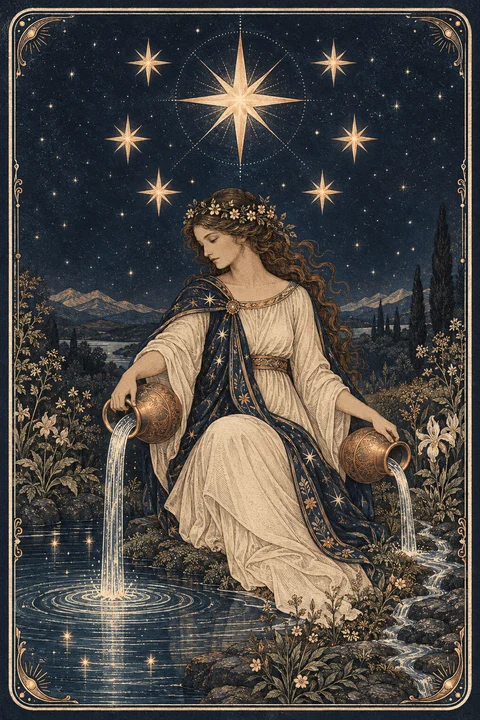
When it appears in a spread, the star reversed meaning points to a temporary crisis of faith, emotional exhaustion, or feeling disconnected from personal inspiration. Rather than signaling permanent despair, the inverted seventeenth Major Arcana card suggests that your natural optimism and hope are merely blocked or turned inward. Traditionally, this card invites you to nurture yourself quietly while you rediscover your sense of purpose.
The Symbolism of The Star in the Rider-Waite-Smith Tradition
In the traditional Rider-Waite-Smith deck, The Star is card number 17 in the Major Arcana, following immediately after the sudden destruction of The Tower. The imagery depicts a maiden kneeling beneath a large yellow star and seven smaller white stars. She pours water from two vessels onto both fertile soil and clear water, illustrating an unforced exchange between unconscious wisdom and conscious reality. Astrologically linked to Aquarius, this card embodies universal hope, calm after devastation, artistic clarity, and deep spiritual nourishment.
When the card stands upright, practitioners read it as pure grace and renewal. The maiden is unclothed, signifying vulnerability, authentic truth, and freedom from illusion. Because the water replenishes the earth continuously, the card suggests that the universe provides an inexhaustible spring of vitality. Understanding this foundation is essential when interpreting the reversal, because the inverted card rarely erases these gifts; instead, it indicates that the querent has lost sight of the stream or closed their hands against receiving it.
Core Interpretations of The Star Reversed Meaning
When studying the star reversed meaning, readers generally examine four distinct interpretive lenses: blocked expression, internalized processing, lack, and excess. Through the lens of blockage, your inspiration remains present, but mental fog or anxiety obstructs your view of it. You may feel pessimistic about the future simply because present burdens obscure your long-term vision. Through the lens of lack, the card highlights low confidence, spiritual dryness, or cynicism that prevents you from believing positive changes are possible.
Alternatively, through the lens of excess, an inverted Star can warn against unrealistic daydreams or naive expectations. In this state, an individual clings to wishful thinking while avoiding the practical effort required to heal or progress. Finally, the internal lens suggests that your healing journey must happen behind closed doors. Rather than performing optimism for the outside world, you are encouraged to quietly mend your own spirits without external fanfare.
In all variations, practitioners emphasize that Major Arcana cards mirror psychological and spiritual milestones rather than unavoidable destiny. The Star reversed reminds you that disillusionment is often a natural phase of growth. Experiencing a lull in confidence does not mean the journey is ruined; it simply marks an invitation to pause, breathe, and tend to internal needs before pouring your energy outward again.
How Different Reading Schools Approach the Reversal
Interpretations of reversed cards vary widely depending on the school of Tarot you consult. In traditional fortune-telling and historic European methods, such as those descending from the Tarot de Marseille, readers often viewed reversed cards as direct oppositions to their upright virtues. Under this rigid lens, The Star reversed was sometimes labeled as bad luck, dashed hopes, or stubborn misfortune. Modern readers largely reject such fatalistic readings, recognizing that complex archetypes carry nuanced psychological layers.
In modern psychological Tarot, influenced by Carl Jung and mid-twentieth-century authors, reversals are considered shadow aspects or inward-directed currents. Within this framework, The Star reversed shows that the conscious mind is struggling to integrate unconscious wisdom. The person may project their disillusionment onto the world, claiming life is unfair when they are actually feeling disconnected from their inner self. Healing comes through integrating that shadow rather than seeking external rescue.
Meanwhile, esoteric traditions connected to the Hermetic Order of the Golden Dawn emphasize elemental dignities and energetic balance. These practitioners analyze whether the airy, intellectual qualities of Aquarius have become hypercritical or detached. If the mind over-intellectualizes emotional wounds, it severs the intuitive current symbolized by the pouring water. Across every reputable school, readers advise looking at the querent's mindset rather than predicting an unalterable catastrophe.
The Star Reversed in Love and Relationship Inquiries
In relationship readings, The Star reversed frequently highlights emotional exhaustion, vulnerability fatigue, or lingering cynicism born from past heartbreaks. One or both partners may feel hopeless about resolving persistent disagreements, leading to emotional withdrawal. When genuine vulnerability feels too risky, partners often hide their true feelings behind walls of quiet resignation, which starves the connection of natural warmth.
For couples, this card can also signify disproportionate idealism. If you place a partner on an unattainable pedestal, reality will inevitably disappoint you when human flaws emerge. The reversed card suggests grounding your expectations in compassion rather than fantasy. Are you expecting your partner to heal wounds that require professional care or personal self-reflection? Clarifying boundaries helps both people rebuild genuine intimacy without unfair burdens.
For individuals seeking romance, The Star reversed often reflects a belief that affection will always pass them by. Past disappointments may have hardened into an assumption that love is unreachable. Many readers encourage clients facing this card to suspend dating briefly and focus on rebuilding self-worth. When you re-establish faith in your own value, you naturally attract healthier, more reciprocal bonds.
Career, Finances, and Creative Stagnation
In queries regarding work and finances, The Star reversed usually signals creative burnout, lack of direction, or feeling underappreciated. You might find yourself grinding through professional routines without deriving any personal fulfillment or enthusiasm from the results. The artistic spark that once guided your projects feels quenched, leaving you feeling frustrated, flat, and doubtful about your long-term talents.
Regarding finances, the reversed card warns against financial complacency or placing faith in speculative schemes. Hoping for a sudden windfall is not a replacement for balanced budgeting and sensible planning. It can also point to imposter syndrome, where qualified individuals fail to pursue advancements or fair compensation because they falsely believe they lack merit. The card urges you to examine your financial situation realistically while giving yourself proper credit for your existing skills.
When creative blockages arise under this card, forcing productivity usually worsens the issue. The Star reversed advises stepping away from high-pressure demands to let the mind replenish itself organically. Engaging in gentle, low-stakes hobbies without performance goals can slowly reawaken the flow of inspiration, allowing your confidence to return at its own natural pace.
Reading the Reversal in Context and Next Steps
A Tarot card should never be read in complete isolation, as surrounding cards dramatically reshape its message. For example, if The Star reversed appears alongside challenging cards like the Three of Swords or the Five of Cups, it emphasizes emotional grief that must be honored before hope can return. Conversely, if it sits next to supportive cards such as the Empress or the Sun, it suggests that relief and renewed vigor are already arriving right behind your temporary doubt.
Reflecting on the star reversed meaning provides a valuable framework for gentle self-inquiry. You might ask yourself where you have been ignoring your own emotional needs, or what personal disappointments you are still carrying in silence. Are you holding onto unrealistic timelines that set you up for feeling like a failure? Identifying these patterns allows you to replace self-criticism with quiet patience.
Ultimately, this card is a gentle reminder that stars remain in the sky even during the heaviest overcast nights. Clouds obscure your perception of the light, but they do not extinguish the light itself. By resting, releasing impossible expectations, and honoring your inner pace, you can clear away the fog and allow your natural guidance to shine through once more.
Frequently asked questions
Does The Star reversed mean bad luck or absolute tragedy?
No, The Star reversed does not signify tragedy or doom. In standard Rider-Waite-Smith interpretation, it reflects an internal state of low morale, doubt, or emotional burnout. It serves as an invitation to rest and tend to your personal healing rather than a prediction of disastrous external events.
What should I do if I pull The Star reversed as advice?
When pulled as advice, The Star reversed suggests lowering unrealistic expectations, nurturing your mental health, and stepping back from draining responsibilities. Instead of trying to force optimism or solve every problem immediately, focus on small, restorative acts that quietly rebuild your trust in yourself and your future.
How does The Star reversed differ from The Tower?
The Tower represents abrupt, external shocks that dismantle outdated structures, while The Star reversed reflects the emotional aftermath and quiet spiritual exhaustion that can follow upheaval. The Tower is active and disruptive, whereas The Star reversed is reflective, highlighting temporary disillusionment, loss of faith, or internal fatigue.
Can The Star reversed mean unfulfilled dreams?
Yes, many practitioners find that The Star reversed highlights unfulfilled dreams or goals that feel painfully delayed. However, it often points out that your attachment to a rigid fantasy is obscuring realistic paths to fulfillment. Adjusting your expectations can help you rediscover real progress.