Death Yes or No: Tarot Meaning Explained
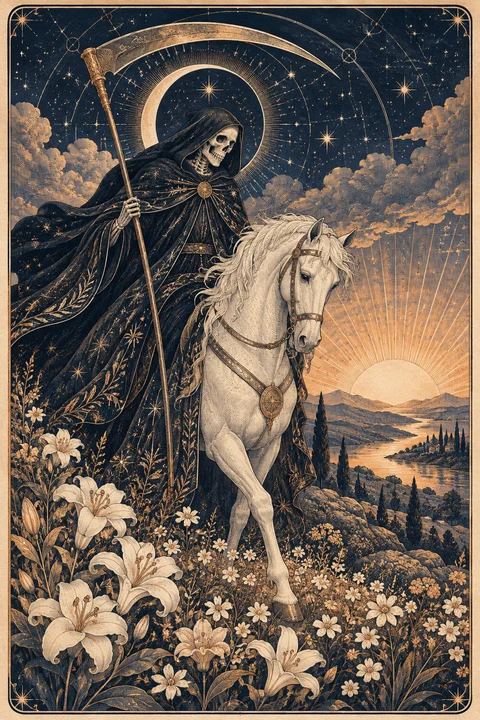
In a straightforward yes or no reading, the Death card traditionally leans toward a clear no if you are asking whether an existing situation will stay the same or survive in its current form. However, practitioners often interpret it as an emphatic yes when your question involves walking away from the past, embracing inevitable transformation, or initiating necessary closure. Because Major Arcana card number 13 represents profound transition rather than physical mortality, the true answer depends heavily on whether your inquiry resists change or invites it.
Understanding the Traditional Meaning of the Death Card
In the Rider-Waite-Smith tradition, Death carries the Roman numeral 13 and is ruled by Scorpio, the fixed water sign associated with regeneration and deep psychological metamorphosis. The artwork depicts an armored skeleton riding a white horse across a battlefield, carrying a black banner adorned with the Mystic Rose. In the background, the sun rises between two towers, quietly reminding the querent that every ending contains the seed of a brand-new dawn. Kings, children, and prelates kneel or fall before the rider, symbolizing that transition is an impartial law of existence that touches everyone regardless of worldly station.
When beginners pull Death in a spread, alarm is a common reaction, yet experienced readers know that the card almost never portends literal physical passing. Instead, the card symbolizes psychological endings, systemic conclusions, and the shedding of outworn identities. Death demands that you surrender what is already decaying so that fresh energy can enter your life. It operates as a cosmic broom, sweeping aside structures that can no longer sustain authentic growth or spiritual development.
Understanding this foundational symbolism is crucial when evaluating the Death yes or no verdict in a consultation. If you treat the card merely as an arbitrary obstacle, you miss its constructive invitation to evolve. Death does not arrive to punish you, but rather to liberate you from dead weight that prevents personal progression. It asks you to respect natural cycles and to accept that pruning branches is what allows a tree to flourish in subsequent seasons.
Is Death a Yes or No in the Upright Position?
When Death appears upright in a query that demands a definitive verdict, most readers classify it as an organic no for questions about preservation. If you are asking whether an unstable romance will recover its original spark, whether an obsolete business model will suddenly thrive, or whether things will remain comfortable, the upright card signals a firm denial. It indicates that the energetic momentum of the situation has reached its conclusion, and attempting to revive it will produce frustration rather than success.
Conversely, upright Death functions as an affirmative yes when you ask about severance, evolution, or moving forward. If you ask whether you should resign from an exhausting job, whether a chapter in your life is finished, or whether major transformation is approaching, the card gives enthusiastic assent. It tells you that the time for polite hesitation has passed and that cutting ties will ultimately restore vitality. Context dictates the verdict, making it vital to inspect the core desire driving your question.
To interpret upright Death accurately, determine whether your inquiry is rooted in holding on or letting go. When the question seeks validation for maintaining familiarity, the answer is no because the card demands release. When the inquiry asks whether significant transition will occur or whether you should liberate yourself from a draining arrangement, the answer is an empowering yes. The card always aligns with evolutionary momentum over preservation.
Is Death a Yes or No in the Reversed Position?
When Death appears reversed in a reading, the energy of transformation becomes blocked, delayed, or actively resisted. For binary questions, reversed Death most often functions as a no or a complicated maybe that advises pause. It suggests that while an ending is technically overdue, one or more parties are desperately clinging to old dynamics out of fear or unresolved grief. The transition is struggling to complete itself because denial is stalling natural progress.
If you ask whether you are ready to begin a new venture while Death appears inverted, the answer leans toward no because lingering attachments must be untangled first. You may still be carrying baggage from a former endeavor or nursing emotional wounds that compromise your present judgment. The inverted skeleton signifies living in the shadow of the past, attempting to resurrect what is fundamentally defunct rather than stepping boldly into uncharted territory.
In rare contexts, reversed Death can function as a conditional yes regarding delayed breakthroughs. It signals that an extended period of stagnation is finally reaching a breaking point where change can no longer be avoided. However, the emotional toll of resisting the inevitable makes this a sobering affirmation. The card cautions that dragging your feet will only prolong discomfort, urging you to stop fighting unavoidable evolutionary shifts.
How Context Shapes the Verdict in Love, Career, and Personal Life
In love readings, asking whether an ex will return and pulling Death yields a compassionate but firm no. The card affirms that the karmic cycle of that specific union has ended, and attempting to rekindle the romance would merely prolong mutual stagnation. If you ask whether a stagnant relationship will undergo profound changes, the card says yes, though those shifts may require completely dismantling familiar routines or choosing to separate amicably so both individuals can thrive independently.
In professional matters, Death appearing for a career query usually signals that a role, project, or organizational chapter is terminating. If you ask whether you will stay in your current company indefinitely, the answer is no, because institutional restructuring or internal boredom will compel a transition. If you ask whether you should pivot toward an entirely different industry, Death offers a decisive yes, confirming that your old professional persona must dissolve to make space for genuine career alignment.
Regarding personal development and well-being, Death serves as an uncompromising mirror. If you ask whether a destructive habit or self-defeating belief system is sustainable, the answer is an absolute no. The card invites you to reflect on how holding on to past grievances poisons current opportunities. By accepting the transition that Death announces, you grant yourself permission to release outdated expectations and construct an identity that reflects who you are becoming today.
Reframing Your Question for Deeper Divinatory Clarity
Because Death is one of the most conceptually rich cards in the Major Arcana, reducing its presence to an isolated yes or no can deprive you of valuable wisdom. Binary questions frequently stem from anxiety, seeking simple reassurance about topics that require thoughtful contemplation. When you ask closed questions, you risk viewing the card as an arbitrary roadblock rather than a catalyst for personal reinvention. Learning to reframe your inquiries helps you collaborate with the symbolism rather than fear it.
Instead of asking whether a difficult friendship is over, you might ask what you need to acknowledge about the current health of that relationship. Instead of asking whether an unexpected change will hurt your career, ask what obsolete priorities this transition is inviting you to relinquish. These open-ended questions encourage self-reflection, giving the archetypal imagery of the rider and rising sun room to illuminate hidden opportunities for renewal.
Before laying down cards, write your question down and examine whether you are asking for permission or genuine understanding. If your original phrasing demands a quick verdict, try expanding it into a multi-part reflection. Ask what must be cleared away first, what lessons the departing cycle offered, and how you can best prepare for the emerging dawn. This approach transforms a moment of apprehension into an empowering act of conscious self-discovery.
Practical Tips for Interpreting Death in Your Personal Spreads
When interpreting Death during your private spreads, pay close attention to the cards that surround it. Minor Arcana cards of the Cups suit can reveal the emotional attachments you must release, while Swords often point to rigid beliefs or communication habits that must dissolve. If Wands surround Death, creative or professional projects are undergoing structural overhauls, whereas Pentacles indicate material, financial, or domestic transitions that require practical adaptation.
Take a few moments to sit with the card and meditate on the imagery created by Pamela Colman Smith under Arthur Edward Waite's direction. Look past the ominous armor and focus your gaze on the golden horizon in the distance. Ask yourself what new possibilities might arise once the current chapter concludes. Recognizing your psychological response to the artwork helps you discern whether you are projecting personal anxieties onto the card or receiving an authentic intuitive message.
Finally, remember that Tarot serves as a tool for symbolic reflection and personal insight rather than a fixed pronouncement of fate. Cards illuminate current trajectories and hidden attitudes, but your conscious choices always determine how you respond to shifting circumstances. Treating Death as a respected companion on your journey allows you to navigate life transitions with grace, dignity, and unwavering confidence in your capacity to begin again.
Frequently asked questions
Does pulling the Death card mean something bad will happen?
No, pulling the Death card does not indicate tragedy or physical harm. In traditional Tarot symbolism, Major Arcana card number 13 represents profound transformation, necessary endings, and the clearing of outworn circumstances. While change can feel uncomfortable or emotionally challenging, the card ultimately points toward liberation and the opportunity to begin fresh after an obsolete cycle concludes.
Is the Death card a yes or no for romance and relationships?
Death leans toward no if you are asking whether an ex will return or whether an unhealthy relationship will stay the same. However, it functions as a clear yes if you are asking whether the dynamic requires profound transformation, or whether you should let go of an unfulfilling romance to pursue personal happiness and new romantic possibilities.
What does Death reversed mean in a yes or no question?
Reversed, the Death card usually indicates a no or a delayed outcome caused by resistance to change. It suggests that you or someone involved is clinging to an outdated situation, prolonging inevitable closure out of fear. The card advises you to address emotional attachments and stagnation before expecting genuine forward progress or clear answers.
How can I tell if Death means yes or no in my specific reading?
Look carefully at the nature of your question. If your inquiry asks whether you should maintain, revive, or prolong an existing situation, Death means no. If your question asks whether a major transition is coming, whether you should release something, or whether a cycle has ended, Death delivers an affirmative yes.