Five of Wands Yes or No: Tarot Meaning Explained
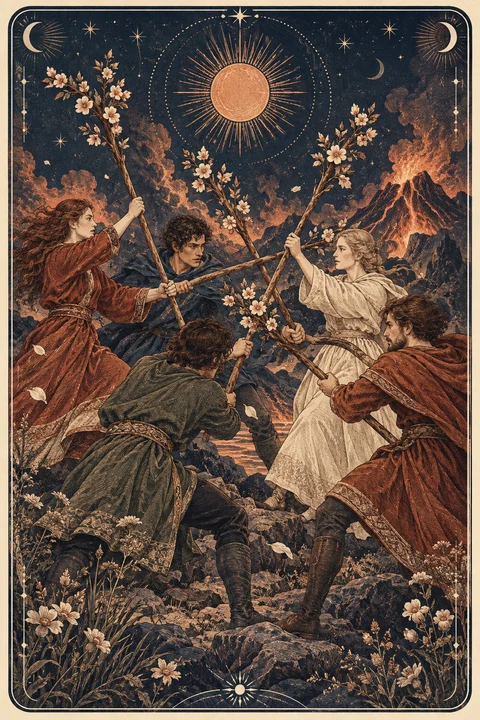
In a divination spread, the Five of Wands yes or no query traditionally leans toward a no, or at least a firm not yet. This card reflects competing desires, friction, and disorganized chaos that prevent a smooth resolution at this moment. When this card appears, practitioners describe an environment where progress requires working through disagreements and overcoming substantial resistance first.
Interpreting the Five of Wands Yes or No in a Spread
When seeking a simple binary answer, encountering the Five of Wands can feel frustrating because it brings restless, scattered energy into the reading. Historically rooted in the Rider-Waite-Smith system, this card rarely points to an effortless green light. Instead, it signifies that people are talking over one another, competing for supremacy, or pulling in opposite directions. The core message cautions that your desired outcome faces external resistance or internal conflicts that make an immediate affirmation improbable.
Rather than indicating a permanent defeat or tragedy, this card highlights an active contest. Many readers interpret the Five of Wands as a conditional answer that asks you whether you are prepared to fight for what you want. Success is not impossible, but you will not receive it on a silver platter. Achieving your goal requires engaging directly with the turbulence, clarifying your boundaries, and discovering common ground amidst the noise.
Timing also plays a critical role when interpreting this card in a reading. If your question asks whether a situation will stabilize soon, the card responds with a likely no because the current atmosphere remains volatile. The energetic crosscurrents must finish playing out before harmony can emerge. Acknowledging this friction allows you to step back and assess whether the battle is truly worth your time and energy.
Core Symbolism of the Five of Wands and the Suit of Fire
To appreciate why this card complicates binary inquiries, it helps to examine its traditional visual symbolism. In the Rider-Waite-Smith deck, Pamela Colman Smith illustrated five young people brandishing rough wooden staves against an open sky. Notably, their clothes are mismatched, and their wands cross one another in disorganized competition. They are not fighting to the death, but they are clearly engaged in a heated skirmish where nobody is working together.
As part of the suit of Wands, this card belongs to the element of Fire, which governs ambition, creativity, willpower, and personal drive. In numerology, the number five consistently denotes sudden disruption, instability, and turning points. When Fire combines with five, the resulting energy represents passion without direction, sparking minor squabbles and ego clashes. The creative spark turns argumentative because everyone wants their own vision to prevail above all others.
Practitioners view this scene as a mirror of daily life, where diverse perspectives collide in boardrooms, social groups, or personal minds. It represents healthy brainstorming gone astray or playful competition turning bitter. When this fiery disturbance shows up, the cards suggest that the underlying tension must be addressed honestly rather than suppressed under a facade of artificial peace.
The Upright Five of Wands: Facing Friction and Rivalry
In the upright position, the Five of Wands functions as a strong signal to pause before acting. If you are asking whether an endeavor will proceed smoothly, the answer leans toward a definitive no. You are likely encountering people who disagree with your methods or enter into unhelpful rivalry with you. Even if your intentions are noble, the surrounding environment contains too much competition and contradictory agendas to support an easy victory.
This card also prompts deep reflection on internal friction. You might be experiencing conflicting motivations within yourself, pulled between doing what is safe and taking a creative gamble. When your own values are at war, pulling this card signals that you lack the inner coherence needed to make a decisive move. Taking action while split internally usually creates messy results that mirror your inner indecision.
If you choose to pursue your path despite the upright card leaning no, prepare yourself for continuous debate. You must refine your arguments, anticipate objections, and maintain emotional stamina. The upright card reminds you that competition can sharpen your skills, but it will inevitably drain your resources if you treat every difference of opinion as a battle that must be won.
The Five of Wands Reversed: Easing Conflict or Avoiding the Issue
When the Five of Wands appears reversed in a reading, its interpretation shifts toward either relief or suppression, making its yes or no leaning heavily context-dependent. Traditionally, the reversal can signify the end of fighting, the resolution of disputes, or reaching a much-needed truce. In questions about whether an argument will de-escalate, the reversed card often leans toward yes, suggesting that individuals are weary of fighting and ready to compromise.
However, the reversed card carries an alternative interpretation that leans no. It can reflect passive aggression, avoidance of necessary discussions, or burying resentments beneath a superficial calm. In this scenario, people are smiling publicly while sabotaging one another in secret. If your question asks whether a situation is truly settled and healthy, the card warns that underlying tensions remain unaddressed and may flare up later.
To determine which reversed meaning applies, reflect carefully on your personal circumstances. Are you walking away from pointless squabbles to preserve your peace, or are you ducking an uncomfortable dialogue because you fear disagreement? Acknowledging the difference will help you understand whether the card brings a true resolution or merely a temporary delay in an ongoing conflict.
Reading the Card Across Different Life Areas
In relationship readings, the Five of Wands upright generally answers no to questions about harmony, commitment, or uncomplicated romance. It suggests bickering over trivial details, defensive attitudes, or competing desires between partners. If you are asking whether an ex will return peacefully, this card indicates that previous misunderstandings and bruised egos remain unresolved. Reversed, it can indicate that both partners are finally exhausted by petty arguments and seeking cooperative reconciliation.
For career and workplace spreads, the card highlights a competitive environment where multiple colleagues are vying for the same position, recognition, or project resources. An inquiry about whether a project will launch smoothly receives a no, as administrative hurdles, contradictory feedback, and differing opinions stall momentum. Embracing collaborative compromise and establishing clear roles can transform this cutthroat dynamic into productive teamwork over time.
Regarding personal aspirations and creative projects, the card reveals creative blocks born from scattered focus. You might be pursuing too many contradictory ideas at once, diluting your creative fire. The card advises you to streamline your goals and eliminate competing commitments before expecting substantial progress. Once you align your intentions, you can move forward with greater unity and conviction.
Reframing Questions for Better Tarot Guidance
While asking whether a situation will turn out well is a natural impulse, binary inquiries often flatten the rich, psychological complexity of the cards. The Five of Wands rarely operates as a blunt barrier; instead, it illustrates a dynamic process of negotiation and self-assertion. Phrasing questions around how, why, or what allows the imagery to offer practical strategy rather than a vague prediction.
For example, instead of asking whether you will win an upcoming contest or settle an argument, consider asking what underlying fears are driving the disagreement. You might ask what strengths you can cultivate to handle workplace competition gracefully, or how you can channel your creative frustration into focused work. These questions empower you to act constructively within challenging dynamics.
Tarot serves best as a mirror for personal awareness and honest reflection rather than a tool for fatalistic certainty. When you encounter friction in the cards, treat it as an invitation to examine your own boundaries, communication habits, and emotional triggers. By shifting your inquiry, you transform perceived obstacles into valuable lessons in patience and diplomacy.
Conclusion: Navigating the Five of Wands Yes or No Energy
Ultimately, the five of wands yes or no outcome serves as a protective warning rather than an absolute closure. It alerts you that pursuing your current trajectory right now will demand emotional bandwidth, endurance, and diplomacy against conflicting forces. Recognizing this atmospheric friction prevents unnecessary disappointment and helps you prepare effectively for the debates that lie ahead.
Whether the card appears upright or reversed, its presence invites you to step back from meaningless rivalries and examine where your energy is best invested. You do not have to attend every fight you are invited to, nor do you need to bulldoze past genuine objections. By approaching disagreements with patience, active listening, and self-possession, you can navigate the turbulence and emerge stronger on the other side.
Frequently asked questions
Does the Five of Wands always mean no?
While the Five of Wands traditionally leans toward a no in binary readings, it rarely represents an insurmountable roadblock. Instead, it indicates that current conditions are fraught with competition, disagreements, or scattered priorities. Rather than signaling an outright impossibility, it asks whether you have the stamina and strategic diplomacy to work through existing friction before moving forward.
What does the Five of Wands mean for love questions?
In romance readings, this card upright leans toward no regarding smooth harmony or sudden commitment. It frequently reflects petty arguments, clash of egos, or differing relationship visions that require open conversation. Reversed, it may suggest that both partners are willing to end futile bickering, though it can also warn against suppressing valid feelings simply to avoid conflict.
Is the Five of Wands reversed a positive card?
The Five of Wands reversed can be positive when it indicates the calming of workplace rivalries, the resolution of legal disputes, or mutual willingness to negotiate. However, it can also signify avoidance of necessary conflict, simmering resentment, or feeling overwhelmed by outside pressures. Context from surrounding cards helps clarify whether peace is authentic or merely performative.
How does the element of Fire influence the Five of Wands?
The element of Fire governs drive, enthusiasm, creativity, and ambition. In the Five of Wands, Fire becomes restless and disorganized, creating hot tempers and intense competition rather than sustained progress. It suggests that while the creative spark and determination are abundant, individuals must learn to coordinate their energy collectively rather than battling for dominance.