Seven of Swords Yes or No: Tarot Meaning Explained
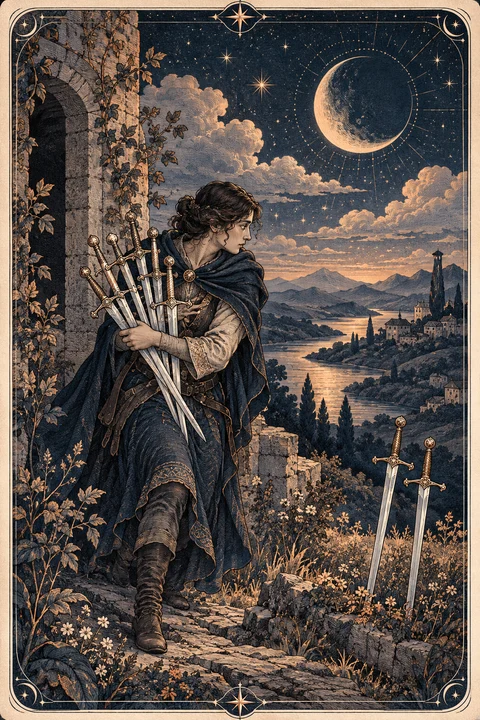
In a straightforward yes or no Tarot reading, the Seven of Swords traditionally leans toward a clear "no." Associated with secrecy, strategic maneuvering, avoidance, and incomplete truths, this card usually indicates that crucial information remains hidden or that an unconventional shortcut may backfire. When this card appears, practitioners describe it as a strong signal to pause, verify facts, and look beneath the surface before proceeding.
The Direct Answer: Seven of Swords Yes or No
When drawing cards for a binary inquiry, the Seven of Swords yes or no interpretation leans decidedly toward "no." This card emerges from the suit of Swords, which governs the intellect, communication, and human conflict. Historically rooted in concepts of cunning, evasion, and stealth, the card suggests that the situation at hand is compromised by hidden factors, questionable motives, or unreliable commitments. Expecting a straightforward, favorable outcome under these energies is rarely advisable.
In select scenarios, readers interpret the card as an ambivalent or conditional "maybe," particularly if the question involves tactical withdrawal or working discreetly behind the scenes. If you are asking whether you should bypass a direct confrontation, leave an unhealthy environment quietly, or protect proprietary work, the card acknowledges that indirect methods might achieve your immediate goal. However, that apparent victory often arrives with complications or unresolved lingering tension.
Most readers caution against treating the card as a green light because its victory is rarely clean. The central energy revolves around getting away with something or taking what you can carry while abandoning the rest. When the Seven of Swords surfaces in response to plans requiring mutual trust, collaboration, or transparency, practitioners describe it as a clear warning to withhold agreement until all facts are verified.
Rider-Waite-Smith Imagery and Core Symbolism
The classic Rider-Waite-Smith depiction illustrates a lone figure tiptoeing away from a military camp under a yellow sky, clutching five upright swords in his bare hands. He glances back over his shoulder with a sly smirk, leaving two swords firmly planted behind him in the turf. This visual narrative captures the essence of strategic theft, discreet escape, and acting independently outside established rules, highlighting clever resourcefulness mixed with vulnerability.
Because the suit of Swords corresponds to the classical element of Air, this card operates firmly within the realm of the rational mind, thought patterns, and ethical judgment. Swords cut both ways, symbolizing analytical sharpness that can easily degenerate into duplicity, rationalization, or trickery. The figure holds the blades by their sharp edges, signaling that cutting corners or resorting to deceit poses an immediate danger of self-inflicted harm.
Crucially, the two swords left standing indicate that something essential has been neglected. The protagonist could not carry all seven blades, meaning the situation cannot be completely resolved through stealth alone. There are loose ends, witness accounts, or unfinished obligations waiting to resurface. The card reminds us that running away with partial gains does not eliminate the underlying systemic challenge or potential confrontation.
How Context Shapes the Reading Across Different Situations
In relationship and romantic readings, the Seven of Swords is almost uniformly a warning, indicating a firm no regarding mutual honesty and deep commitment. It often highlights evasiveness, withheld feelings, infidelity, or half-truths told to avoid discomfort. If you are asking whether a romantic prospect is being completely genuine, this card suggests that someone is keeping secrets or keeping one foot out the door rather than engaging fully.
For career, professional, and business questions, the answer remains predominantly negative if you are asking about collective trust, promotions, or transparent partnerships. It frequently reflects office politics, competitors snooping on your work, or an environment where colleagues act out of selfish self-interest. However, if your question asks whether you should maintain strict confidentiality regarding an invention or strategy, the card may validate keeping your cards close to your chest.
When addressing personal dilemmas, creative work, or personal growth, the card asks whether you are attempting to outsmart your own responsibilities. Are you taking an easy shortcut that undermines your integrity? Many practitioners describe this card as an invitation to examine where avoidance is masking fear of direct confrontation. Bypassing difficult conversations rarely produces enduring peace, even if it feels expedient in the moment.
Upright Versus Reversed Seven of Swords
In its upright orientation, the Seven of Swords reflects active, conscious stealth, tactical retreats, and deliberate calculation. The individual is still in the middle of executing their plan, hoping to escape notice and slip away without detection. For yes or no readings, upright energy strongly implies that what you seek is clouded by subterfuge, unrevealed agendas, or a situation where someone is not playing by fair rules.
When reversed, the Seven of Swords often points to secrets coming to light, confessions being made, or the collapse of an ill-conceived scheme. It can signify that evasion is no longer working, forcing the querent or someone around them to face accountability. Alternatively, it reflects an internal crisis of conscience, where guilt, imposter syndrome, or moral hesitation makes continuing a deceptive path psychologically impossible.
Does the reversal turn the answer into a decisive yes? Usually, it does not. Instead, the reversed card operates as a transitional warning that truth is emerging or that an apology is overdue. While coming clean clears the path for future healing, the immediate answer to a yes or no question remains skeptical, suggesting you must clear up past misunderstandings before moving forward with new commitments.
Better Ways to Phrase Questions for the Seven of Swords
While yes or no inquiries offer quick reassurance, binary questions frequently flatten the deep psychological nuance of the Tarot. The Seven of Swords is inherently complex because it explores the gray areas of human behavior, such as strategy, self-preservation, tact, and deception. Reducing its intricate message down to a flat rejection obscures the valuable warnings and strategic advice the card seeks to communicate.
Rather than asking closed questions like "Will this project succeed?" or "Is my coworker lying to me?", open-ended inquiries yield richer personal reflections. Tarot functions best as a mirror for mindfulness and critical thinking, encouraging you to analyze interpersonal dynamics and hidden risks. By phrasing your inquiries around awareness and action, you regain agency rather than looking for predetermined outcomes.
Consider asking questions such as: "What facts or motivations am I currently overlooking in this situation?" or "Where in my life might I be avoiding necessary conflict through passive retreat?" You might also explore: "How can I protect my personal boundaries without compromising my core integrity?" These formulations transform a cautionary card into an empowering tool for deliberate, ethical decision-making.
Reflective Practices and Next Steps When This Card Appears
Whenever the Seven of Swords emerges in your spread, treat it as an invitation to conduct a thorough reality check. Review your agreements, verify verbal promises with written documentation, and look closely at whether your intuition has been flagging red flags you chose to rationalize. Caution is not cynicism; it is the responsible safeguarding of your emotional, intellectual, and material investments.
It is equally vital to turn the card's analytical gaze inward upon your own behavior. Examine whether you are tempted to take shortcuts, sidestep uncomfortable accountability, or withhold information out of fear of criticism. True personal power comes from standing firmly in your truth rather than sneaking away with fragments of peace. Confronting difficulties directly, even when awkward, prevents future complications.
Ultimately, understanding the seven of swords yes or no significance reminds us that quick fixes rarely build lasting foundations. Divination serves as symbolic reflection, guiding you to align your actions with wisdom, clear communication, and uncompromised ethics. When this card appears, step back from impulsive moves, reassess your tactical approach, and ensure that your chosen path honors both your intellect and your conscience.
Frequently asked questions
Is the Seven of Swords ever a yes in Tarot readings?
Yes, in very specific contexts where discretion, quiet strategic planning, or removing yourself from a toxic environment is necessary. If your question asks whether you should step away from a hostile argument or keep a private creative idea confidential, the card can lean yes, validating an indirect, self-protective approach rather than direct confrontation.
What does the Seven of Swords mean for love questions?
In love readings, the Seven of Swords generally signals caution or a firm no. It traditionally represents hidden intentions, emotional evasiveness, betrayal, or lack of complete honesty between partners. If you suspect insincerity, the card suggests examining communication patterns closely, verifying facts, and addressing unresolved tension directly rather than letting unspoken suspicions fester.
How does the reversed Seven of Swords affect a yes or no question?
The reversed Seven of Swords still usually leans no, but the energy shifts from active deception toward exposure and confession. It suggests that hidden truths are coming to light, past evasions are catching up with someone, or a conscience is demanding honesty. It advises against moving forward until complete transparency has been reestablished.
Can the Seven of Swords indicate self-deception in decision-making?
Many practitioners describe the Seven of Swords as a mirror for rationalization and imposter syndrome. It often highlights moments where you convince yourself that taking a shortcut is harmless or that avoiding a confrontation will make a problem disappear. In this sense, it urges honest self-reflection before taking your next external step.