The Chariot Yes or No: Tarot Meaning Explained
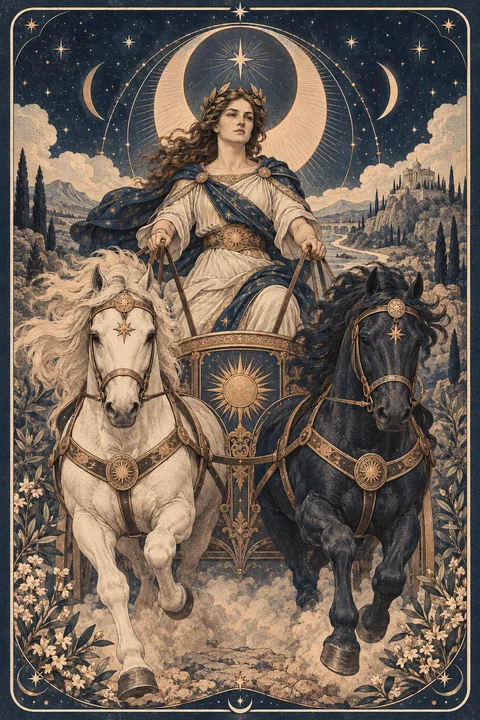
In a straightforward reading, The Chariot yes or no pull is traditionally interpreted as an enthusiastic yes, provided you are willing to take disciplined action. Major Arcana card number 7 represents triumph over conflicting impulses, self-mastery, and resolute determination. This card confirms that success is entirely possible, but it reminds you that victory requires deliberate effort rather than passive hoping.
The Core Symbolism of The Chariot in Tarot
In the traditional Rider-Waite-Smith deck, The Chariot depicts an armored warrior standing beneath a starry canopy, holding a wand of authority. Before the vehicle sit two sphinxes, one black and one white, representing opposing internal impulses, dualities, and conflicting desires. The charioteer holds no physical reins; instead, the vehicle is steered entirely through sheer willpower, focused intention, and spiritual discipline. Astrologically linked to the cardinal water sign Cancer, the card speaks to emotional containment and building a protective shell around your vulnerabilities so you can advance toward your chosen objective.
When this card appears, it signals that external circumstances will not simply fall into place on their own. Victory comes through actively reconciling contradictory desires, such as caution and ambition or passion and logic. Practitioners describe The Chariot as the archetype of directional momentum, where passive contemplation must yield to decisive execution. The imagery reminds us that progress is impossible if your inner drivers pull in opposite directions, making integration the first requirement of forward movement.
Upright Meaning: The Chariot Yes or No
When consulting The Chariot yes or no framework in an upright orientation, readers almost universally consider it a resounding affirmative. This card suggests that you possess the necessary grit, stamina, and intellectual clarity to achieve your objective. Whether you are asking about passing an exam, completing a project, or overcoming an obstacle, the card validates your ability to cross the finish line. However, unlike passive cards that promise favorable chance, this card demands your active participation and unwavering self-command.
The upright card highlights that your success will depend entirely on how well you handle distractions and maintain focus. For instance, if you ask whether you should launch a new venture, The Chariot answers yes, but it emphasizes that you must establish clear boundaries and rigorous routines. Many readers point out that The Chariot rarely grants effortless windfalls; instead, it promises that consistent, strategic pressure against your current obstacles will yield the outcome you desire.
You might reflect on where your current strengths lie and what habits might be siphoning your momentum. Are you permitting minor inconveniences to derail your schedule, or are you staying anchored to your primary purpose? The upright Chariot serves as both an affirmation and an urgent call to muster your inner fortitude, assuring you that you have the tools to triumph over competing demands.
Reversed Meaning: When The Chariot Leans Toward No
When The Chariot appears reversed, its traditional interpretation flips toward a firm no, or at minimum a critical pause. A reversal often reflects a situation that has careened out of control, either through excessive force or a complete lack of direction. In some cases, it indicates aggressive micromanagement that alienates allies, while in others, it reveals paralyzing self-doubt where opposing desires tear your efforts apart. For this reason, proceeding blindly under a reversed Chariot often results in emotional burnout or practical gridlock.
Consider an inquiry about whether to confront a colleague or partner during a moment of high tension. The Chariot reversed warns that you may be acting from reactive impulse rather than considered strategy, meaning a confrontation will likely generate more friction than clarity. Alternatively, the reversal can signify that external factors are moving too quickly for you to safely navigate right now, making patient recalculation far wiser than stubborn acceleration.
Instead of forcing your agenda, take time to inspect your inner alignment. Ask yourself whether you are driving forward out of genuine purpose or simply out of an unwillingness to admit that a route is blocked. When you pull this card reversed, the most supportive action is to release your grip on the wheel, pause your momentum, and reevaluate your internal motivations before taking another step.
Context Matters: Love, Career, and Personal Growth
Context plays an essential role in how you should apply The Chariot to your life. In relationship inquiries, an upright Chariot can signal a yes regarding mutual devotion, but it frequently advises you to balance independent autonomy with partnership. If you ask whether a relationship will progress, the card indicates that shared goals and honest communication can bridge differing emotional styles, much like the paired sphinxes moving forward together.
In career and professional inquiries, The Chariot is one of the strongest markers of professional advancement, relocation, and public recognition. If you are asking whether you will secure a promotion or navigate a competitive hiring process, the upright card indicates that your competence and determination will set you apart. It encourages you to advocate boldly for your qualifications while maintaining absolute composure under professional scrutiny.
For personal growth and creative endeavors, The Chariot reflects overcoming procrastination, breaking dependencies, and mastering internal doubts. The card reminds you that developing self-discipline is not about rigid self-punishment; rather, it is about creating supportive structures that allow your creative spirit to thrive. Regardless of the domain, the central message remains focused on intentional, directed energy.
Why Binary Questions Limit The Chariot
While asking simple binary questions can provide quick reassurance, reducing a rich archetype like The Chariot to a single syllable risks missing its most valuable wisdom. Tarot cards function as symbolic mirrors designed to illuminate your underlying psychology, environmental dynamics, and hidden resources. When you demand a quick yes or no from The Chariot, you overlook the tactical instructions it offers regarding how to navigate your challenge.
The Chariot is inherently an operational card that deals with methodology, strategy, and emotional resilience. It rarely speaks of destiny as a predetermined script written in stone; instead, it illustrates what becomes possible when human will harmonizes with clear intention. By viewing the card solely through a binary lens, you risk becoming passive, waiting for a predicted outcome rather than actively steering your circumstances as the imagery invites you to do.
Divination serves best when treated as an invitation for mindful reflection rather than an absolute prediction of future events. When you treat the symbols on the card as dialogue partners, you can explore the nuances of your situation with greater depth, uncovering subtle blind spots that a rigid binary answer would completely obscure.
Reframing Questions and Reflecting on The Chariot Yes or No
To get the most meaningful insight from your reading, you can transform flat yes-or-no inquiries into dynamic, open-ended questions. Instead of asking whether you will achieve a specific goal, consider asking what inner conflicts you must resolve to move forward, or how you can best harness your energy toward your desired outcome. This shifts the focus from an external verdict to your personal agency, allowing you to partner directly with the archetypal energy of the card.
If you are contemplating a difficult decision, you might ask what boundaries you need to establish before advancing, or where your focus is currently divided. These questions honor the central metaphor of the vehicle, challenging you to examine whether your thoughts, emotions, and practical habits are pulling in alignment or driving your life in opposite directions.
In conclusion, interpreting The Chariot yes or no pull offers a powerful confirmation that your willpower and discipline can carry you past any obstacle in your path. By combining the card's upright encouragement with thoughtful self-examination, you can transform a simple card draw into an empowering blueprint for lasting personal achievement.
Frequently asked questions
Is The Chariot always a yes in Tarot readings?
In an upright position, The Chariot is almost always read as a yes, particularly for questions involving goals, ambition, and overcoming obstacles. However, it is an active yes that requires determination, boundary setting, and disciplined focus rather than effortless luck.
What does The Chariot reversed mean for a yes or no question?
When pulled in reverse, The Chariot usually leans toward a no or suggests an immediate pause. It signals that you may be forcing an outcome recklessly, dealing with conflicting motivations, or lacking the structural control necessary to succeed right now.
What does The Chariot represent in a love yes or no reading?
In relationship readings, an upright Chariot typically indicates a yes to moving forward, provided both partners balance independence with shared goals. It reminds you to manage conflicting emotional needs consciously rather than allowing differences to steer the connection off course.
Which astrological sign is associated with The Chariot?
The Chariot is traditionally associated with Cancer, the cardinal water sign ruled by the Moon. This connection highlights the card's themes of emotional containment, self-protection, and harnessing deep inner feelings to fuel forward momentum and purposeful outer achievement.