Three of Pentacles Yes or No: Card Meaning Explained
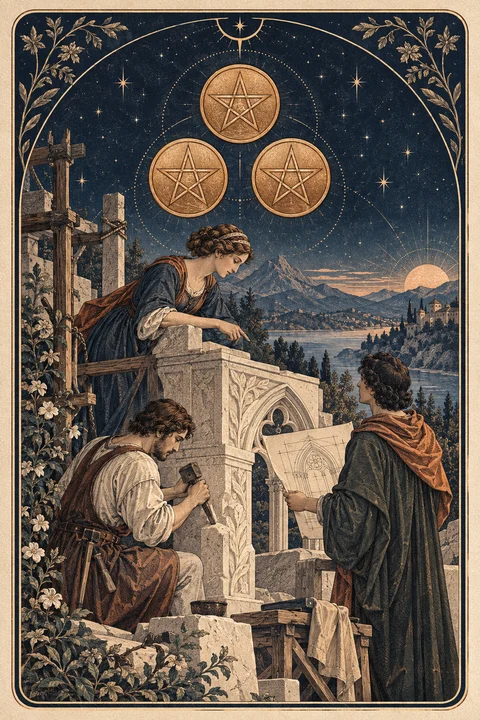
In a straightforward reading, drawing the Three of Pentacles yes or no inquiry almost always yields a clear yes. This card reflects collective effort, craftsmanship, and constructive feedback, suggesting that your goal is attainable when you commit to preparation and cooperation. When it appears reversed, however, practitioners describe the answer as leaning toward no or not yet due to misalignment and poor communication.
Three of Pentacles Yes or No: The Direct Answer
When consulting the cards for immediate clarity, the Three of Pentacles yes or no verdict is overwhelmingly affirmative when drawn upright. It represents shared goals, mutual respect, and the disciplined execution of plans. If your question centers on whether a collaborative project will succeed, whether an interview will go smoothly, or whether someone values your contributions, this card offers reassuring confirmation that your efforts are recognized.
That affirmative answer comes with an important condition that readers frequently emphasize. The Three of Pentacles is never an emblem of passive luck or overnight miracles. Because it is tied to practical development, the card signals that a positive outcome depends on your willingness to cooperate, accept constructive advice, and put in genuine work. The universe is saying yes, provided you show up as an active participant.
In contrast, drawing this card in reverse shifts the baseline answer toward a hesitant no or a cautionary not yet. A reversed appearance often suggests that essential components are out of sync, such as poor communication among partners, inadequate preparation, or an unwillingness to listen to experienced voices. Rather than an outright denial, it highlights friction that must be resolved before success becomes possible.
Symbolism of the Three of Pentacles in the Rider-Waite-Smith Tradition
To understand why this card leans toward yes, look to the traditional Rider-Waite-Smith imagery. The illustration portrays a young stone mason working inside a cathedral or sanctuary, holding a chisel and looking back toward two figures: a monk and a seasoned architect holding architectural plans. Above them, three carved pentacles form an arch, symbolizing the harmony of vision, structure, and physical labor coming together.
This dynamic demonstrates that no major achievement happens in complete isolation. The craftsperson brings manual skill, the architect brings strategic design, and the religious figure provides institutional support and purpose. When these distinct perspectives align, solid foundations turn into enduring monuments. In a personal reading, this scene invites you to reflect on who forms your support network and how your specialized talents fit into a larger community.
As a Minor Arcana card belonging to the suit of Pentacles, this card is governed by the Earth element. Earth represents stability, commerce, physical health, and deliberate, measured growth. Numerologically, the number three introduces initial manifestation, synthesis, and creative expansion following the seed planted in the Ace and the balance tested in the Two. Consequently, the card validates that your foundation is structurally sound.
How Context Shapes the Meaning in Career, Finances, and Love
In career and financial matters, the Three of Pentacles is one of the most encouraging cards in the deck. If you are asking whether to accept a job offer, start a joint business venture, or pitch an idea to clients, the card delivers an emphatic yes. It suggests that your competence will be rewarded and that superiors or collaborators see your distinct value. For financial inquiries, it points toward sustainable gains achieved through steady professional effort rather than speculative risks.
When reading for love and relationships, the card provides nuanced insight depending on your circumstances. For people asking whether a blossoming connection has potential, the card leans yes, highlighting mutual respect and a shared desire to build something durable. It treats romantic partnerships like a collaborative craft where both individuals contribute equally to emotional safety, honest communication, and long-term planning.
If you are navigating interpersonal conflict, the card encourages you to treat the dilemma as a practical problem that can be solved together. It advises against letting ego dominate the conversation and instead recommends bringing in an objective perspective, such as a relationship counselor or trusted mediator. Here, the yes indicates that healing and harmony are entirely achievable if both individuals commit to honest, cooperative effort.
The Reversed Three of Pentacles and Navigating Obstacles
When the Three of Pentacles appears reversed in a yes or no spread, practitioners describe it as an indicator of discord, disorganization, or neglected standards. It suggests that someone involved in the situation may be cutting corners, dismissing helpful feedback, or attempting to handle an overwhelming task without asking for assistance. In response to questions about starting a new project or advancing a partnership, the card recommends pausing.
In professional environments, the reversed card often mirrors office politics, competing egos, or a general lack of shared vision. Team members might work at cross-purposes, leading to frustration and delays. If you are working independently, it can reflect imposter syndrome, hesitation to invest in necessary training, or reluctance to have your work reviewed by knowledgeable peers. Addressing these gaps is necessary before moving forward.
Within romantic readings, the reversed Three of Pentacles can indicate unequal division of emotional labor or a feeling that you and your partner are no longer working as a unified team. Rather than reading this as an absolute sign of doom, view it as a mirror reflecting where alignment has slipped. It invites you to consider whether both parties are genuinely invested in mutual growth and whether resentment has taken root.
Why Yes or No Spreads Require Nuance and Reflection
While yes or no spreads provide fast clarity during moments of indecision, many experienced readers treat binary answers with caution. Tarot is fundamentally a visual language of symbolism, personal reflection, and archetypal patterns rather than a rigid mechanism for predicting fixed outcomes. Boiling rich imagery down to a simple affirmative or negative answer can strip away valuable guidance about how and why a situation is unfolding.
Furthermore, personal agency plays an indispensable role in how any card manifests in daily life. Drawing an upright Three of Pentacles does not guarantee a successful outcome if you abandon your responsibilities or ignore feedback after putting the deck away. The card outlines favorable conditions and supportive energetic currents, but the final outcome remains in your hands through the daily choices you make.
Surrounding cards in a spread also dramatically influence the direction of the Three of Pentacles. If it sits next to challenging cards like the Tower or the Three of Swords, the collaborative nature of the card might represent external criticism that hurts before it helps. When accompanied by uplifting cards like the Sun or the Ten of Cups, its affirmative promise of community and teamwork becomes even more pronounced.
Reframing Questions for the Three of Pentacles Yes or No Inquiry
If you feel stuck waiting on a binary outcome, consider reframing your query to unlock more actionable wisdom. Instead of asking a rigid question such as whether a specific person will hire you, ask what qualities you can emphasize during the interview process. This shifts your attention away from passive anticipation and places power back onto your skills, preparation, and self-presentation.
You might also explore inquiries such as how to build greater trust within your current team, or what specialized skills you need to develop before launching your next endeavor. When working with romantic dilemmas, asking how you can build a more collaborative partnership encourages dialogue and shared accountability far better than asking whether a partner is your destined soulmate.
Ultimately, exploring a three of pentacles yes or no question reveals that true success is a collaborative, continuous practice. By welcoming constructive guidance, honoring your own developing mastery, and treating your goals as monuments built stone by stone, you create the very conditions that turn hope into lasting, tangible reality.
Frequently asked questions
Is the Three of Pentacles always a yes?
Traditionally, the Three of Pentacles is considered a strong yes when upright, particularly for inquiries about career development, cooperative projects, and skill-building. However, that affirmative outcome relies on teamwork, honest communication, and sustained practical effort rather than pure luck.
What does the Three of Pentacles mean for a love question?
In love readings, the card leans toward a positive yes by emphasizing mutual respect, shared values, and long-term planning. It portrays relationships where both partners actively cooperate and invest emotional effort to build a stable, lasting connection together.
Does a reversed Three of Pentacles mean no?
Practitioners generally read the reversed Three of Pentacles as leaning toward no or not yet. It highlights unresolved friction, poor communication, lack of teamwork, or inadequate preparation that must be addressed before the situation can progress successfully.
What element and astrological connections belong to the Three of Pentacles?
The Three of Pentacles belongs to the Earth element, which governs material stability, craft, and physical resources. In traditional esoteric astrology, the card corresponds to the second decan of Capricorn, representing structured ambition, disciplined effort, and tangible achievement.