Three of Swords Yes or No: Tarot Meaning Explained
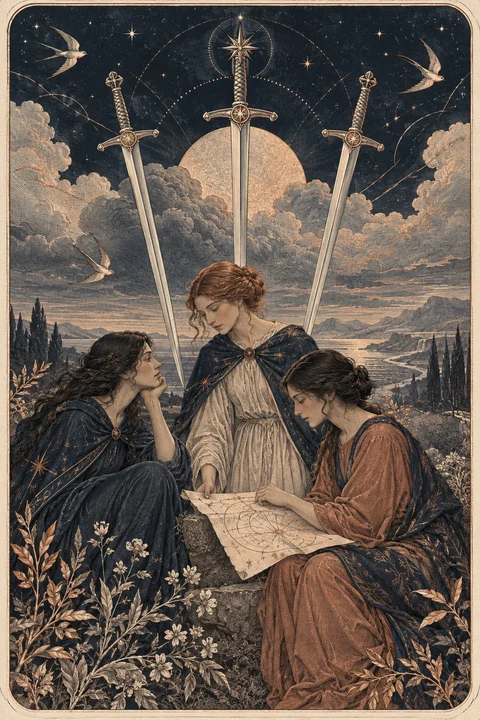
In a straightforward reading, the Three of Swords yes or no answer is almost always a clear no. As a card representing sorrow, heartbreak, and emotional separation, it typically signals that pursuing your current direction may lead to distress or disappointment. However, understanding the card's deeper context and the specific phrasing of your question can reveal whether this painful pause is ultimately protective.
The Core Symbolism of the Three of Swords
In the traditional Rider-Waite-Smith Tarot deck, the imagery of the Three of Swords is unmistakable and stark. A vibrant red heart floats against a gray background, pierced cleanly by three silver blades while dark storm clouds release heavy sheets of rain. Unlike many other cards in the Minor Arcana, this card contains no human figures, suggesting that the experience of heartbreak and mental anguish is a universal human trial that transcends any single individual or circumstance.
The suit of Swords corresponds to the element of Air, which governs the intellect, communication, belief systems, and absolute truth. When combined with the numerological energy of the number three, which often marks expansion or initial manifestation, the card depicts the moment thought pierces feeling. The swords do not represent accidental physical injury, but rather words spoken in anger, painful realizations, betrayals, or decisions made by the analytical mind that wound the sensitive emotional heart.
Because this archetype is so visceral, readers across traditions treat it as a serious symbol of vulnerability and psychological pain. Storm clouds and downpours emphasize that emotional storms cannot be bypassed or ignored; they must be weathered fully. Recognizing this visual and elemental framework allows you to see the card not as an omen of malice, but as an honest mirror reflecting painful realities that have already begun to take shape.
Three of Swords Yes or No: The Traditional Answer
When you draw the Three of Swords yes or no card in an upright position, it almost universally signifies a firm no. Divination practitioners describe this card as an alert that proceeding with your plan is likely to result in rejection, misunderstandings, grief, or broken expectations. If you are asking whether someone will return to a romance, whether a volatile job will improve on its own, or whether a risky endeavor will succeed smoothly, the upright Three of Swords cautions that the emotional cost is far too steep.
The reason for this negative inclination lies in the card's traditional association with sorrow, severance, and disillusionment. The presence of three penetrating blades indicates divided loyalties, communication breakdowns, or the intrusion of an unwelcome third factor into what should be a harmonious union. In practical consultations, readers point out that forcing a favorable outcome against this card's warning usually magnifies the eventual disappointment.
At the same time, seasoned readers stress that Tarot cards do not decree fixed, unchangeable fates. Instead, they capture the trajectory of your current momentum and subconscious dynamics. When the upright card delivers a no, it serves as a protective boundary, alerting you to blind spots so you can protect your emotional well-being before significant damage occurs.
Rare Circumstances Where the Upright Card Leans Yes
Although the default interpretation leans heavily toward no, skilled readers recognize that the phrasing of your query can invert how the card operates. If your question centers on severance, parting ways, or unmasking a deception, the card acts as an affirmative confirmation. In situations where staying in a dynamic causes ongoing harm, the sharp truth of the swords represents the painful incision necessary to remove a deeper infection.
For example, consider someone who asks, 'Should I finally walk away from this unfulfilling partnership?' In this scenario, drawing the Three of Swords can be understood as a painful yes. The card acknowledges that severing the cord will hurt deeply, but it confirms that the partnership is already saturated with grief. The card mirrors the reality that heartbreak is unavoidable whether you stay or leave, making deliberate departure the honest choice.
Similarly, if your inquiry involves medical procedures, necessary surgeries, or confronting someone about a long-hidden secret, the card often indicates that the painful truth or surgical intervention must take place. The blades represent precision and decisive action. While the experience may bring tears and stress, the card confirms that facing reality directly is the only way forward.
The Meaning of the Reversed Three of Swords in Yes or No Readings
When the Three of Swords appears upside down in a reading, its energy becomes more nuanced, often resulting in a gentle maybe or a conditional yes regarding healing. In traditional Tarot philosophy, a reversal can signify the internal internalization of a card's themes, the resolution of an intense crisis, or the prolonged refusal to release old grudges. Depending on your personal situation, it suggests that the worst of a painful storm has passed.
If you are inquiring about recovery, therapy, or reconciliation after an extended estrangement, the reversed card frequently leans toward yes. It reflects a willingness to remove the swords from the heart, forgive old offenses, and begin the quiet work of emotional reconstruction. The heavy rain clouds are starting to break, and the analytical mind is learning to support emotional healing rather than inflicting fresh wounds through obsessive rumination.
Conversely, if the question asks whether you are ready to jump immediately into a new romance or launch an ambitious venture, the reversal may still lean toward no. In this light, it signals lingering resentment, unprocessed grief, or repressed emotional pain. Rushing forward before fully clearing out the residue of a past heartbreak risks carrying old baggage into fresh beginnings.
How Context and Surrounding Cards Change the Message
Relying solely on a single card for a complex life dilemma can strip away essential nuance, which is why professional readers examine surrounding cards to decipher the complete story. A card drawn alongside the Three of Swords can dramatically alter its emotional tone, showing where the pain originated, how long it will last, and what gifts lie hidden behind the sorrow.
When placed beside supportive cards from the suit of Cups, such as the Two of Cups or the Ace of Cups, the Three of Swords suggests that an honest conversation or temporary rift will ultimately pave the way for deeper emotional intimacy. The painful truth must be spoken so that genuine connection can flourish. Conversely, if it appears next to the Tower or the Ten of Swords, it confirms an abrupt, unavoidable collapse that demands radical acceptance and complete renewal.
Similarly, practical cards from the suit of Pentacles, such as the Eight of Pentacles or Three of Pentacles, often point to contract disputes, workplace lay-offs, or structural betrayals rather than romantic heartache. Observing these neighboring influences prevents you from jumping to premature conclusions and helps you pinpoint the exact arena where clarity is needed.
Reframing Your Question Beyond Yes or No
Binary questions often limit the rich psychological wisdom that Tarot is designed to provide. Asking a simple yes-or-no question about a delicate relationship or complex career transition can leave you feeling disempowered if an unsettling card like the Three of Swords emerges. Shifting your inquiries toward open-ended phrasing transforms the deck from an anxiety-inducing oracle into an empowering tool for self-reflection.
Instead of asking, 'Will my partner and I stay together without arguing?' try asking, 'What unspoken feelings or unresolved hurts need to be addressed between us?' Rather than wondering, 'Will this job application be rejected?' ask, 'What professional lessons can I take away from past disappointments to strengthen my career path?' These questions acknowledge that while challenges exist, you possess the agency to respond constructively.
By inviting the Three of Swords to speak as a teacher of emotional resilience and truthful clarity, you step outside fear-based fortune telling. You allow the card to show you where you are holding onto illusions, where your boundaries require reinforcement, and how you can honor your heart's authentic needs with gentle honesty.
Reflection and Healing: The Three of Swords Yes or No Conclusion
In summary, while the Three of Swords yes or no message is traditionally an emphatic no, it carries profound gifts of honesty, clarity, and protection. Life inevitably brings moments where expectations shatter and feelings are hurt, but the suit of Swords reminds us that truth is liberating, even when it cuts through comfort. Recognizing where pain exists is the indispensable first step toward genuine relief.
Whenever this card surfaces in your personal spreads, take a deep breath and pause before reacting with fear or despondency. Ask yourself what emotional truths you have been avoiding, what difficult conversations you must initiate, and how you can offer compassion to your own wounded heart. The swords pierce deeply, but wounds that are brought into the light are finally able to heal.
Frequently asked questions
Is the Three of Swords always a negative card?
While the card is traditionally challenging, it is not inherently negative. In the Tarot tradition, it symbolizes necessary clarity and the release of unhealthy illusions. A painful truth may hurt initially, but it prevents you from remaining trapped in deceptive or unfulfilling situations.
What does the Three of Swords mean for love questions?
In love readings, it typically signals heartache, harsh words, emotional distance, or third-party interference. For a yes-or-no question about reconciliation or immediate harmony, it leans strongly toward no, indicating that past wounds must be acknowledged before any healthy reunion can occur.
Does the Three of Swords indicate a permanent breakup?
The card reflects current emotional pain, sharp words, and separation, but it does not dictate an unchangeable future. It highlights severe strain that requires honesty and time to heal, showing that healing cannot happen until both people acknowledge the core wound.
How does the element of Air influence the Three of Swords?
Air represents the mind, communication, and intellectual discernment. In the Three of Swords, Air manifests as sharp realizations or critical words that collide with emotional desires, showing how mental clarity can sometimes create sorrow before bringing lasting peace.