Two of Swords Yes or No: Tarot Meaning Explained
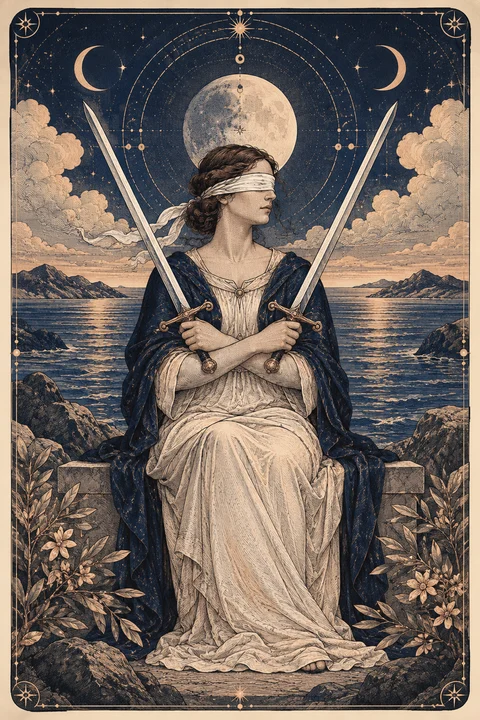
In a straightforward reading, the Two of Swords yes or no answer is traditionally interpreted as a neutral maybe or a gentle no that indicates a stalemate. This card signifies that you do not yet possess enough clarity, information, or emotional readiness to reach a definitive outcome. Rather than giving a firm green light, it invites you to pause, acknowledge competing options, and address unresolved tension before choosing a path.
Understanding the Two of Swords in the Rider-Waite-Smith Tradition
In the classic Rider-Waite-Smith Tarot deck, the Two of Swords portrays a seated woman dressed in simple gray robes, wearing a white blindfold over her eyes. In her hands, she balances two heavy, crossed broadswords across her chest, guarding her heart while maintaining a precarious equilibrium. Behind her lies a calm body of water dotted with jagged rocks, beneath a nocturnal sky illuminated by a slender crescent moon. Every visual component in this scene speaks to quiet tension, deliberate withdrawal, and balanced forces.
As part of the suit of Swords, this card belongs to the element of Air, which rules the intellect, logic, communication, and truth. The number two in numerology represents duality, partnership, choices, and balance. Here, Air meets the concept of duality, manifesting as an impasse between two equal and opposing ideas. The blindfold suggests that the figure has intentionally shut out external data to protect her peace, while the crossed blades act as a defensive barrier against emotional or mental intrusion.
Tarot practitioners often emphasize that this imagery does not indicate helplessness, but rather a willful truce. The calm water behind the figure implies that strong emotions still ripple beneath the surface, even though her posture looks completely still. By sitting between the water and the sky, she suspends action to avoid making an error, choosing silence over conflict until new clarity emerges.
Two of Swords Yes or No: Upright Meaning
When you draw the upright Two of Swords in a quick divination spread, the answer leans toward a hesitant maybe or a cautious no. Many readers interpret the card as an indication of a frozen situation where external circumstances cannot advance until an internal dilemma is settled. If your inquiry asks whether an event will take place immediately, this card suggests that forward progress is currently stalled by competing desires, conflicting motives, or hidden facts.
In matters of love and relationships, receiving this card upright often reflects emotional guardedness or an unspoken standoff between partners. One or both individuals may be avoiding an honest conversation to prevent friction, effectively maintaining peace at the price of genuine intimacy. If you are asking whether someone will reach out or commit, the card points to hesitation, suggesting that the person is weighing pros and cons in isolation rather than taking decisive action.
Regarding career and practical pursuits, the upright card advises against rushing into binding commitments, signing complex contracts, or assuming a project will proceed smoothly. You might be torn between two competing offers or hesitant to speak candidly about work conditions. The upright position does not foretell outright failure, but it explicitly cautions that proceeding without resolving internal ambivalence will only prolong the impasse.
Two of Swords Reversed in a Yes or No Reading
When the Two of Swords appears reversed, its energy shifts from quiet stagnation into active motion, often tipping the scale toward a conditional yes or a definitive resolution. In traditional practice, the reversal signifies that the blindfold is slipping off. Hidden facts come to light, suppressed emotions demand expression, and the psychological defense mechanism that once preserved peace is no longer functioning. You are finally compelled to look at what you previously chose to ignore.
In relational questions, the reversed card often mirrors the breaking of a prolonged silence. Difficult conversations can no longer be postponed, and partners must confront uncomfortable truths about their compatibility or future plans. While this process can feel intense or vulnerable, it clears the air, allowing genuine progress to resume. If your question asks whether change will occur, the reversed card leans strongly toward yes, because the stagnant deadlock is coming to an end.
In professional or financial contexts, the reversed card warns of mental overwhelm or information overload, yet it also indicates that an unavoidable choice is arriving. You may find that external deadlines force your hand, requiring you to abandon fence-sitting and pick a direction. While the upright card recommends careful contemplation, the reversed card reminds you that stalling indefinitely carries its own significant costs.
Why Context and Surrounding Cards Matter
Tarot cards rarely deliver simple black-and-white verdicts because human circumstances are rarely static. The meaning of the Two of Swords shifts considerably depending on the surrounding cards in your layout and the emotional atmosphere of the querent. For instance, if this card rests alongside supportive Minor Arcana cards like the Three of Cups or the Four of Wands, the temporary pause is likely brief and benign, serving merely as a moment to align expectations before celebrating success.
Conversely, if the card appears alongside challenging cards such as The Tower, the Three of Swords, or the Ten of Swords, the reluctance to choose may stem from deep-seated fear of painful consequences. In such spreads, the card acts as a mirror showing that avoiding a hard truth will not prevent an inevitable outcome. By observing neighboring suits, you discover whether the deadlock is motivated by intellectual doubt, emotional hurt, financial insecurity, or practical limitations.
Similarly, Major Arcana cards bring universal, spiritual weight to the spread. Pairing the Two of Swords with The High Priestess highlights intuitive knowledge that your conscious mind resists acknowledging, while appearing next to Justice indicates that an objective, legally binding decision must take precedence over subjective preferences. Evaluating these dynamics ensures that you receive a nuanced, realistic perspective rather than a flat, one-word forecast.
Better Ways to Phrase Your Tarot Questions
Binary yes-or-no inquiries often leave seekers feeling anxious or dissatisfied because they treat the future as a predetermined script. Tarot functions best as a reflective tool that illuminates current patterns, underlying motives, and practical pathways forward. When you reduce complex, multifaceted life dilemmas to a simple binary choice, you surrender personal agency and risk overlooking the valuable wisdom that cards like the Two of Swords offer.
Instead of asking closed questions such as will this deal go through or should I leave my current position, consider reframing your query around personal responsibility and clarity. You might ask what blind spot is preventing me from making a healthy choice, or how can I balance logic and intuition in this situation. These inquiries encourage the cards to reveal actionable insights, helping you dismantle self-imposed obstacles and build genuine confidence.
To explore a fork in the road thoroughly, many practitioners recommend using a two-choice comparative spread rather than asking for a basic verdict. Place one card to represent the potential outcome of following path A, and a second card to represent path B. By examining the distinct energetic tone of each option, you gain the panoramic perspective needed to choose for yourself with clarity and conviction.
Reflecting on the Two of Swords Yes or No Verdict
Ultimately, encountering the two of swords yes or no dynamic reminds you that true discernment requires both patience and courage. When life places you between two seemingly irreconcilable choices, the card suggests that neither option is entirely wrong, nor is either option entirely easy. The discomfort you feel does not stem from external bad luck, but from the natural tension that accompanies meaningful decisions.
Take this opportunity to sit quietly with your thoughts, just like the figure on the card, but commit to removing the blindfold when you are ready. Consider journaling about the assumptions you hold, the fears that keep your arms crossed, and the facts you might be avoiding. By treating this card as an invitation to self-reflection rather than an impenetrable barrier, you transform a frustrating moment of indecision into a gateway toward authentic clarity and self-trust.
Frequently asked questions
Is the Two of Swords a definitive no in Tarot?
No, it is rarely viewed as a definitive no. Most experienced practitioners interpret the Two of Swords as a neutral maybe or a temporary pause. It indicates that external conditions or personal decisions are currently deadlocked, meaning the situation requires greater clarity before an outcome can materialize.
What does the blindfold symbolize in the Two of Swords?
The blindfold represents the deliberate choice to block out external distractions, advice, or uncomfortable visual facts. It suggests that the person is attempting to solve a problem strictly through mental logic or, conversely, is avoiding an obvious truth that they are not yet ready to acknowledge.
Does the Two of Swords reversed mean yes?
The reversed Two of Swords frequently leans toward yes because it represents the end of an impasse. When the card appears upside down, the blindfold slips off, hidden information surfaces, and the querent is compelled to break their silence and move forward.
How can I get a clear answer if I pull this card?
To gain greater clarity, draw one or two clarifying cards to identify what specific information you are missing or what fear is creating the blockage. Alternatively, reframe your original question into an open-ended inquiry that explores how you can overcome your current hesitation.