Two of Wands Yes or No: Tarot Meaning Explained
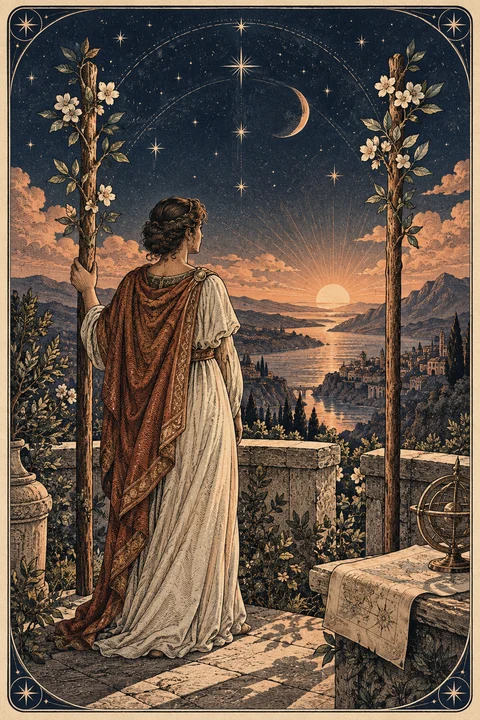
In a straightforward yes or no reading, the upright Two of Wands traditionally leans toward a conditional yes, indicating that success is likely if you step forward with deliberate planning and bold vision. When drawn in reverse, the card typically leans toward a no or a cautious pause, pointing to hesitation, fear of the unknown, or poor preparation. Because this card represents a threshold moment between an initial spark and long-term execution, its answer ultimately depends on your willingness to choose a path and commit to it.
Understanding the Two of Wands Yes or No Answer
When you pull the Two of Wands in a yes or no spread, the card rarely gives an absolute, unyielding answer. Instead, many readers interpret the upright Two of Wands as a purposeful yes that requires your active cooperation. The card belongs to the suit of Wands, which corresponds to the element of Fire in western esoteric traditions. Fire represents creative energy, vitality, ambition, and willpower. Because the number two introduces balance, duality, and decision-making, the card suggests that the outcome you desire is entirely possible, provided you formulate a coherent strategy.
A simple yes can sometimes give the false impression that events will unfold automatically without personal effort. The Two of Wands reminds you that your intention must meet practical preparation. You have already experienced the initial inspiration represented by the Ace of Wands, and now you stand at a crossroads where you must choose how to direct that momentum. If your question centers on whether you should explore a new horizon or pursue an ambitious project, the upright card gives you green lights paired with an invitation to plan carefully before leaping.
Conversely, when the card appears reversed, practitioners describe its energy as blocked, rushed, or overly cautious. In this orientation, the card tilts toward a no or suggests that the timing is not yet right. Rather than indicating an outright failure, the reversal often highlights unresolved internal conflicts, fear of leaving your comfort zone, or unrealistic expectations. Taking immediate action under a reversed Two of Wands may lead to frustration because the structural foundation beneath your idea has not yet been solidified.
Rider-Waite-Smith Symbolism and Its Meaning
To appreciate why the Two of Wands functions as a conditional answer, look closely at the imagery developed by Arthur Edward Waite and artist Pamela Colman Smith. In the standard Rider-Waite-Smith deck, a figure stands atop a stone castle battlement, dressed in rich garments that suggest worldly achievement. In his right hand, he holds a small globe, while his left hand grips a tall wooden staff firmly planted on the parapet. A second wand stands affixed to the wall behind him, framing his vantage point as he gazes across the ocean toward distant mountains.
The globe in the figure's hand is one of the most potent symbols in the Minor Arcana. It represents your personal world, potential opportunities, and the realization that your future rests in your hands. You hold the potential to shape your circumstances, yet holding a miniature world is not the same as traversing the physical landscape. The battlement beneath his feet provides security and comfort, but it also functions as an enclosure. He stands literally between the safety of what is already built and the vast unknown of the open horizon.
The two wands themselves illustrate this essential tension between stability and expansion. The staff affixed to the wall represents the past foundation, the current security, and the territory you have already mastered. The staff held in his hand symbolizes the voyage ahead, active exploration, and future ambition. Furthermore, the roses and lilies carved into the stone relief symbolize the union of passion and pure intention. For your yes or no inquiry, this rich imagery emphasizes that you cannot embark on a meaningful quest without consciously leaving the fortified walls of your current routine.
The Upright Two of Wands in Different Life Contexts
In relationship readings, an upright Two of Wands yes or no draw generally leans yes, especially if you are asking whether a connection has long-term potential or if you should discuss future plans. The card highlights honest communication about shared goals, joint travels, and aligning your personal paths. However, if your question asks whether someone will make a sudden emotional confession, the card counsels patience. The Two of Wands operates on deliberate foresight rather than impulsive romantic displays, suggesting that mutual understanding develops through structured, honest conversation.
When applied to career and professional questions, this card delivers an encouraging yes for expansion, partnership exploration, and international business ventures. Many readers see it as a favorable omen for entrepreneurs and professionals contemplating a career pivot or launching an independent endeavor. The upright card confirms that you possess the skills and vision necessary to scale your work. At the same time, it insists that you conduct research, draft contracts, and establish timelines before signing agreements or handing in your resignation.
For personal development or creative inquiries, the upright card offers a resounding affirmative to stepping outside your familiar environment. If you are asking whether to relocate, enroll in an educational course, or commit to a major artistic project, the Two of Wands affirms that broad horizons await. It asks you to reflect on whether you are clinging to security simply because it is safe. Your ambition has outgrown your immediate surroundings, and the card encourages you to match your inner vision with outward courage.
The Reversed Two of Wands as a Cautionary No
When the Two of Wands appears upside down, its natural forward momentum becomes disrupted, leading most practitioners to interpret it as a leaning no. The reversal typically reflects two opposing psychological states: either excessive hesitation stemming from fear of the unknown, or reckless impatience that ignores necessary logistics. If you ask whether you should proceed immediately with a major life change, the reversed card warns that moving forward right now could leave you feeling unmoored and overwhelmed.
In romantic matters, a reversed Two of Wands frequently points to divergent life visions or a partner who feels trapped and restless. One person may want to settle down while the other yearns for complete freedom, or long-distance arrangements may create unexpected strain. If your question is whether a broken relationship will reconcile swiftly, the reversed card usually answers no. It signals that unresolved individual priorities and a lack of mutual alignment must be addressed before any harmonious reunion can occur.
In workplace and financial contexts, the reversed card advises against making speculative commitments or entering untested partnerships. It suggests that critical details have been overlooked, budgets may be miscalculated, or team members are working at cross-purposes. If you are asking whether to accept an offer that feels ambiguous, the card suggests holding back until all expectations are defined in writing. Taking time to reevaluate your strategy transforms the reversed card from a discouraging denial into a valuable protective warning.
Why Context and Question Structure Matter in Tarot
Tarot is fundamentally a visual language of archetype, myth, and human psychology rather than a rigid coin toss. Relying solely on binary yes or no interpretations can flatten the nuanced wisdom of cards like the Two of Wands. While assigning positive or negative values is convenient for quick guidance, cards rarely function as simple switches. Surrounding cards in a larger spread, the elemental dignity of the layout, and your current life circumstances all shape how the energy manifests in practice.
For example, if the upright Two of Wands appears alongside cards of action like the Chariot or the Eight of Wands, its affirmative energy is intensified, urging rapid execution of your plans. However, if it sits next to cards of pause or reassessment, such as the Four of Swords or the Hanged Man, the yes becomes tempered, indicating that contemplation must precede any physical movement. Paying attention to these surrounding dynamics ensures that you receive a holistic answer rather than a fragmented one.
Furthermore, personal responsibility sits at the center of Tarot tradition. The cards reflect prevailing currents and possible trajectories based on your current mindset, not an unchangeable fate written in stone. When you understand the Two of Wands as an invitation to weigh your choices, you regain ownership of your journey. The card does not decide your future for you; it holds up a mirror to your readiness to venture beyond what you already know.
Better Ways to Frame Your Two of Wands Questions
To gain the most practical insight from your deck, consider reframing closed questions into exploratory inquiries. Closed queries like 'Will I get the promotion?' or 'Will my partner move with me?' often invite anxiety because they surrender your agency to outside forces. When you draw the Two of Wands, the card's entire thematic focus is about vision, personal autonomy, and choosing your direction, making it the ideal card for empowered, proactive questioning.
Instead of asking 'Should I quit my job?', you might ask, 'What factors should I consider before I expand my professional path?' Rather than wondering 'Will my creative project succeed?', try asking, 'How can I best align my daily efforts with my long-term creative vision?' These open-ended structures honor the analytical nature of the Two of Wands, transforming a simple prediction into an actionable roadmap that supports your personal growth.
You can also use the Two of Wands as a dedicated prompt for journaling and self-reflection. Ask yourself what your personal globe represents in this moment, and what fortified walls you might be reluctant to leave behind. Consider what research, alliances, or resources you need to gather before stepping onto the path ahead. Framing your dialogue with the cards in this manner honors both the traditional symbolism of the Minor Arcana and your innate capacity to direct your life.
Frequently asked questions
Is the Two of Wands traditionally a yes or no card?
Traditionally, the upright Two of Wands leans toward a yes, but it is a conditional yes that requires deliberate strategy and active decision-making. The reversed card generally leans toward no, indicating that hesitation, fear of change, or incomplete planning must be addressed before proceeding.
What does the Two of Wands mean for love in a yes or no spread?
In love readings, an upright Two of Wands leans yes for relationships built on shared future goals and mutual respect. It favors planning joint adventures or discussing commitments. Reversed, it leans no, suggesting mismatched long-term visions or partner reluctance to compromise.
What element and astrological association belong to the Two of Wands?
The Two of Wands belongs to the suit of Wands, which corresponds to the element of Fire, embodying passion, ambition, and willpower. In western esoteric systems, it is traditionally associated with Mars in Aries, highlighting the drive to initiate bold endeavors through focused leadership.
How can I get clearer answers from the Two of Wands than a yes or no?
You can achieve clearer insight by asking open-ended questions focused on strategy and agency. Inquire about what steps will help you achieve your goal, what fears are holding you back, or how you can bridge the gap between your ideas and practical execution.