Wheel of Fortune Yes or No: Tarot Meaning Explained
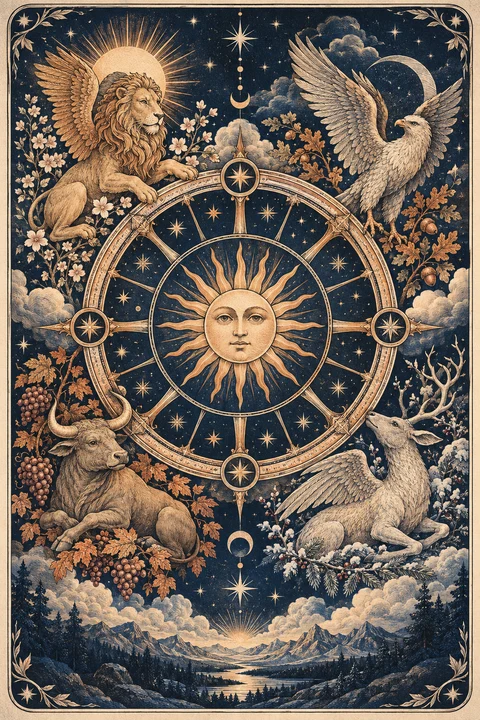
When drawn upright in a simple reading, the Wheel of Fortune yes or no answer is traditionally interpreted as an enthusiastic yes that brings positive momentum and serendipity. However, because this card represents cosmic cycles and shifting fate, it also signals that circumstances are currently evolving and remain partly outside your personal control. When pulled in reverse, readers generally interpret the card as a gentle no or a temporary delay caused by bad timing.
Symbolism and Core Meaning of the Wheel of Fortune
In the Rider-Waite-Smith system, the Wheel of Fortune holds the numerical position of Card 10 in the Major Arcana. This milestone marks the completion of the first phase of the fool's journey and introduces the concept of universal cycles. The central wheel features the Hebrew letters for the divine name alongside letters spelling out ROTA, an anagram frequently associated with Tarot. Surrounding the wheel are mythological figures, including the Egyptian god Hermanubis rising, the serpent Typhon descending, and a sphinx balancing at the summit, reminding readers of life's perpetual motion.
In the corners of the card sit four winged creatures representing the fixed signs of the zodiac: the angel for Aquarius, the eagle for Scorpio, the lion for Leo, and the bull for Taurus. Each creature studies a book of wisdom, symbolizing spiritual knowledge that remains constant amid worldly upheaval. Astrologically connected to expansive Jupiter, the card embodies destiny, luck, karma, and the cyclical nature of human existence. When this card appears, it reminds the seeker that life rarely moves in a straight line and that change remains the only enduring constant.
Understanding this foundational symbolism helps clarify why the card behaves uniquely during binary consultations. Unlike cards that emphasize conscious human choices, such as the Magician or the Two of Wands, the Wheel of Fortune operates on a macrocosmic level. It addresses conditions that are orchestrated by timing, environment, and unseen forces. As a result, its presence always invites humility, encouraging you to align with life's rhythm rather than attempting to force a predetermined outcome against the prevailing current.
Interpreting the Wheel of Fortune Yes or No in a Reading
In a direct inquiry, drawing the Wheel of Fortune yes or no upright serves as a dynamic, affirming yes. It indicates that the energetic scales are tipping in your favor, bringing helpful synchronicities, serendipitous breakthroughs, and lucky turns of events. If you have been enduring an uphill battle, this placement suggests that the cycle is shifting toward relief and forward progress. Many readers view this card as an invitation to welcome unexpected offers and trust the overall direction of your journey.
Conversely, drawing the Wheel of Fortune reversed leans toward a no or at least a firm caution to pause. This reversal does not suggest permanent doom or eternal misfortune, but it does indicate that current conditions are unfavorable for forcing an outcome. You may be encountering unexpected friction, repetitive loops, or setbacks beyond your immediate influence. Traditionally, the reversed card asks you to accept the present lull, reflect on recent lessons, and wait for conditions to improve before launching crucial plans.
Sometimes readers encounter this card as an ambiguous maybe, particularly when the surrounding cards reveal scattered energies. Because the wheel is perpetually turning, what looks like a positive breakthrough today can easily morph into an unforeseen complication tomorrow. If your query demands absolute guarantees, Card 10 gently pushes back against certainty. It encourages you to embrace flexibility and recognize that any yes or no answer remains inextricably tied to how gracefully you adapt to sudden shifts.
Why Context and External Timing Matter
A binary reading can easily oversimplify complex situations, and the Wheel of Fortune illustrates this limitation better than almost any other card. While an upright pull offers encouraging news, the outcome often depends heavily on events outside your immediate control. For example, asking whether a job application will succeed might produce a yes, but the opportunity could arrive through unexpected company reorganizations or an unannounced vacancy rather than standard hiring protocols. External timing plays an indispensable role here.
The surrounding cards in your spread provide necessary nuance for interpreting this energetic movement. If the Wheel of Fortune appears alongside stable earth cards like the Queen of Pentacles, the changes underway are likely to yield tangible, lasting security. When surrounded by volatile swords or fiery wands, however, the shift may arrive quickly and demand immediate cognitive adjustments. Paying attention to these surrounding symbols prevents you from viewing the card as simple magic and grounds its message in your everyday reality.
Furthermore, personal context determines how a sudden turning point feels emotionally. A major transformation that liberates one individual might temporarily destabilize another who prefers predictable routines. The card prompts you to consider your relationship with uncertainty. Are you resisting natural closures, or are you ready to ride the crest of a new phase? Evaluating your internal readiness ensures that you can turn any affirmative or negative response into an empowering, grounded step forward.
Upright and Reversed Meanings Across Common Life Themes
In relationship readings, an upright Wheel of Fortune acts as an affirming yes toward romantic growth, serendipitous meetings, or positive evolutions within existing partnerships. It often represents a destined feeling where both parties cross paths at the exact right moment. When reversed, it leans toward no regarding immediate reconciliation or swift relationship clarity. In that position, it suggests that unresolved emotional patterns or poorly matched schedules are hindering mutual harmony, urging you to focus on self-awareness rather than chasing a partner.
Regarding professional endeavors and financial queries, an upright pull delivers an encouraging yes. It points toward fortunate windfalls, promotions, or unexpected alignments that elevate your career trajectory. This is a traditional signal to pitch your concepts, take calculated risks, and embrace collaborative ventures. If the card appears reversed, it functions as a clear recommendation to avoid speculative financial risks. It signals that market fluctuations or organizational politics may stall your progress, making conservation and patience your wisest strategies.
For personal growth and creative pursuits, the upright card enthusiastically endorses your creative path, signaling that your intuition matches the zeitgeist. It invites you to share your craft and welcome constructive feedback. When reversed, it asks you to investigate where you feel stuck in repetitive behavioral cycles. Rather than despairing over creative blocks, practitioners describe this phase as a mandatory incubation period. It offers an opportunity to reassess your motivations, refine your skills, and patiently prepare for the next creative breakthrough.
Reframing Binary Queries for Meaningful Reflection
While binary yes or no questions satisfy our immediate desire for reassurance, they rarely capture the full wisdom of the Major Arcana. Asking a flat question like will this project succeed reduces the rich symbolism of Card 10 to a mechanical coin toss. In contrast, framing your questions around personal agency, timing, and adaptation unlocks deeper clarity. Tarot functions best as a reflective mirror that illuminates your inner landscape and highlights constructive choices.
To cultivate richer insights, consider swapping rigid questions for exploratory ones. Instead of asking whether a specific venture will pan out, you might ask what natural cycle you are currently navigating. Instead of inquiring if someone will contact you, ask how you can best navigate the emotional ebbs and flows of your connection. These inquiries acknowledge that while you cannot dictate every cosmic turn, you possess complete sovereignty over how you respond to whatever circumstance presents itself.
Reframing inquiries also prevents the anxiety that often accompanies perceived negative answers. When you view the cards as tools for personal development, a reversed card ceases to look like bad luck and becomes a valuable diagnostic indicator. It points out where your expectations may be clashing with reality, enabling you to conserve your energy. Practicing this mindful approach transforms your readings from passive fortune-telling exercises into proactive sessions of self-discovery and conscious decision-making.
Conclusion: Navigating the Wheel of Fortune Yes or No
Interpreting the Wheel of Fortune yes or no requires balancing immediate optimism with a mature understanding of life's unpredictable nature. In its upright orientation, the card brings an affirming, hopeful yes that promises helpful changes and cosmic momentum. In reverse, it advises patience, suggesting that unfavorable timing makes a temporary no the most protective outcome for your journey. Both orientations encourage deep respect for the natural cycles that govern personal and spiritual development.
As you reflect on your reading, remember that no Tarot card locks your future into an unalterable script. The imagery of the turning wheel is meant to inspire resilience, reminding you that low points are temporary and high points should be treasured with gratitude. By approaching the cards with critical curiosity and a willingness to adapt, you transform any answer into meaningful personal guidance that supports your ongoing evolution.
Consider asking yourself how you can remain grounded during periods of swift transition, and where you might benefit from relinquishing rigid control. The Wheel of Fortune invites you to participate actively in your destiny while honoring the natural timing of the universe. By meeting each turning point with self-awareness and an open heart, you cultivate the wisdom necessary to navigate whatever shifts appear on your horizon.
Frequently asked questions
Is the Wheel of Fortune always a yes when drawn upright?
In most traditional interpretations, an upright Wheel of Fortune is read as a favorable yes. However, because it is ruled by expansive Jupiter and represents shifting cycles, it also signals that the situation involves moving parts outside your control. The outcome remains positive, provided you stay adaptable to evolving conditions.
What does the Wheel of Fortune reversed mean for a yes or no question?
When reversed, the Wheel of Fortune traditionally leans toward a no or indicates a temporary standstill. It does not signify tragedy, but rather unfavorable timing, repetitive patterns, or friction beyond your immediate influence. The card advises you to pause, conserve your resources, and wait for conditions to stabilize.
Does the Wheel of Fortune represent fate or free will in Tarot?
The card traditionally symbolizes the intersection of external destiny and personal agency. While the spinning wheel represents events, systemic shifts, and cosmic timing that you cannot manipulate, the four figures studying scriptures remind you that your internal response, wisdom, and mindset remain entirely within your personal control.
How can I get a clearer answer if the Wheel of Fortune feels ambiguous?
If the card feels ambiguous, draw one or two clarifying cards from the Minor Arcana to see where the energy manifests practically. Alternatively, rephrase your question from a closed binary format into an open-ended inquiry about how you can best navigate the current cycle.